Inside the Org Follow-Up: Swappow PLUS+ Foundation
The Swappow PLUS+ Foundation is an incredible organization that helps foster kids thrive through a combination of skateboarding and life-skills programming.
Four years ago, we interviewed Michael Shapiro, their Executive Director, during the first year of their build-a-skateboard program. Recently, we had the opportunity to speak with Michael again to learn about how the program has developed and changed over that time.
Read about how Swappow PLUS+ Foundation has developed their programming over the last 4 years to continue inspiring foster youth through skateboarding.
Hi Michael, we're so excited to get to follow up with you after all this time! We can't believe how long it has been since we last interviewed you! How are you today? How have you and Swappow PLUS+ changed since we last talked to you?
Great to be reintroduced to you too, Taryn. It's been a partnership with Roarockit since we started our professional development program, and we've grown and blossomed in so many ways in the same way that we hope our participants will grow and blossom. Four years ago, we started a program with a pilot group of eight participants, and we just had a graduating class this year of over 30 participants. Our graduation event that first year had a handful of people, mostly friends and family, come out and support these kids, and at this event, we had over around 150 people come out. It's truly turning into something. Like we tell our participants, momentum begets momentum, and our program is taking on momentum and growing in a way that's surpassing our expectations. And we're thrilled. We're thrilled to still be here in light of a pandemic and all sorts of challenges that come with starting something new.
Last time we spoke, it was during the first year of your program. Now with 4 years of experience under your belt, what have you learned? What advice would you give to your past self?
Hmm. Yeah, I'd say start out slow. Pace yourself. I think a good question is when you're struggling, when you're feeling insecure is like, well, “Mike, when was the last time you started and developed a professional development program?” So to give yourself a lot more grace than you usually do. At least for me, I just expected myself to be an expert. So the advice would be to start out slow. Be easy on yourself. Practice while no one's looking and make slow incremental steps in the same direction, and over time, something pretty amazing happens. I would say as long as it resonates with the community, and with the participants, then keep doing it. I think mostly I would give myself encouragement. I always talk about Charlie Mackesy’s “The Boy, The Mole, The Fox, and the Horse”, and his newest book, called “Always Remember”, and it says, on the first page, I think, “one day you'll realize how hard it was and how well you did”. And I think that's the reality. It was hard. And we've done very well.
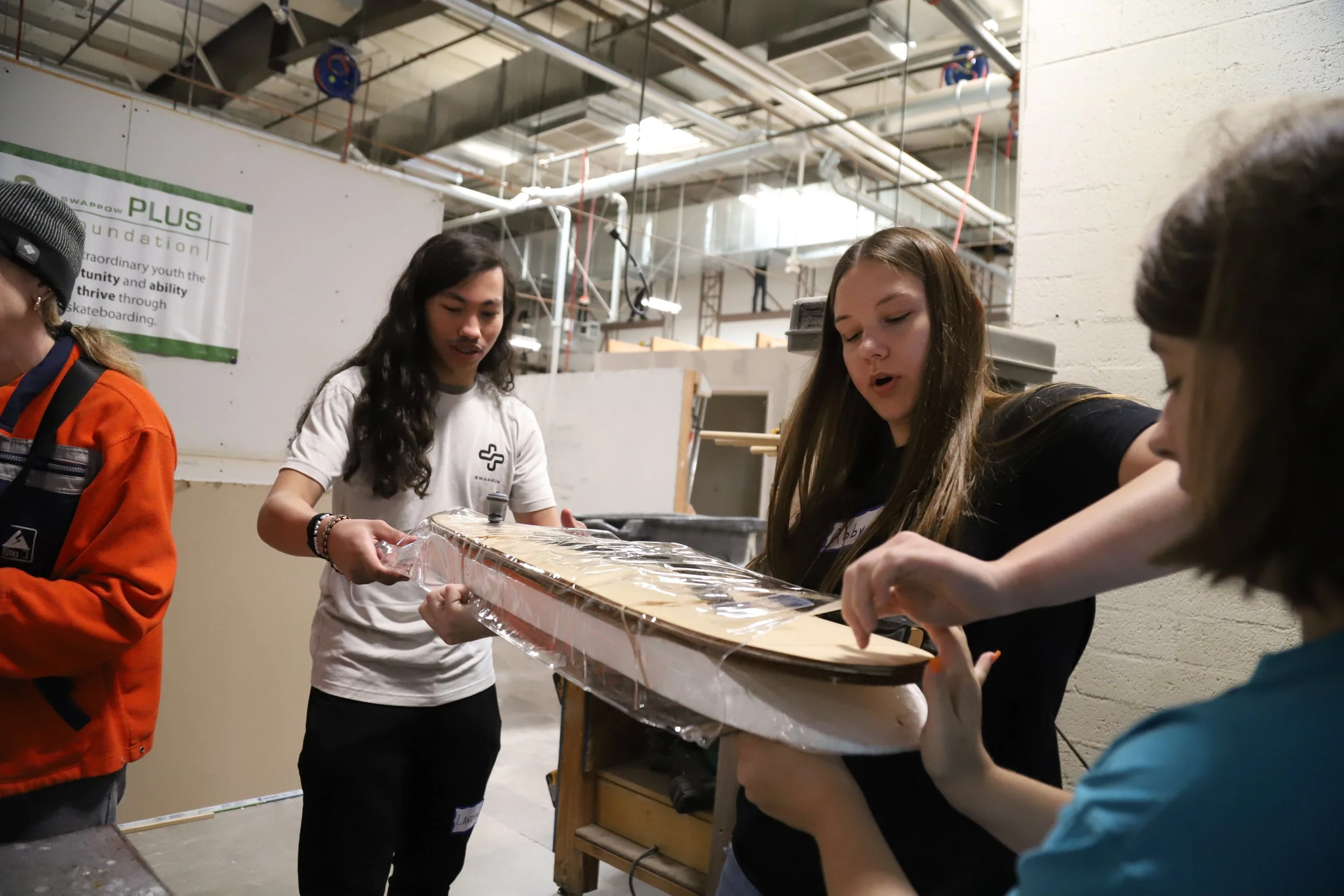
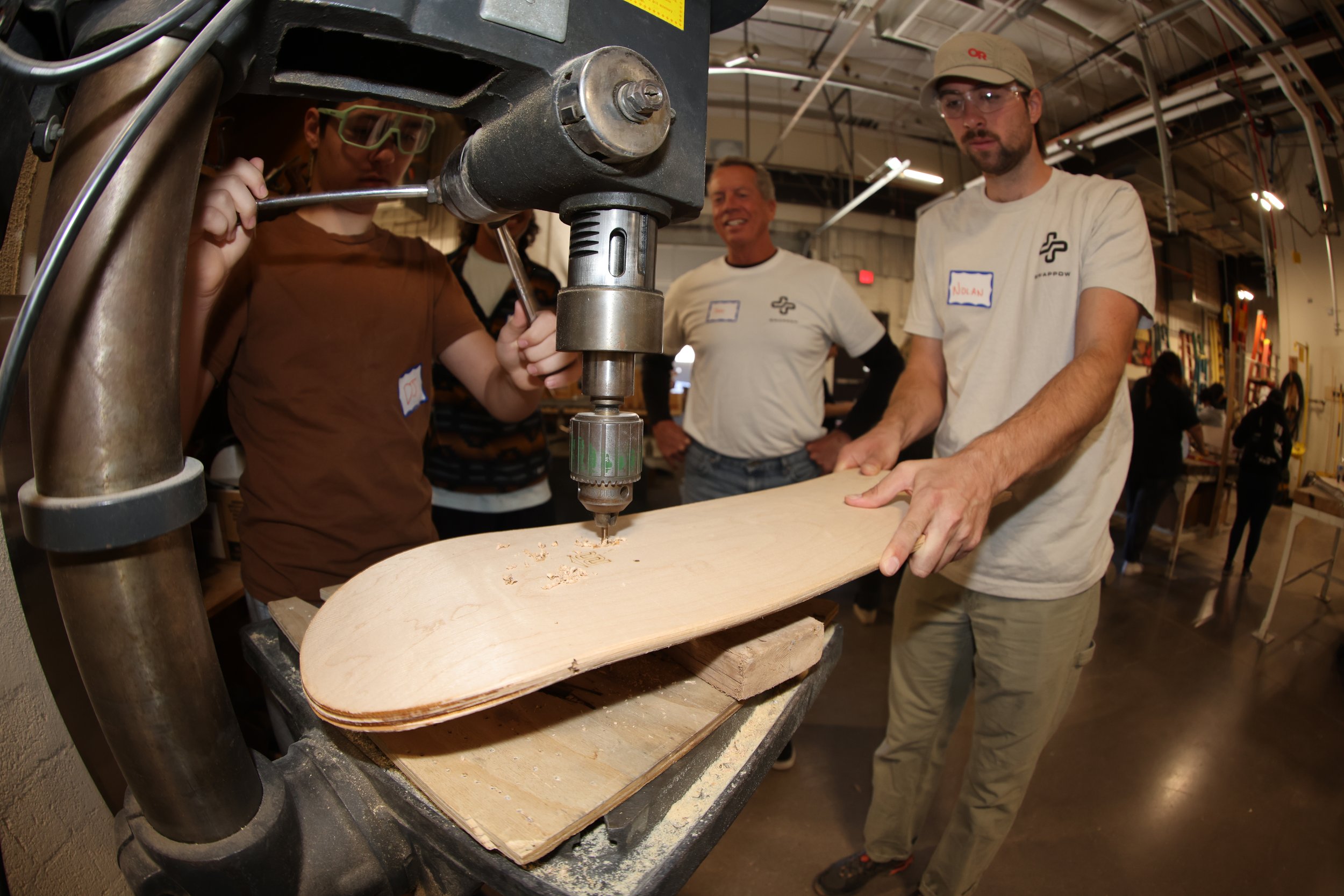
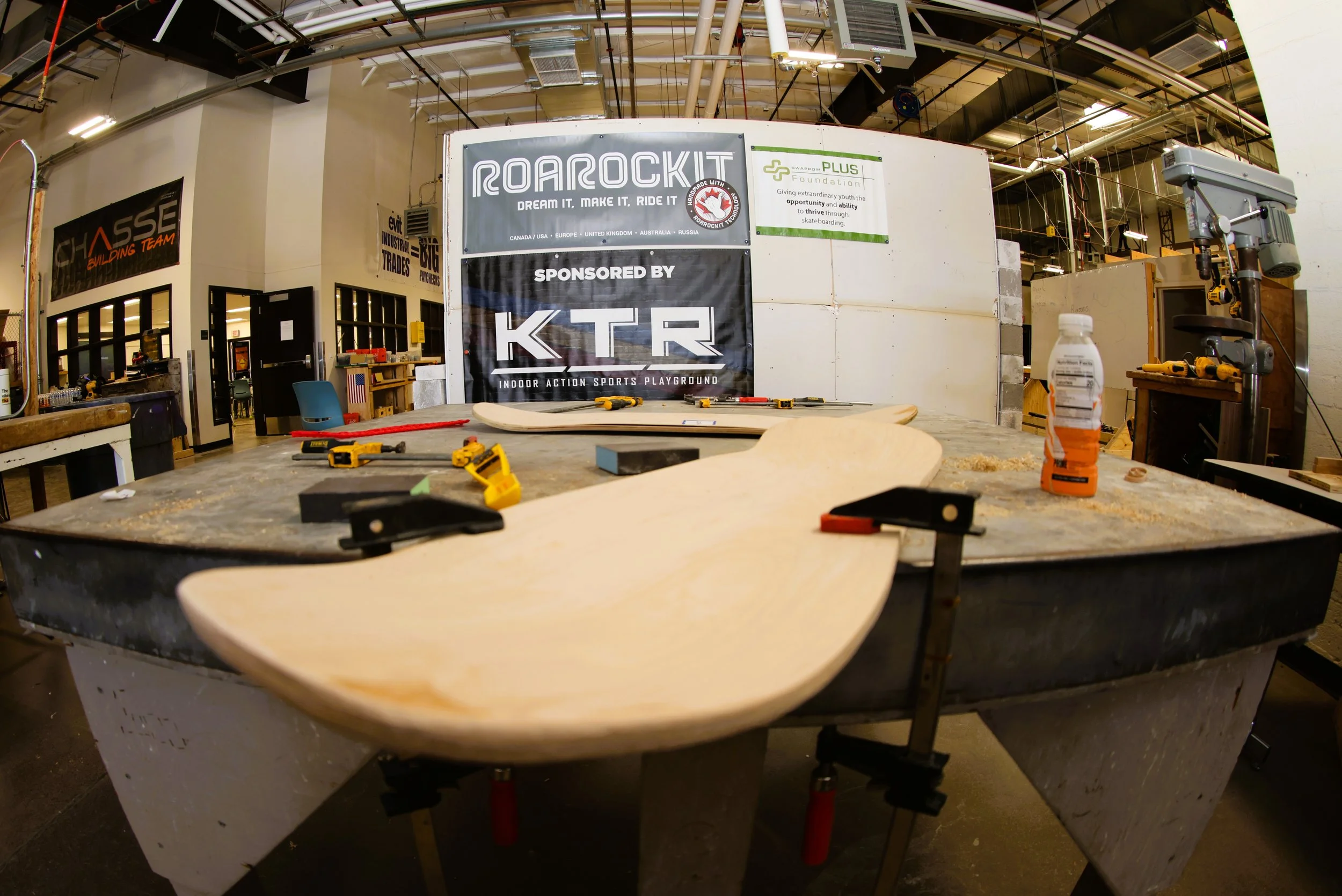
What would you tell someone who wants to start their own skateboard building program? How have you enjoyed working with Roarockit's materials and technology?
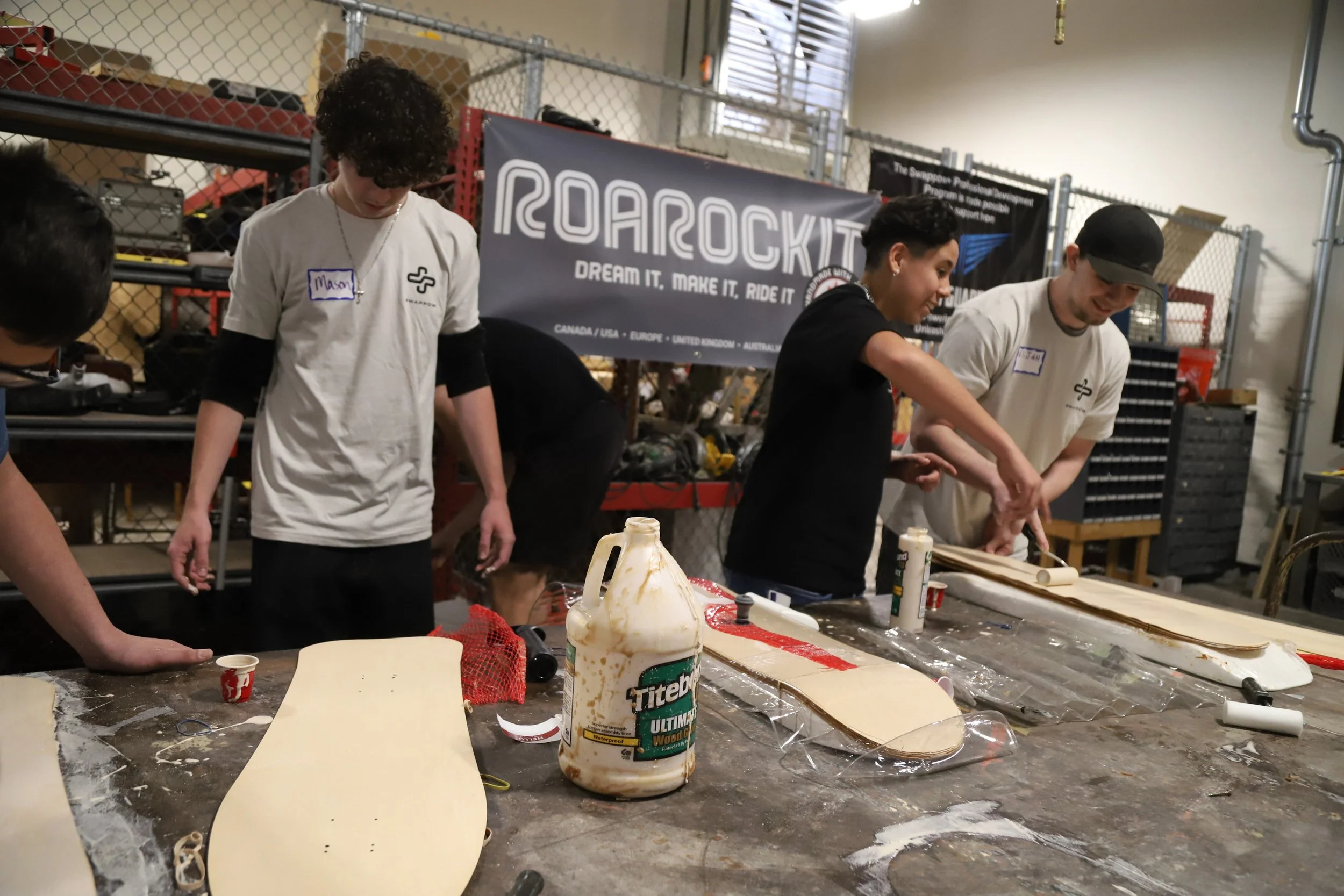
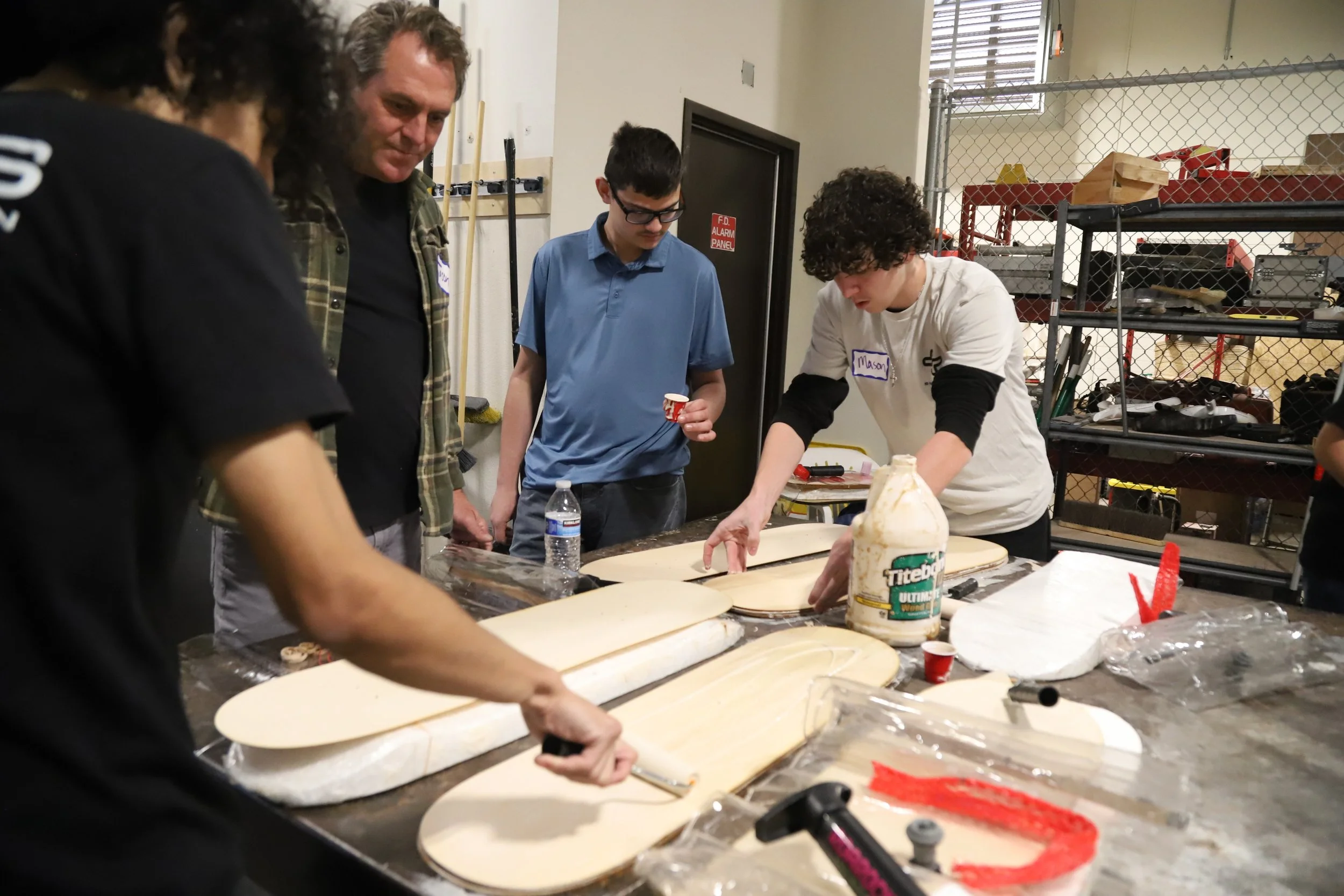
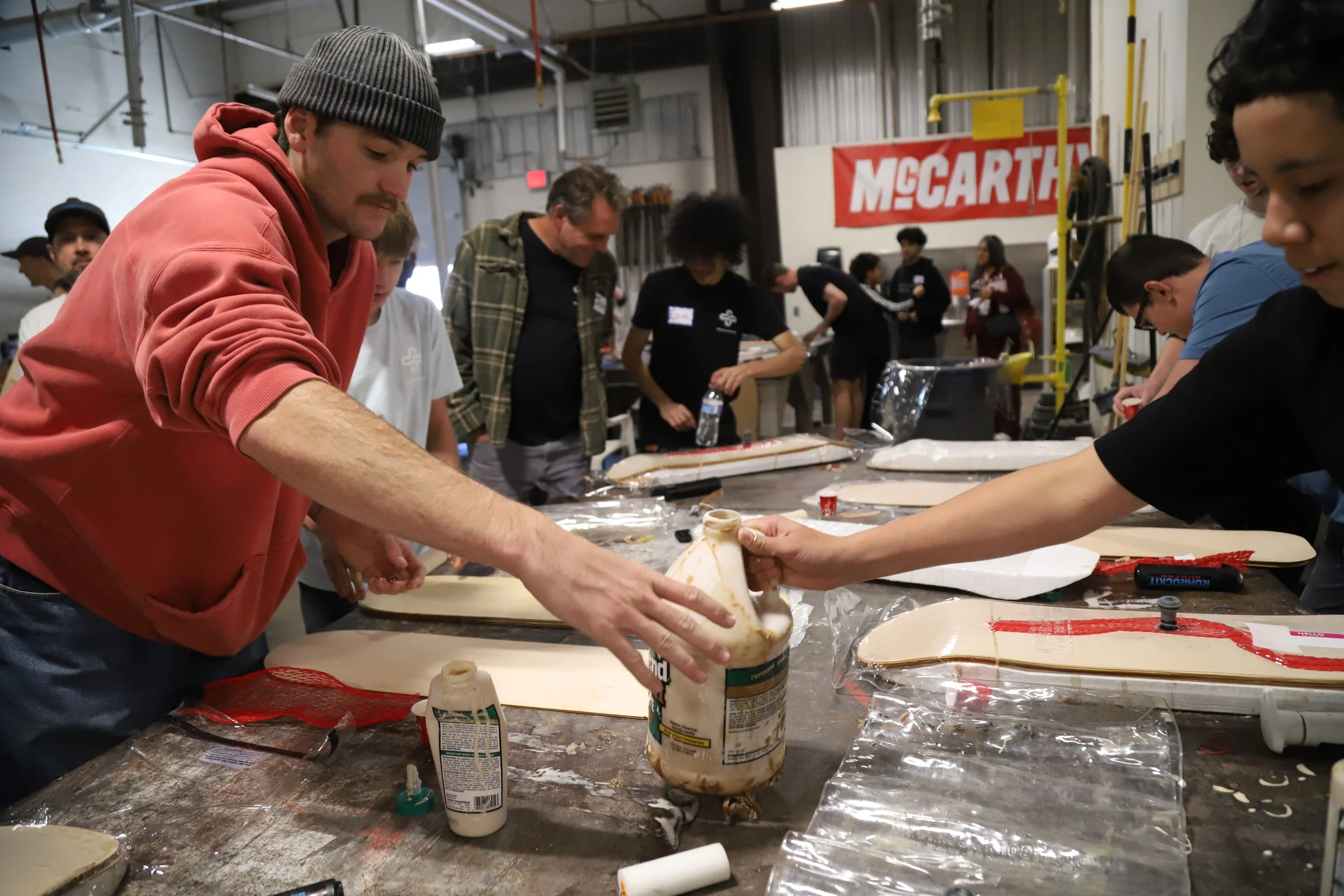
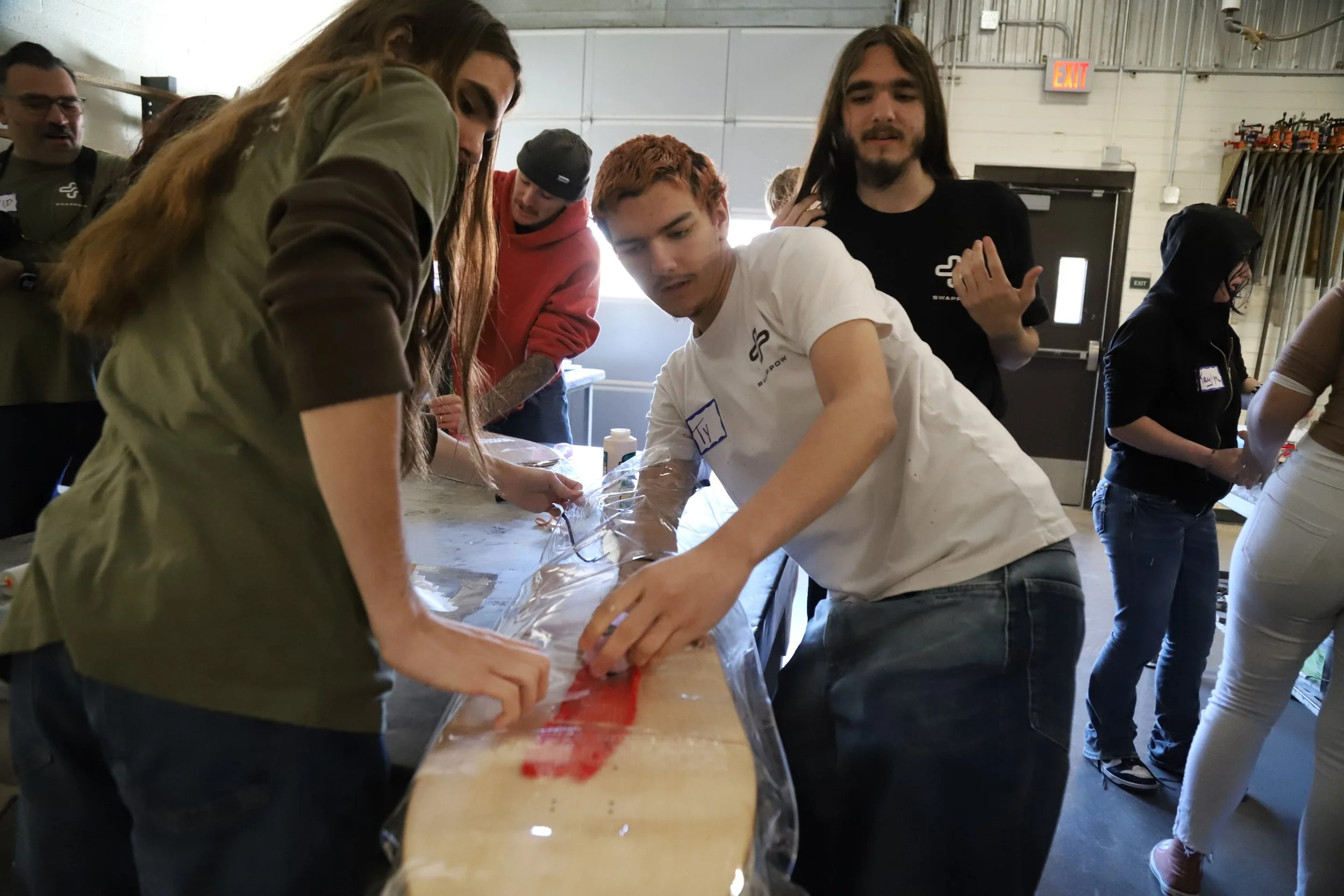
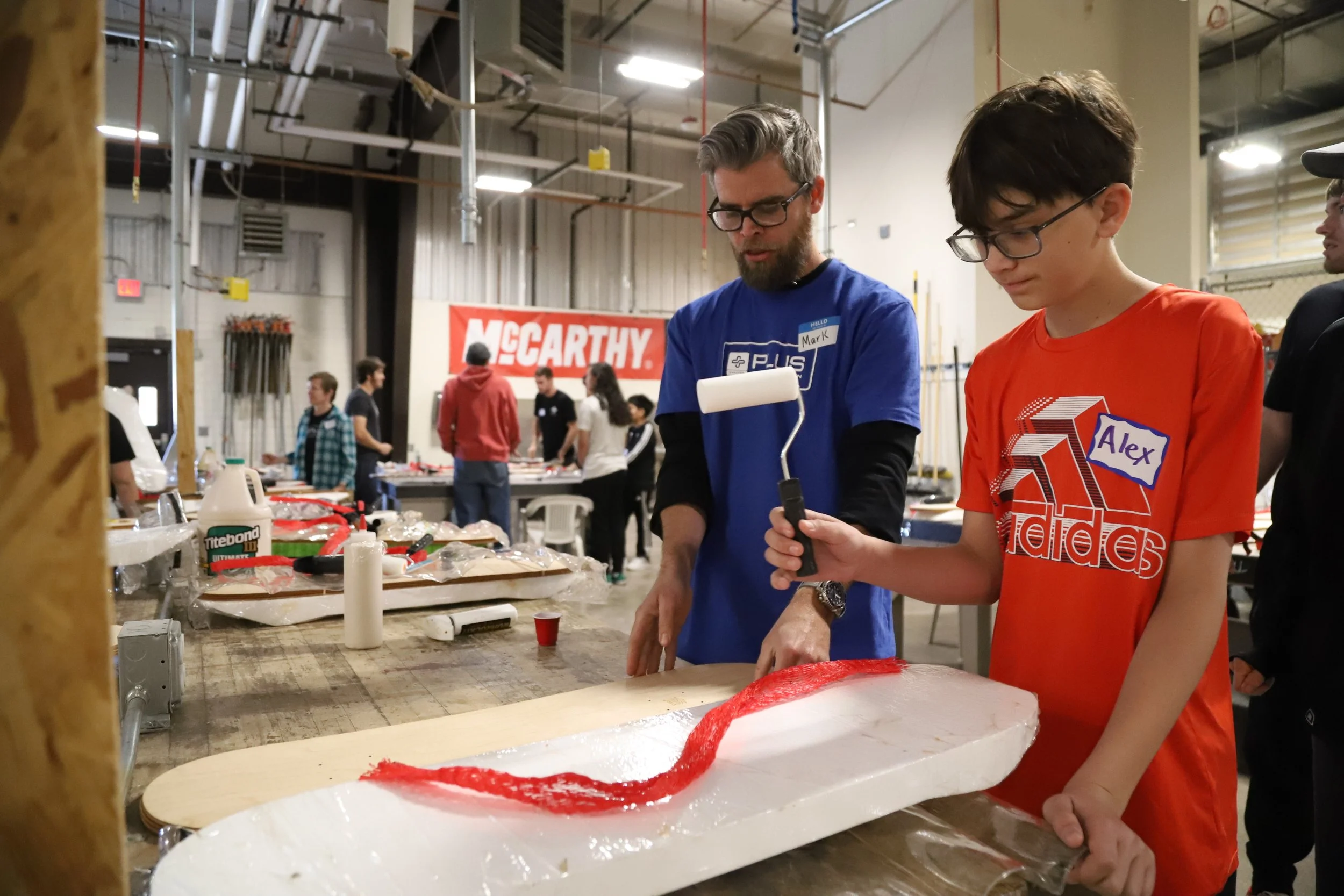
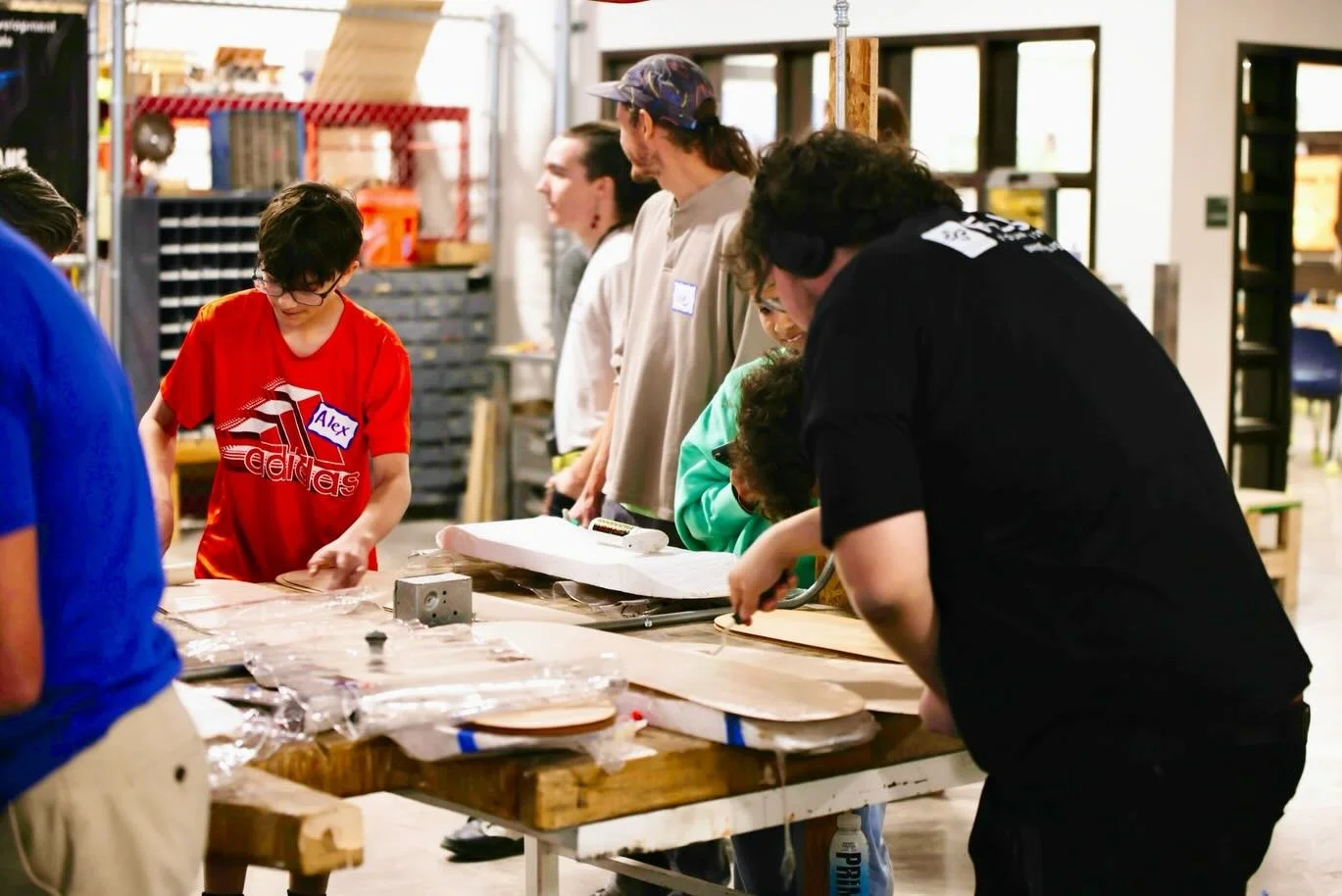
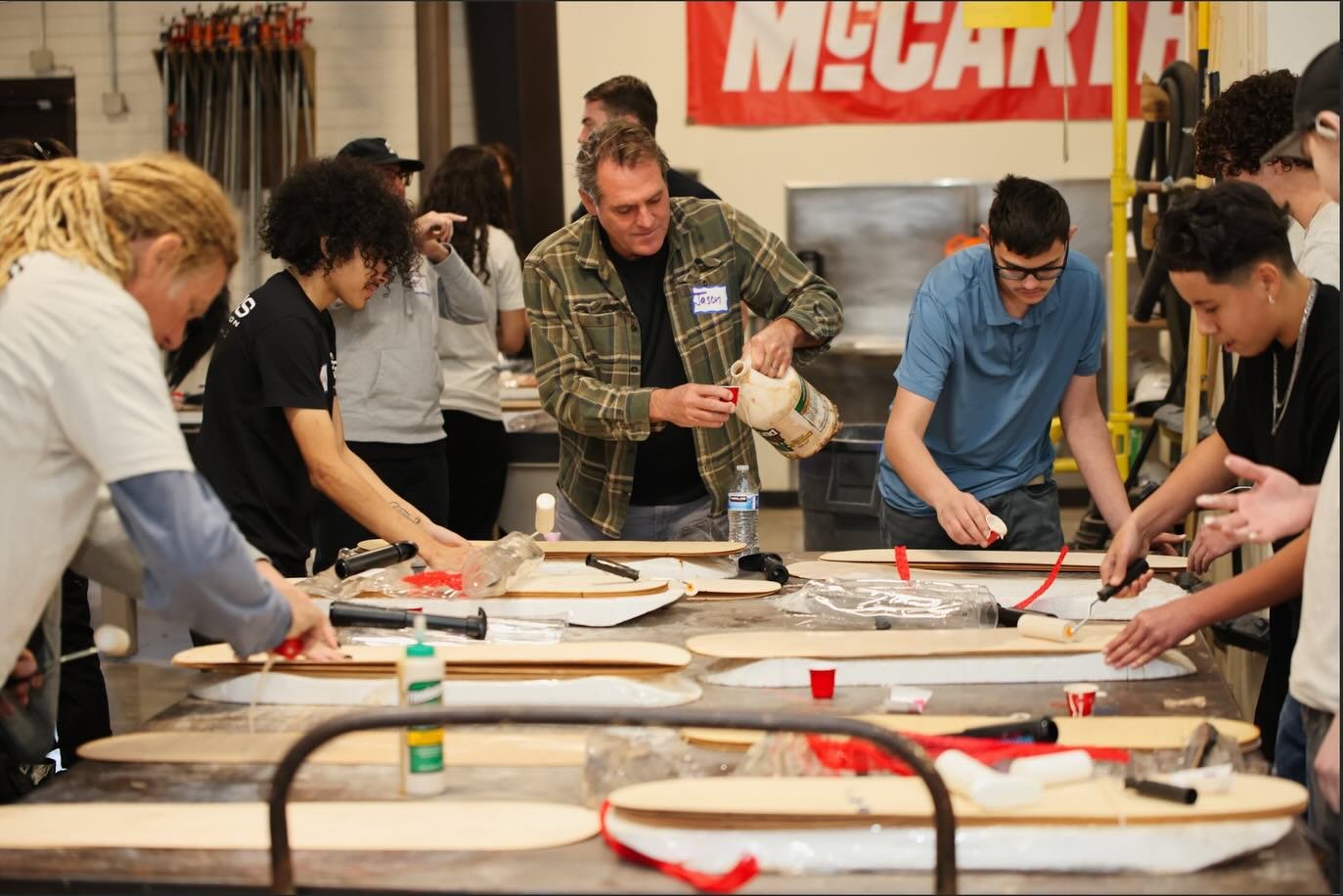
I'd say Roarockit’s technology has been ideal for us because we don't operate out of our own facility, we operate out of a trade school on the weekends. And so everything we do has to be portable in that all of our equipment needs to be easy to break down and transfer to a storage area, and Roarockit allows us to do that. We have this great opportunity to press and shape beautiful skateboards in a way that doesn't require a massive hydraulic press, and there's something really cool too about the participants getting to touch every part of it and have a connection to every phase of the process. Whereas if we were to press the boards ourselves for them, or utilize, I guess standard practices for board manufacturing, there'd be a little less hands-on opportunity for the participants. So we feel pretty thrilled to have used the Roarockit products successfully for four years. Overall, the whole system has worked very well for us, and we don't have any plans to discontinue using your product because it fits our needs very well.
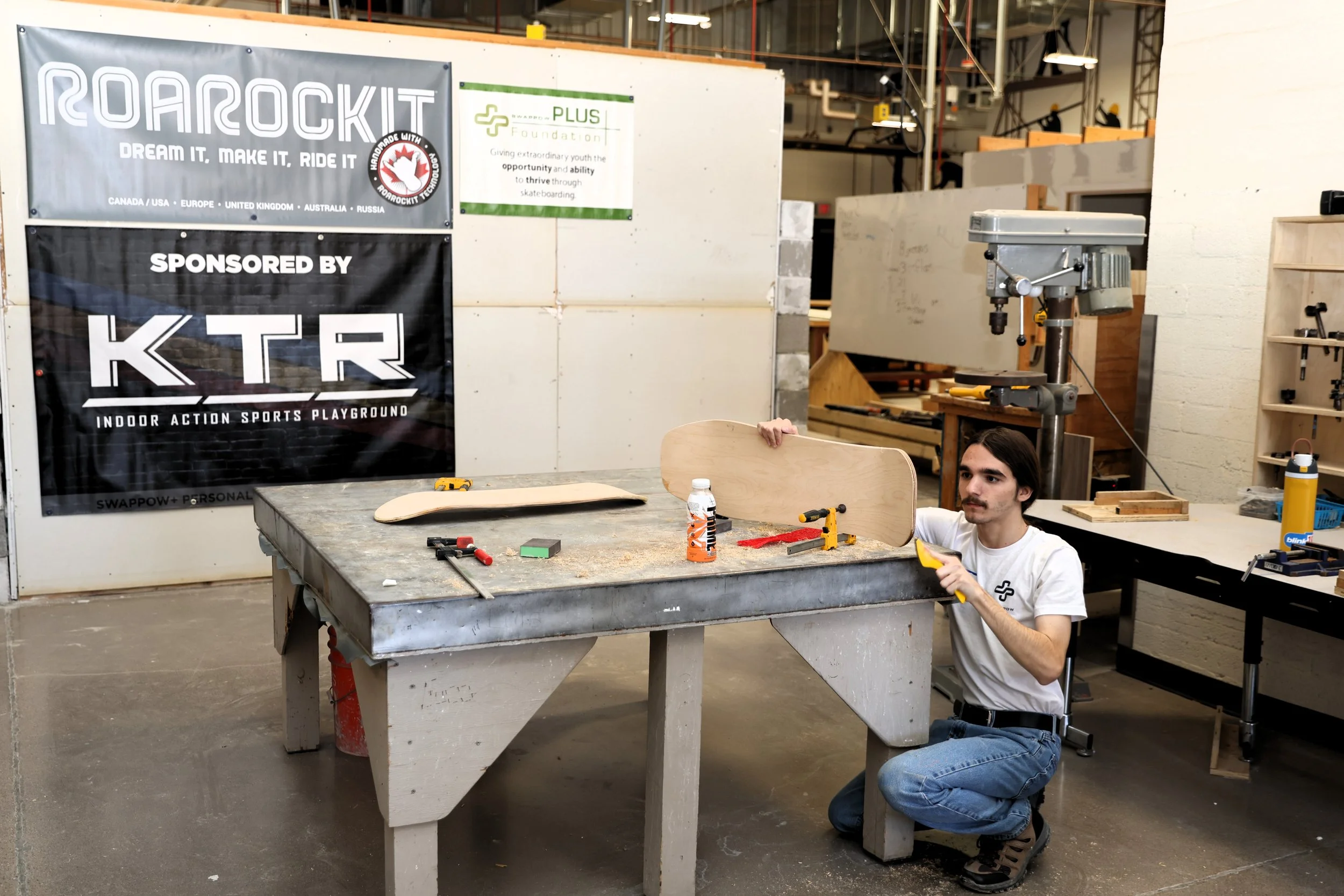
How do you feel this program benefits the foster youth? How do you work this into your curriculum and how has it developed over time?
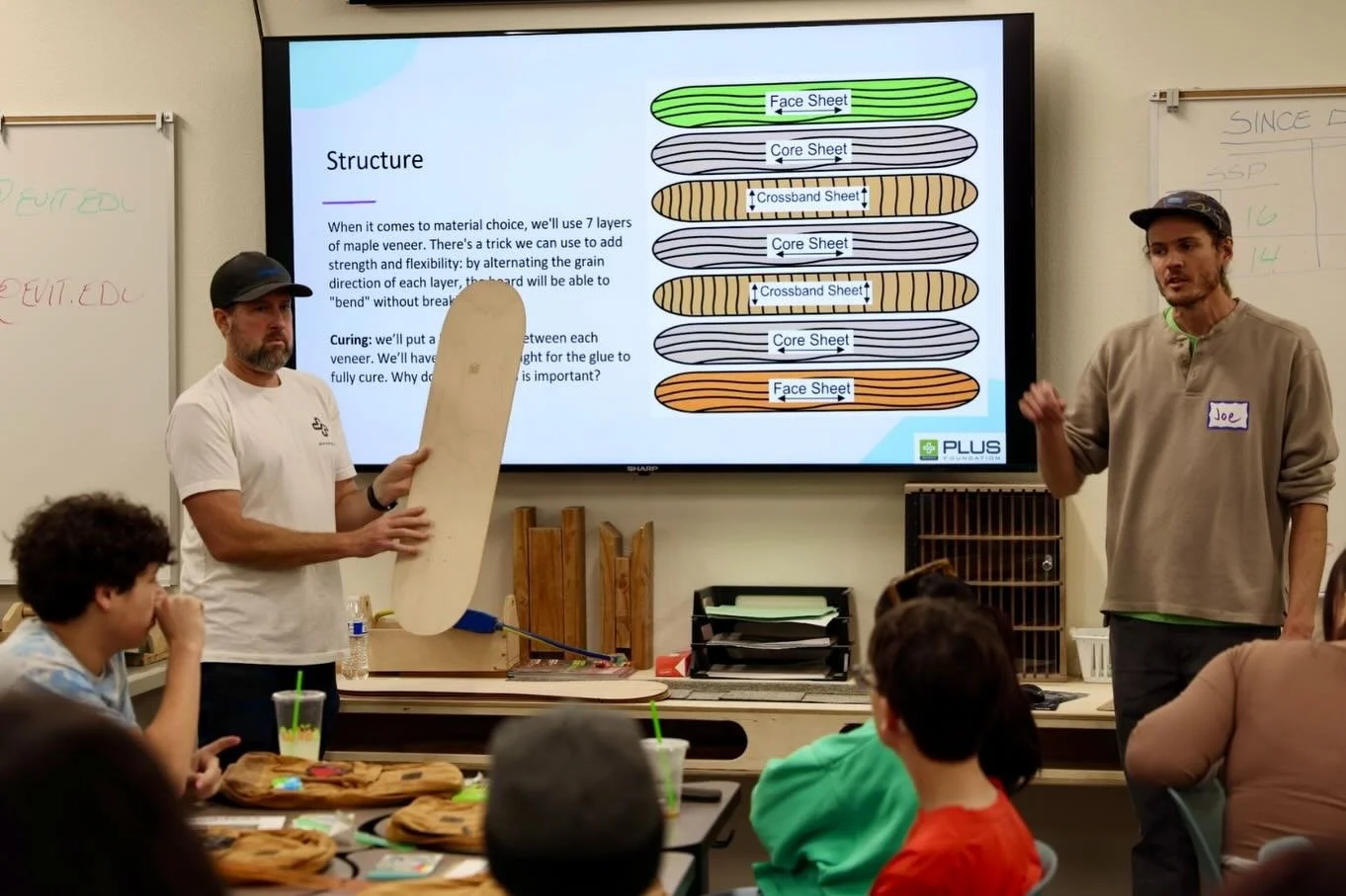
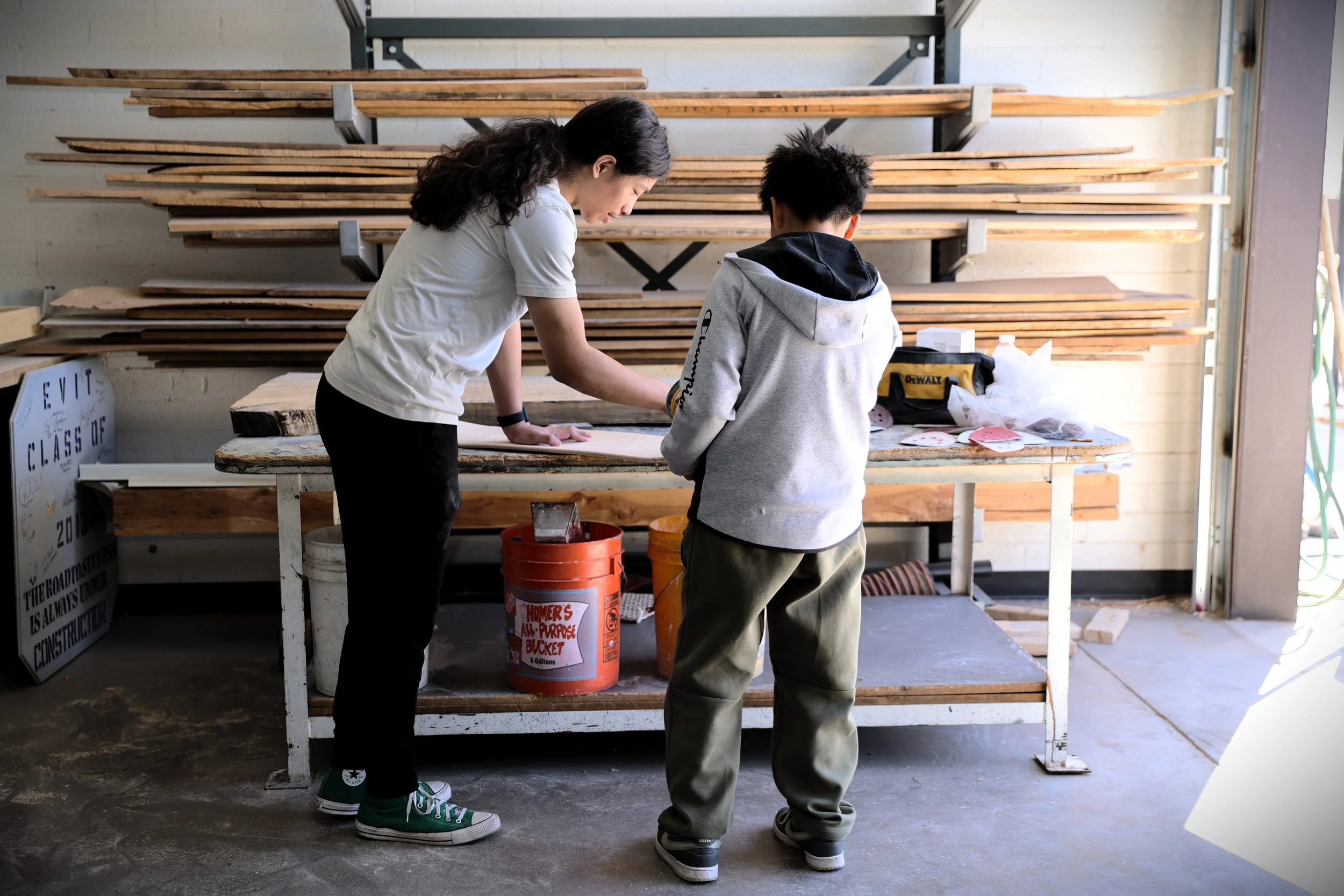
Yeah, it has developed and changed over time. We just thought it was a natural extension for our participants who were already doing personal development programming through skateboarding. And so it was just sort of an easy trajectory towards professional development through skateboard manufacturing and through viewing the skateboard from the perspective of a business owner versus a consumer. We just thought it was going to be a fun thing, you know, for our participants to learn a spectrum of skills while manufacturing their own skateboards. What I didn't anticipate was that it was a way to bring in kids who would never step onto a trade school or university campus. Kids who wouldn't ever view themselves continuing their education or pursuing certifications. We're bringing these kids, this sort of untapped group, onto a campus, and they're actually getting plugged in. So not only the participants, but even the volunteers are coming to this trade school, looking around and realizing that this program has something for them, or the actual school does. I think what happens with things is you start to just do it, and then it takes on a life of its own. During the second year of us offering the program at EVIT, which is a trade school, the Department of Child Safety and Arizona Friends of Foster Children Foundation started to dream and build an on-campus residency for youth who are aging out of a foster care to live on campus at EVIT, and to pursue a certification at the school. We happened to be on the campus before that was even there, but it was a natural partnership for us to then start to partner with this residential facility, called Hope Tech, and EVIT to empower this specific group of foster youth. So we're having all these kids now who are likely to struggle in their lives and their careers, come be a part of a 12 week program with us, and then stay, live on campus, and start to pursue certifications and in some cases even actually be employed by the school. So that was an unexpected byproduct of us hosting a 12 week manual skateboard manufacturing workshop.
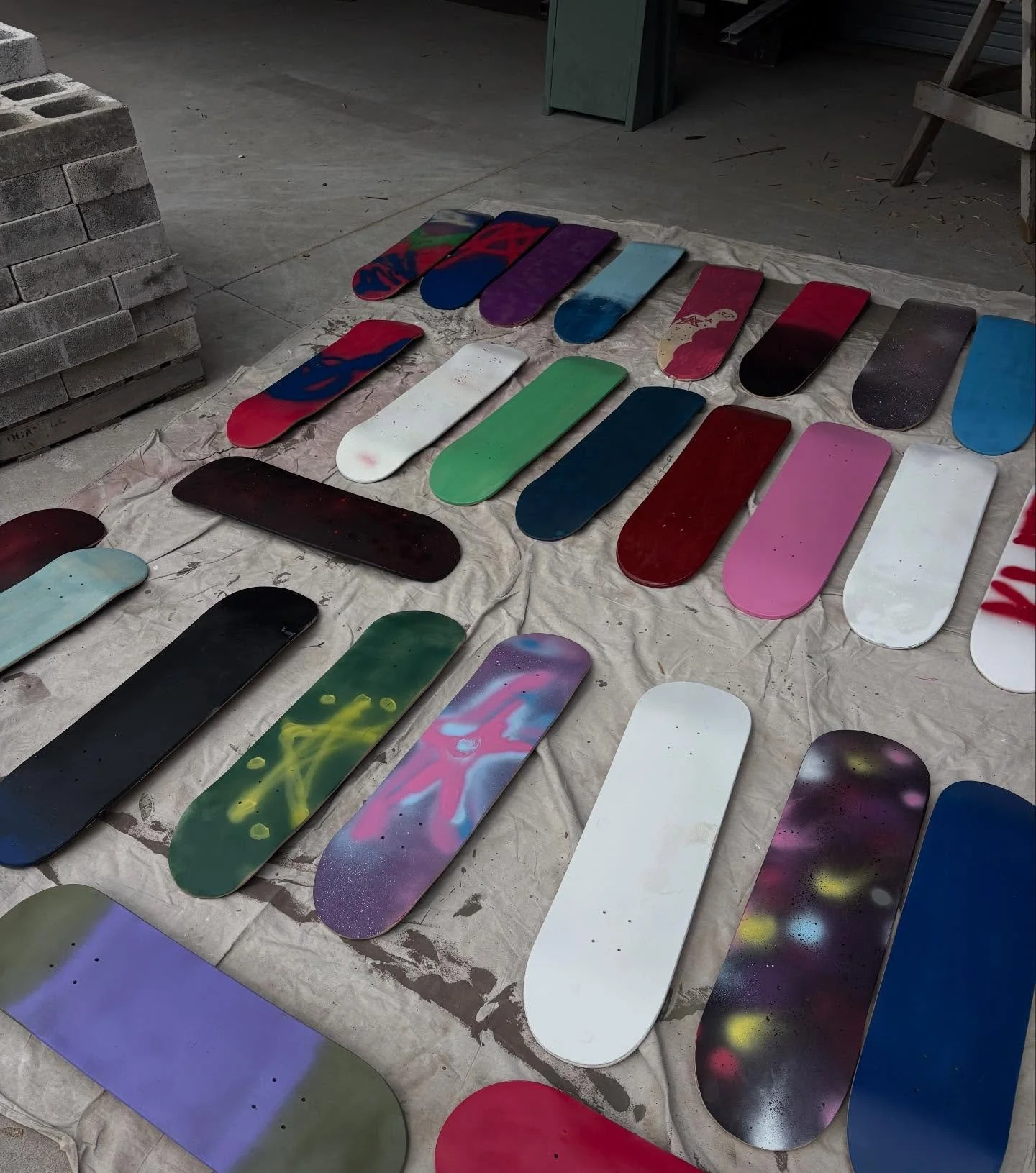
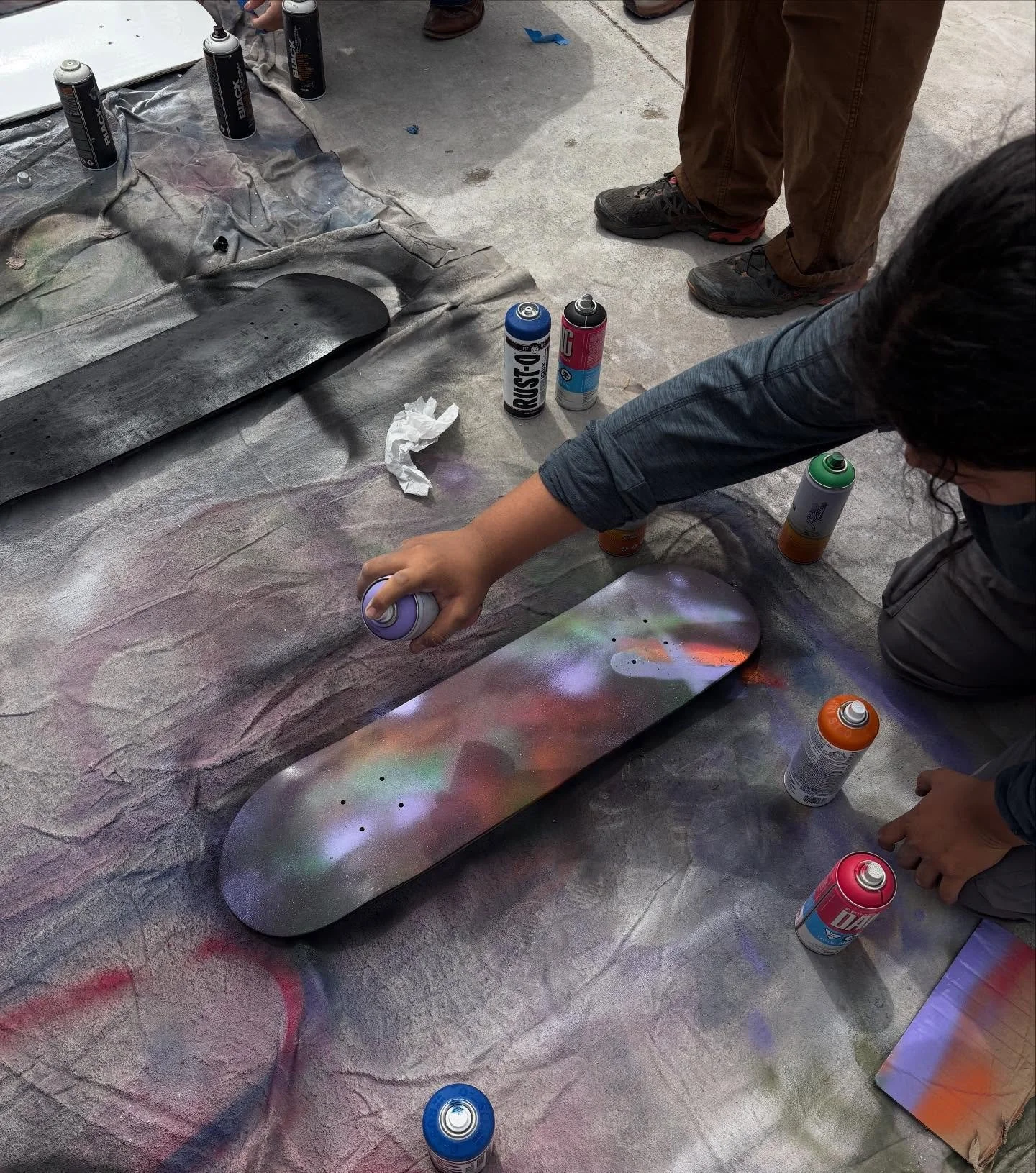
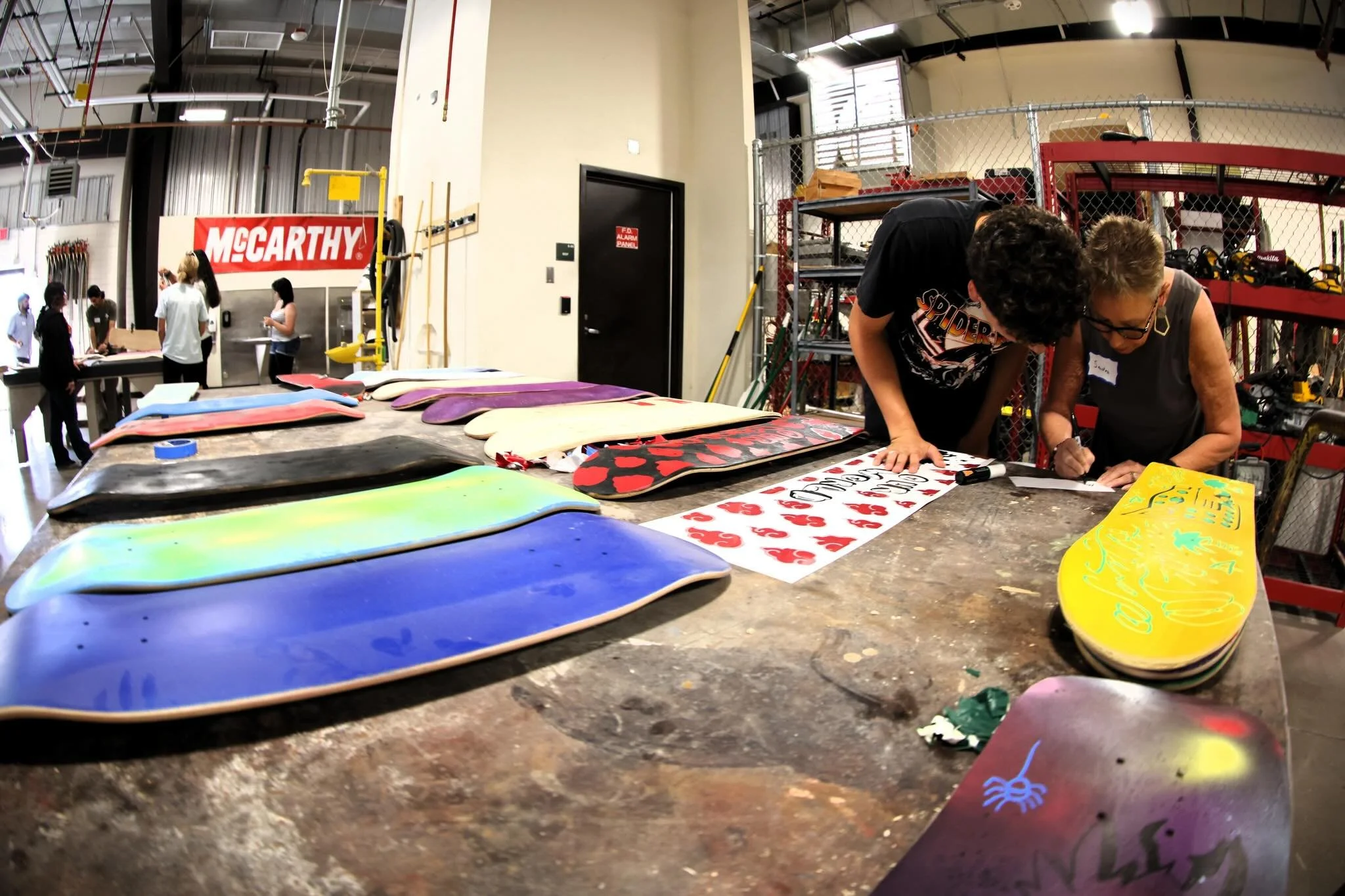
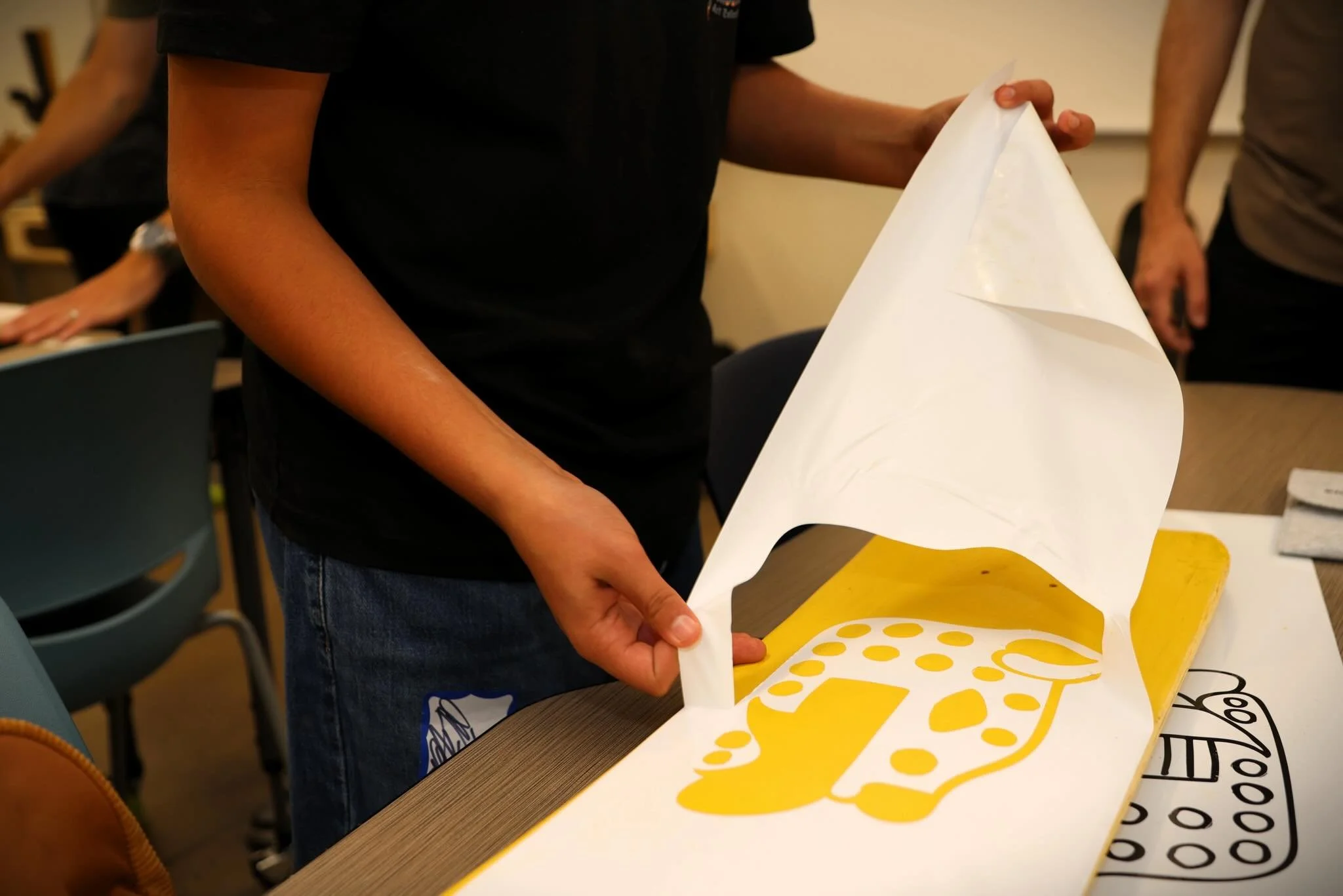
Another thing that I didn't realize or didn't anticipate was the power of the skateboard graphic aspect of our programming. It became very apparent that for our participants it was almost like a vision board or a canvas in which they put their hopes, dreams, and ambitions, and make it more tangible. It's become that for us. The skateboard graphics we design, in a way, have become a vision board and a reference point for something to pursue. We've also had participants process grief and trauma through their skateboard graphic. This became so apparent that this year, we realized, in a way, we're doing art therapy. And so for the first time, we invited a licensed art therapist to come to our sessions and to actually teach us best practices of art therapy, so that our participants can heal and can manifest their visions on their skateboard graphics. Noel, who has this art therapy practice, is just excited and wants to partner with us so much so that she's presenting opportunities this summer for some of our participants to go through their summer art therapy program. So we didn't anticipate the therapeutic benefits of what we were doing and the actual real life tangible, vocational training benefits that was going to happen from it.
And now the school, EVIT, is really proud of what we do. So it's no longer really begging for permission to use their facility, it's more “When are you coming back next year, and let's make sure we secure the dates”. It's become part of their repertoire of high quality, world-class programming that comes through their facility.
So yeah, it has been the best case scenario in that situation. It just continues to get better each year, and as the program gets more refined, it falls on the shoulders of more people, so it's less of a lift. Our staff is growing and our staff is doing a remarkable job of taking on the actual event execution and I feel like there's all sorts of other opportunities.
We have an opportunity to actually showcase our completed skateboards at Sky Harbor Airport at one of the terminals. We're not quite ready for that, but I feel like that's the direction we're going; that the final product of our participants can ultimately be showcased to an international audience. I got asked today, “When are you going to have these boards ready for sale?” So I think there's almost a full-time job for somebody and a full for-profit entity that could come out of this eventually, and ideally it would be a former participant that could make a career out of it.
Stories matter, too. Our participants tell their stories through their board graphics, and in doing so, we're validating their experiences and giving those stories meaning, purpose, and dignity. When someone has faced hardship or trauma, having others take an interest in their story can help them see themselves not just through what they've endured, but through their resilience and growth. That's what we're helping our participants do, recognize the value and strength in their own journey. So yeah, all sorts of great things are happening. The Roarockit kits and the process of working, shaping, sanding, refining wood, has had a few of our participants want to pursue a career in construction, framing carpentry. So, yeah, all sorts of great unanticipated, beautiful outcomes!
What has been the youths' reactions to getting to build skateboards? Do you have any special stories to share of the effects it had on them?
Yeah, I mean, we work with kids who are a tough crowd sometimes. They’ve had their hopes and dreams dashed so much that it's almost like you can just sense that they don't care anymore, and don't get their hopes up anymore. This year we had a kid who was just kind of like that archetype of the type of participant we work with. He even told me early on, I don't do anything I don't want to do, and he came to almost every event. He had sort of that guard up and was really reluctant to open up to be at all encouraged, but I could hear him on the phone talking to somebody, talking about how proud he was that he built his own skateboard and created his own graphic. I could just sense that he was really proud of what he had done. He’s probably not going to share that with us, but he was sharing it with somebody. And so I think, especially those kids who skateboard, they feel really proud to build something and something that represents something they love so much and to make it themselves. So that's just one story.
How have you been able to continue to secure funding for this amazing program?
First and foremost, the program has to resonate with the kids. Otherwise, we should stop doing it. And secondly, the story has to resonate with the community enough so that they want to support it. There has been a resurgence of the importance and value of the trades, and there's been a huge amount of attention given to workforce development, especially workforce development in Arizona where industries are blossoming, and need to be staffed by thousands of employees. This has led to more and more people realizing we're not just teaching foster kids who are at risk youth, how to skateboard, which has value in and of itself, but we're actually equipping participants to develop tangible skills that will allow them to be productive, contributing members of a community. There’s that old quote: “an ounce of prevention is worth a pound of cure”. Our community, especially the philanthropic community, is increasingly recognizing that we have a choice: we can invest in young people through training, mentorship, and opportunities that lead to meaningful careers, or we can pay for the consequences when those opportunities are absent, through incarceration, law enforcement, rehabilitation programs, and other costly interventions. And so I think everyone would agree that it's much better to invest in these kids in a positive way that will help them develop the skills needed to make a living for themselves, versus ways to to handle crime. A lot of people don't know what to do with these kids. We do. It starts with just creating an environment that's safe, welcoming, sincere, and authentic, and our kids come and they find that they belong to something and then they almost unintentionally learn skills and they get excited and passionate about their career and their future. The community wants to support that. Not only do they just care about these kids, they care about the future of our society. What do we do with a bunch of kids who aren't employable, who have self-destructive behaviors? It's almost an impossibility. So let's train them early on, and let's support them in a way that they are not only making a better life for themselves, but making a positive impact on the community. And I've said this before, but our kids are extraordinary. They've been through so much, and they have a resilience and an ability to adapt that makes them leaders. If their basic needs start to get met, they are leaders because they understand and recognize how to deal with adversity. Fortunately, groups like Valley Guardians, Legacy Foundation, Social Venture Partners, have been very generous with their support, and then Arizona residents who see the value of our work and want to contribute to it through the Arizona tax credit. All of those areas have made it possible for us to stay around and continue to operate.
Have you, personally, been skateboarding more or less since starting the program?
That's a sad question. Yeah, I skateboard way less now than I ever did. I mean, my physical body has taken a hit in the past eight years since I've started with Swappow. But, I've taken the same passion and drive that I had for skateboarding and I've applied it to establishing and running this organization. We have a great support of leadership: our board of directors, our founder Joe Dunnigan, but a lot of the creative efforts and hard work have rested on my shoulders. And so yeah, I skateboard less but also, like, it's okay to age. It's okay to, with age, change interests, and to evolve. I think I'd be sort of sad if I was still a really good skateboarder, and had atrophied in other areas. I feel pretty good that I'm actually blossoming in my career and in community leadership, and my skateboard skills have diminished. It would be a different story if my marriage was starting to fail, you know, or if I became a really bad parent, a dad. But those aspects of my life are still strong and thriving, and so as I approach my 50s, I think it's okay to let go of the level in which I skateboarded and recognize that it's the new generation's turn. So, I think I'm okay with that, honestly.
What would you consider to be your greatest success over the last four years when it comes to Swappow PLUS+?
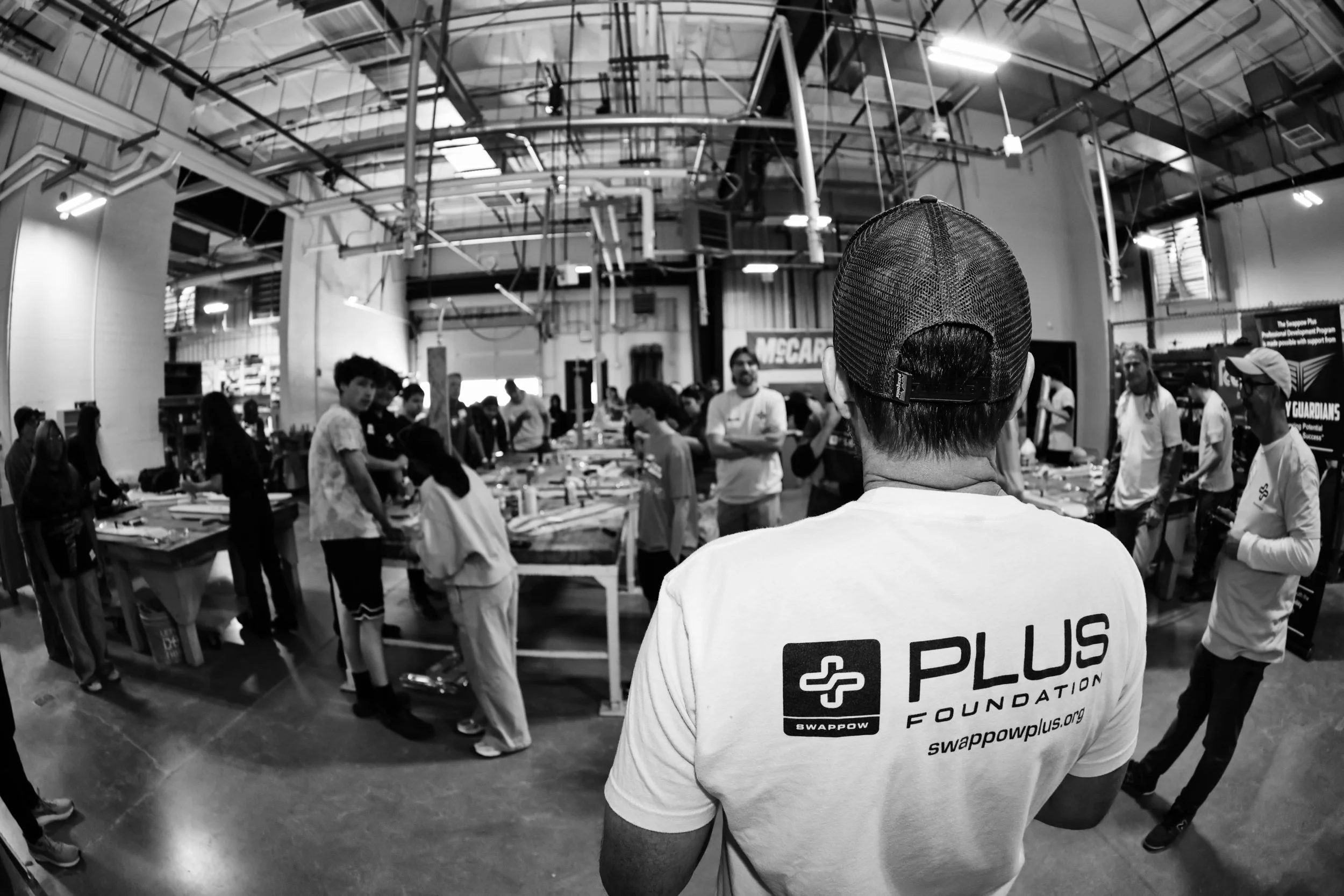
We had a graduation event last Saturday, and we had a kid who identified as a loser. His graphic said, in big letters: LOSER. He said he's just always felt like a loser. He's always been told he's a loser, and he's sort of just embraced the label. He said this on stage in front of almost 200 people, and it took everything in me to restrain myself because I had access to a microphone. But I'm glad I didn't say anything because this young man's assigned coach was Bryce, who was a former participant, who's evolved through our program so much that now he's a coach and a leader on our Youth Leadership Council. He's come back to help others. And he, in such a poised, eloquent, calm manner on stage, said to this young man, “I know how you feel. I identified as a loser for many years and I no longer feel that way about myself. I have a strong sense you will also feel this way, that you'll realize that you're not a loser and that your life has value and meaning, and that you are important and you bring to this world things no one else can”. Bryce spoke to our participant in a way that I couldn't, because he could truly identify with this young man, and encouraged and supported this kid who is struggling with low self esteem. I felt like that one vignette was a small indicator that it's being transferred, not just us helping kids, but the kids that we help are now helping others. That's the true way you make a difference in the community and the world: by equipping others and helping them believe in themselves so much that they then help others believe in them, and that is unstoppable. I'm most proud of the participants who have grasped the understanding so much that they're no longer just a recipient. They're also now delivering the programming to others in a better way than we could ever do. So I'm watching kids' lives, trajectories that have been changed and they no longer view themselves as a victim, and they no longer view themselves as a loser, but they actually recognize how extraordinary and special they are. So I'm most proud of that.
Thanks again for your time Michael! Any last words for the viewers back home?
Well, we also believe that rising tides lift all boats, and so we're not just an organization that's operated alone and done great things - this has required literally thousands of people, and hundreds of organizations like Roarockit that have come alongside and allowed us to do this work. I said this at the graduation event, but a lot of resources and a lot of energy and effort and a lot of individuals, companies, and organizations have joined together to make this work possible, and it's expensive, but we tell the kids they're worth it. They're worth all of our efforts and they believe that. We view Roarockit as one of the key partners that has made this work possible. Alongside them, organizations and supporters such as Arizona Friends of Foster Children Foundation, Valley Guardians, Legacy Foundation, John Blue at BlueTek, Steve the Logoman, Social Venture Partners, EVIT Hope Tech, hundreds of volunteers, hundreds of individual donors, and the early champions who believed in this vision before it was proven have all played a vital role in making this a reality.
Because so many people have contributed to the success of this work, the positive outcomes belong to all of us. We have shared in the effort, and we should all share in celebrating the impact.
Learn more about Swappow PLUS+ with these links below!
Taryn O'Grady,
Roarockit Skateboard Company