Marcus McKinnon has taken his school’s build-a-board program to the next level! Building a skateboard at his school has become a coveted experience by the students, with them all looking forward to their chance to finally build their own board.
Over eight years ago, we interviewed Marcus during the first year of his skateboard building program. Since then, he has moved to a new school and continued the program, creating a dedicated workshop space, developing new ideas, and building countless boards with his students.
Read along as Marcus reflects on his teaching journey and the discoveries he has made along the way.
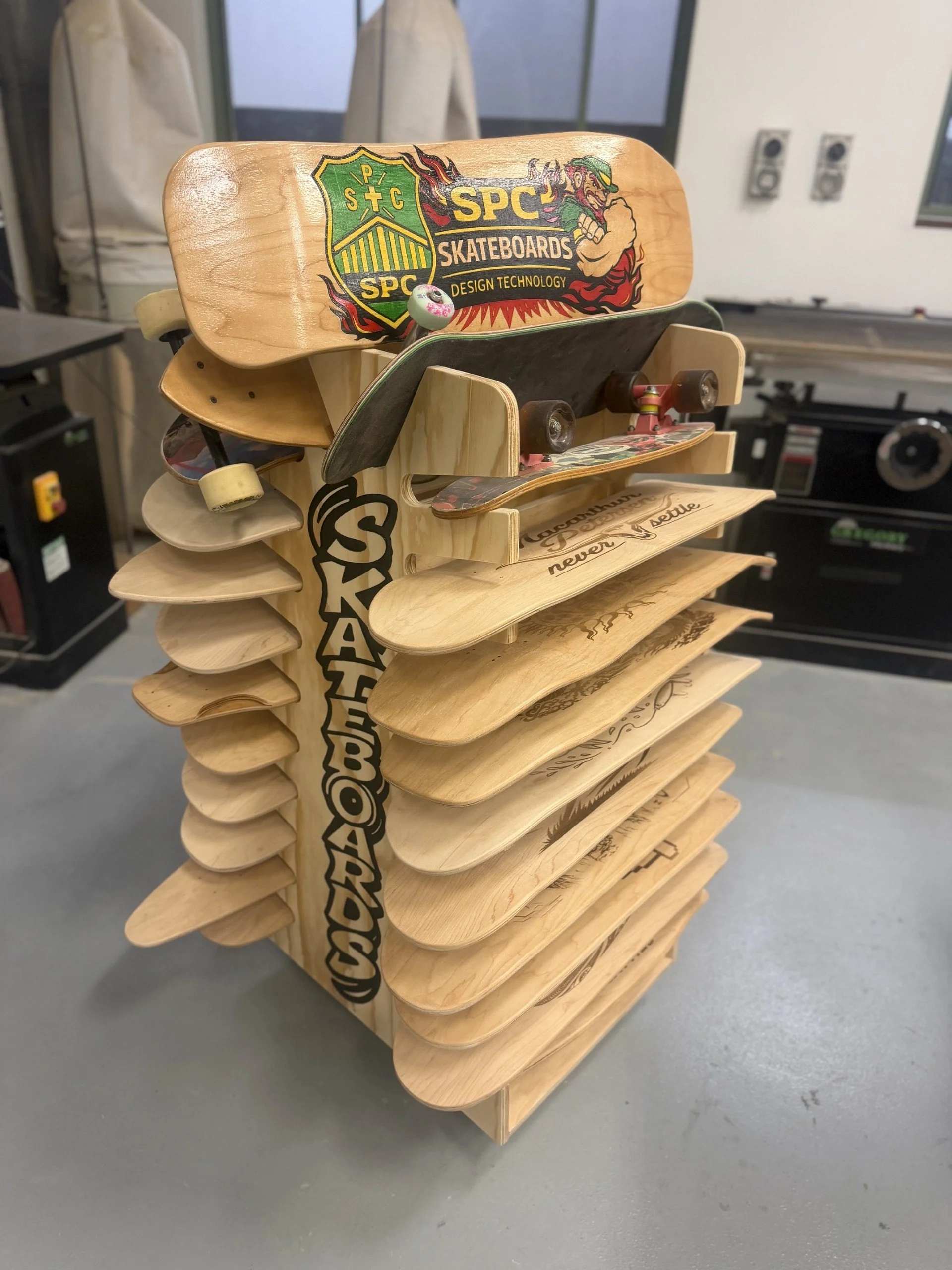
Student Skateboard Gallery
A small snapshot of the many student skateboards that have been created over the years. Every board is completely individual and tells its own story.
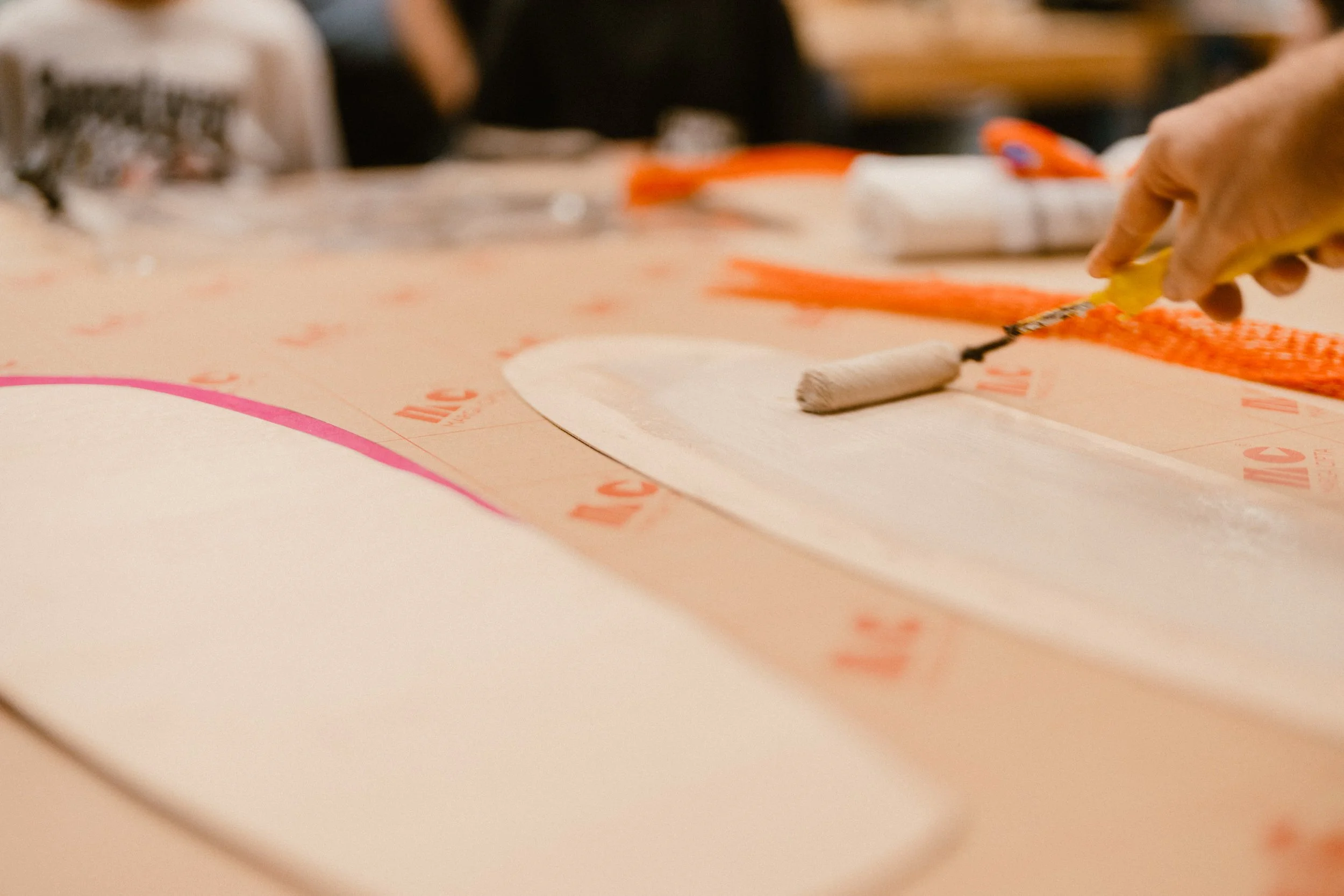
Learning Through Making
Taken during one of our College Open Evenings. Rather than simply displaying finished skateboards, we wanted visitors to experience the process of making one from the very beginning.
IT STARTED WITH A SKATEBOARD...
by Marcus McKinnon
There's something different about a skateboard.
People don't dream about building a chopping board. They don't spend weeks designing graphics for a bookshelf or proudly hang a coffee table on their bedroom wall. But a skateboard is different. It carries identity. It's art, engineering, craftsmanship and personal expression, all wrapped into one product. Whether you ride one or simply admire them, there's something incredibly satisfying about creating a skateboard with your own hands.
If I'm being honest, that's exactly what drew me to building one and using the Roarockit system nearly a decade ago.
The first skateboard wasn't really for my students. It was for me. I simply wanted to know if I could build one.
Like so many people who discover the Roarockit system for the first time, I was captivated by the idea of taking a pile of timber veneers and turning them into something I'd be proud to hang on a wall, display in my office or simply say, "I made that."
As it turned out, once I'd built one, everyone else wanted to as well.
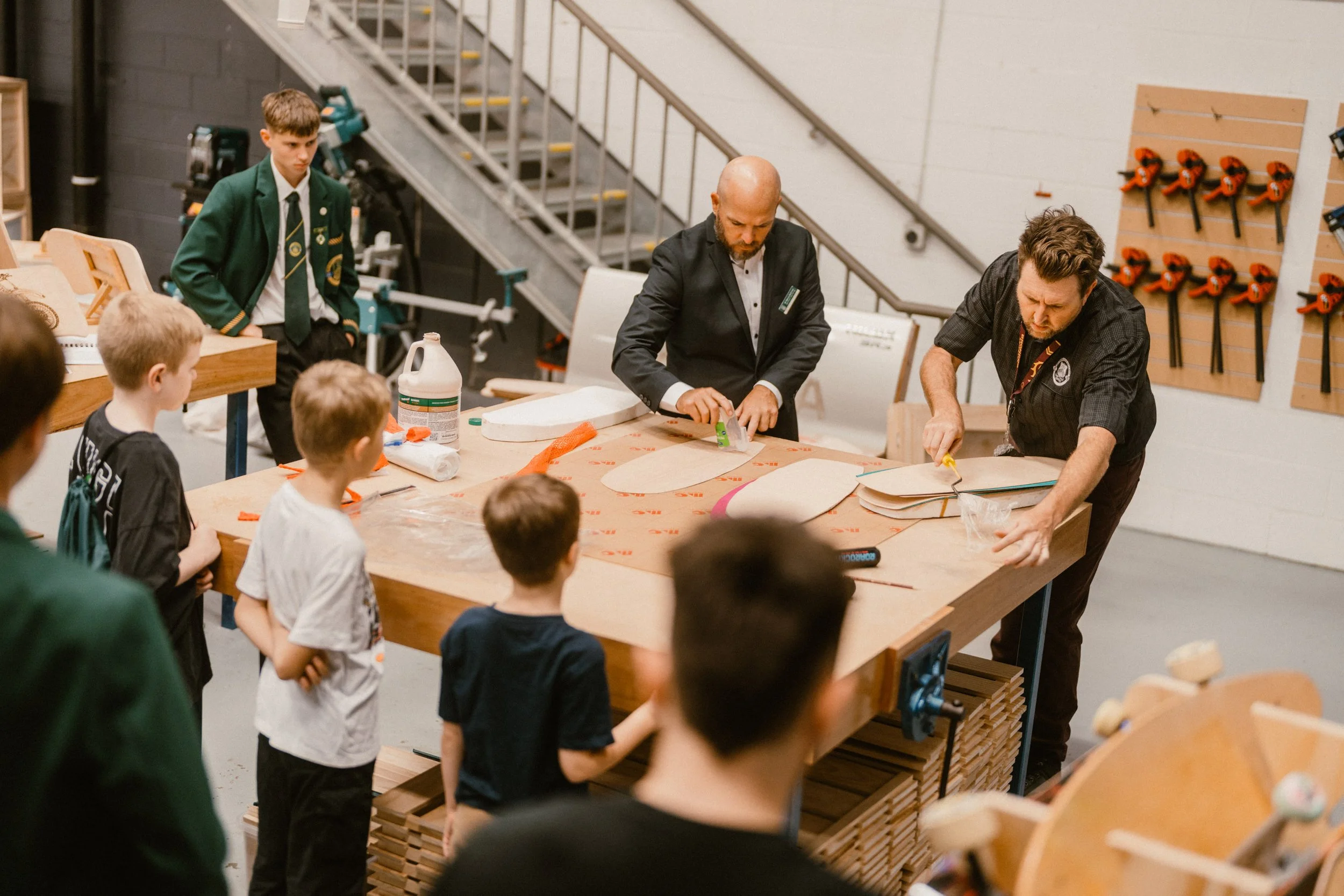
Community Workshop Demonstration
Another photo from the same evening. I like this image because it shows students, parents, staff and our Principal all gathered around the same workbench. It captures the curiosity that the program seems to create.
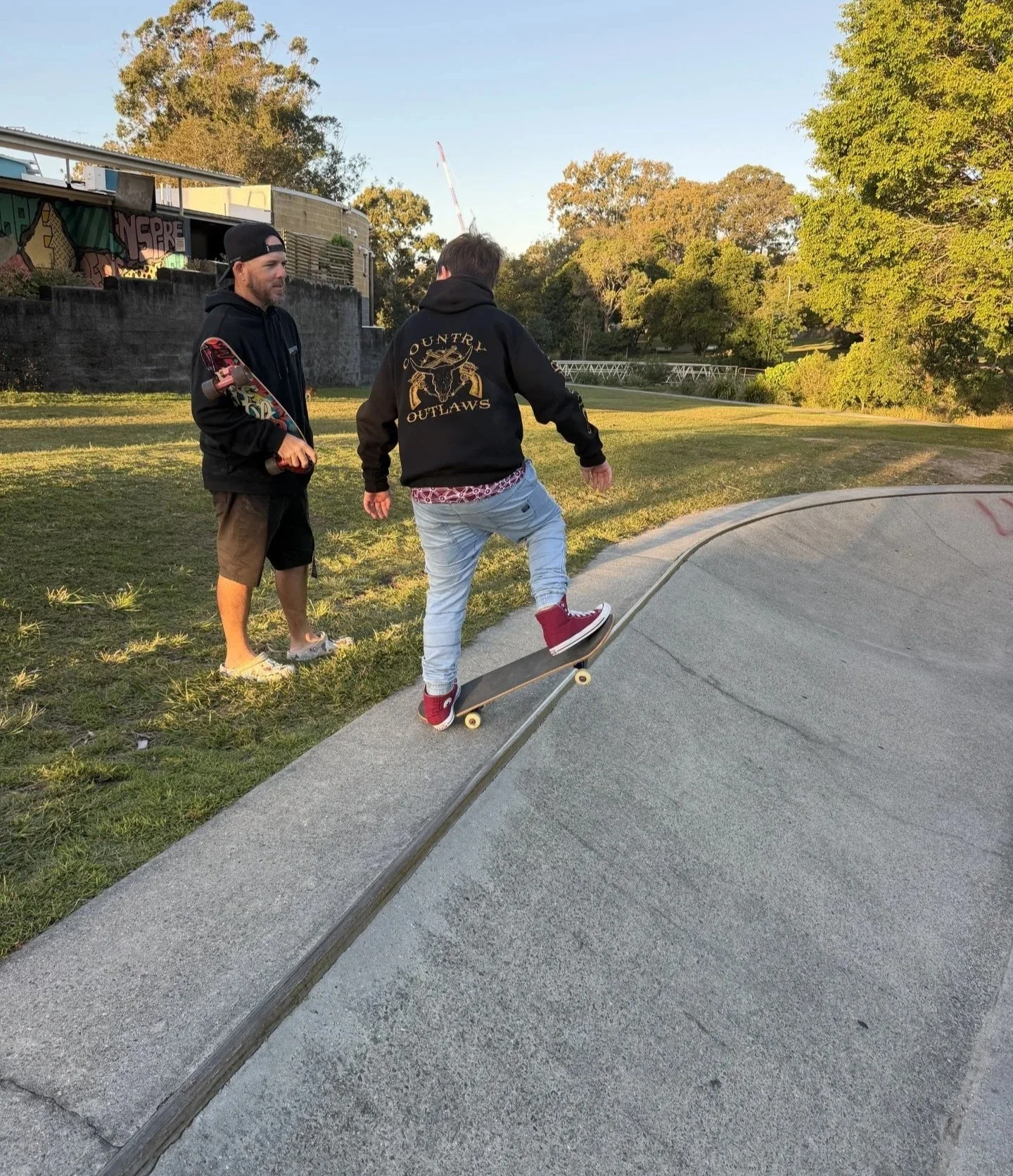
Coaching the Next Generation
This photo reminds me that the journey is about much more than building boards. It's about sharing experiences, building confidence and passing that passion on.
Looking back now, I realise that first skateboard wasn't the beginning of a school project. It was the beginning of a journey.
What makes skateboards so special is that people genuinely want to build them. That's what gives them their power. The excitement is real. People willingly slow down, pay attention to the details, obsess over graphics, experiment with finishes, and chase quality because the final product actually matters to them. That's something very few projects can achieve.
The skateboard has always been the hero of the story.
Without the excitement of building something people genuinely want to own, none of the creativity that followed would ever have happened.
A skateboard is the destination people see. Creative thinking is the journey they don't realise they're taking.
Looking back over the past eight years, I think that's been true for me just as much as anyone else. Every skateboard we pressed seemed to answer one question while quietly creating three more. The workshop became a place where curiosity was almost expected. Every completed board sparked another conversation, another idea or another challenge.
What if...?
It became the question that quietly shaped everything that followed.
I remember one afternoon looking at the beautiful Canadian maple veneer offcuts left on the bench after preparing a press. Throwing them into the bin just didn't feel right. They were simply too good to waste.
I found myself wondering, what if they became skateboards too? Not full-sized decks, but miniature prototypes where ideas could be explored without the pressure of committing to a full board. So we gave it a go.
For a few years those little prototype skateboards became one of the most enjoyable experiments we'd ever tried. Eventually time got the better of us and the idea made way for new ones, but that's never really been the point. Not every experiment needs to become part of the program forever. Sometimes its greatest value is simply proving the question was worth asking.
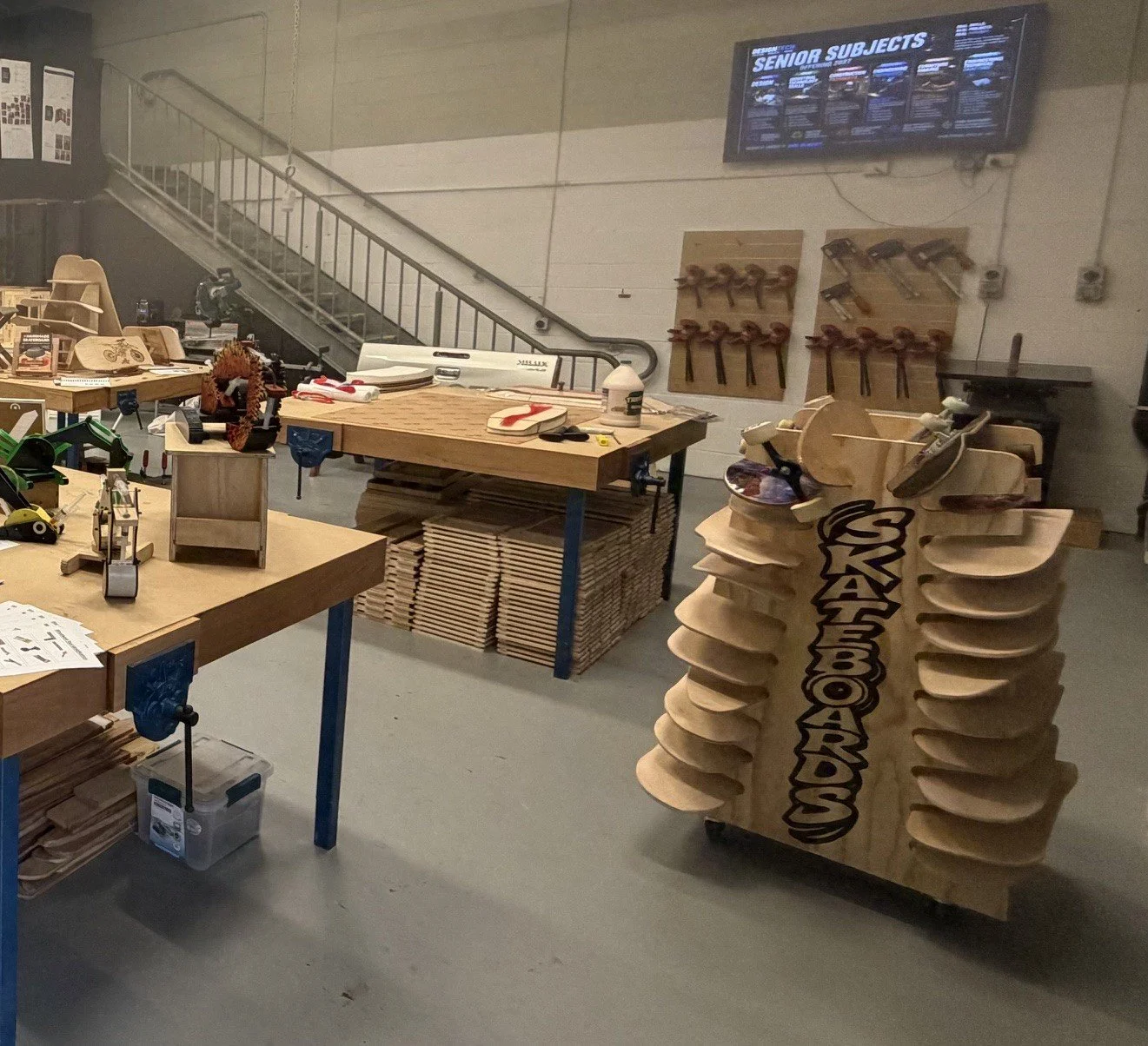
SPC Skateboards Workshop
The program has grown a lot since we first spoke. This is now the dedicated workshop where students design and manufacture their skateboards.
Another question found us in a completely different way.
We'd just finished a skateboard, and for a moment I simply stood back and admired it. The artwork had come together beautifully. It wasn't that I didn't want the board to be ridden—quite the opposite. Skateboards are built to be used. But I also knew exactly what would happen. A few sessions at the skatepark and the artwork I'd spent so long creating would slowly disappear beneath scratches, grinds and years of wear.
That wasn't a problem. It was another opportunity to ask:
What if the artwork wasn't sitting on the skateboard? What if it became part of the skateboard?
That single question led us to experiment with laser-cut veneers, carefully cutting different coloured timbers apart before rebuilding them like a giant timber puzzle. Instead of applying the artwork after the skateboard was finished, the artwork became the face veneer itself—embedded into the construction of the board.
To our surprise, it worked the very first time, and it looked incredible.
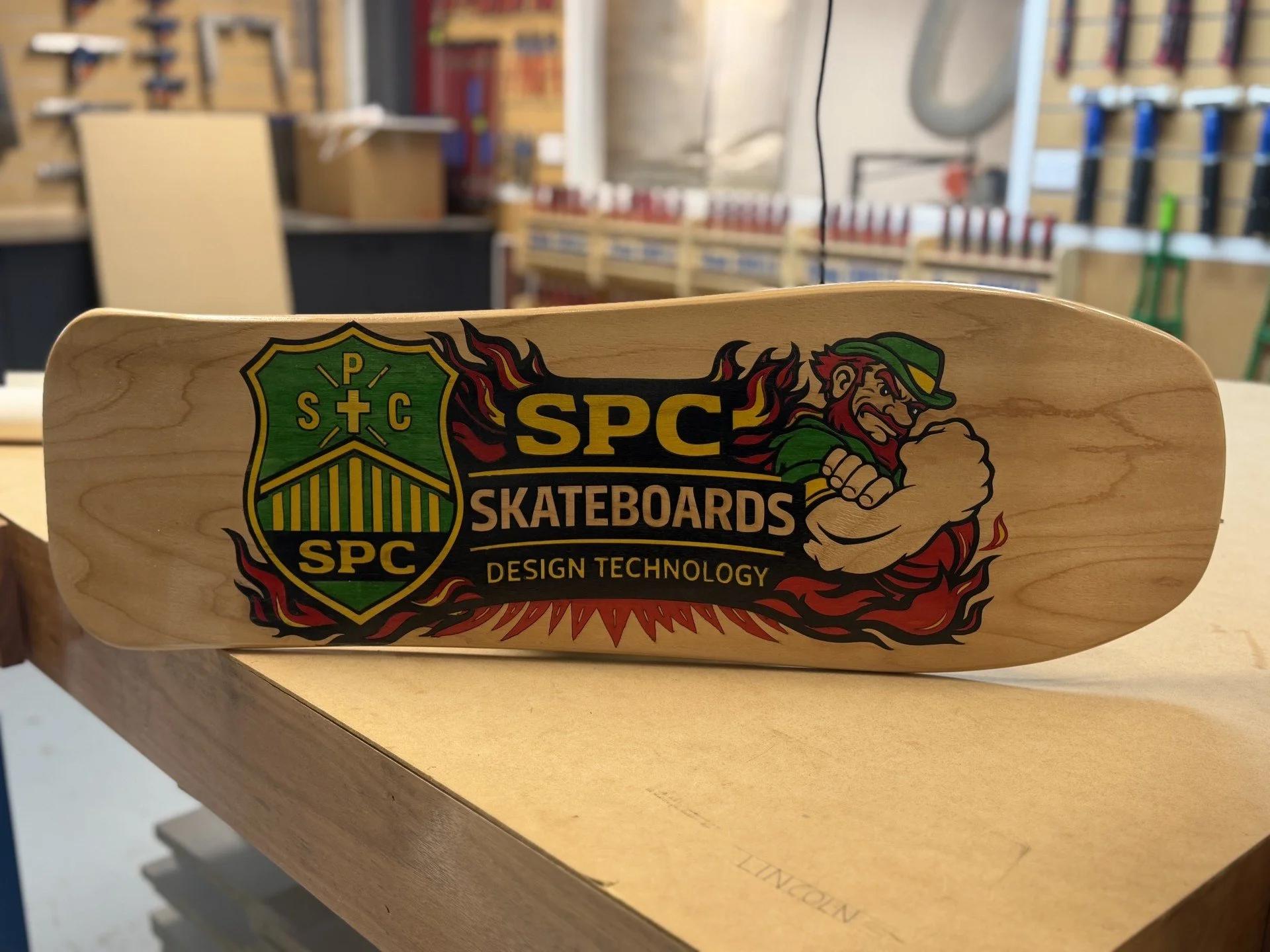
SPC Signature Deck
This board uses laser-cut veneer artwork that becomes part of the skateboard itself rather than being applied afterwards.
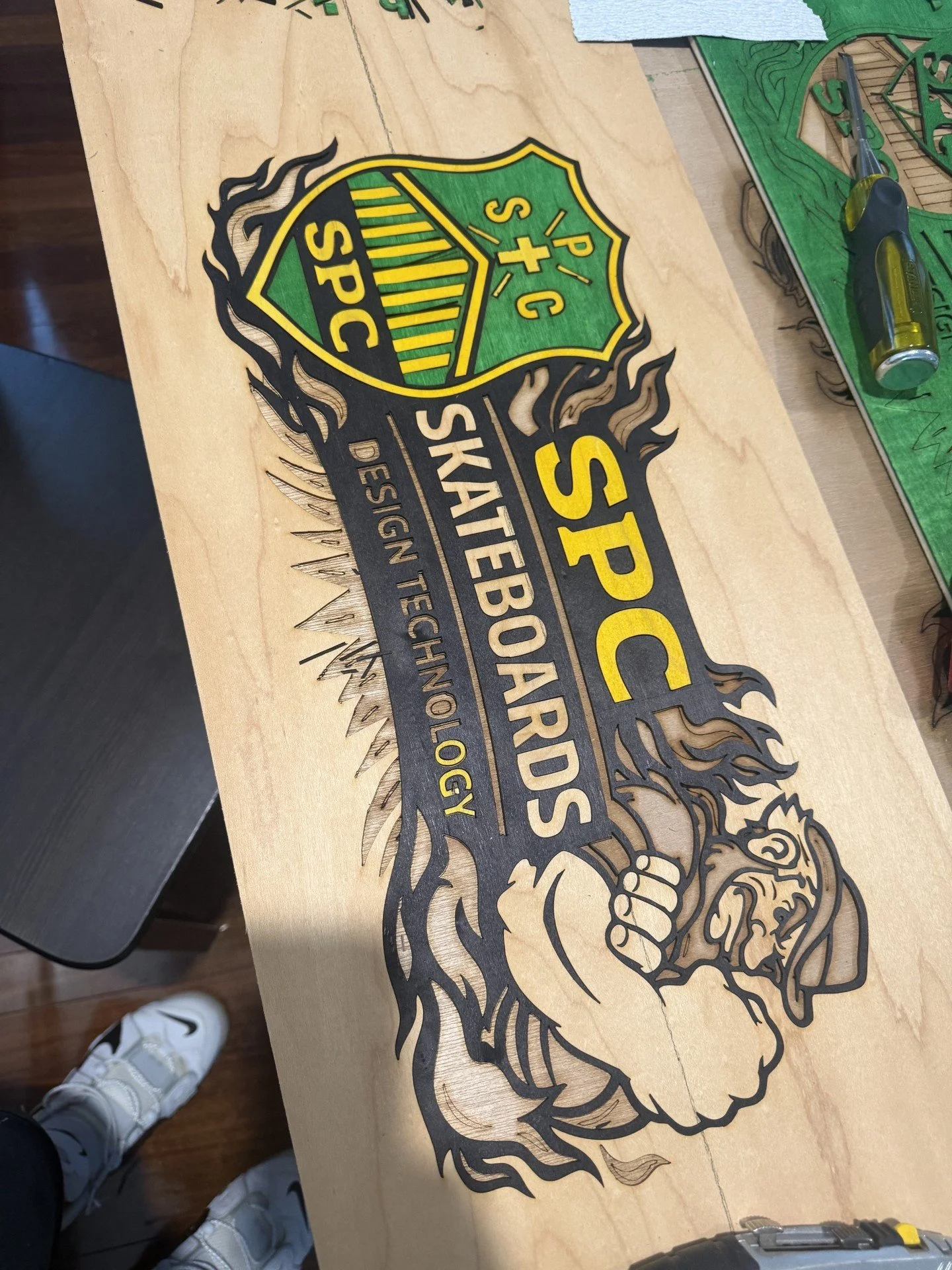
Beyond the Skateboard
One of the experiments that grew from asking, "What if?" This laser-cut veneer project is an example of how the ideas and skills developed through skateboard making have continued to evolve into completely new directions.
What began as a question about protecting artwork became something much bigger. It opened the door to completely new ways of thinking about skateboard graphics and reminded us that innovation doesn't always come from chasing something revolutionary. Sometimes it comes from simply caring enough to ask whether something could be done differently.
That's probably the biggest lesson skateboards have given me over the years.
What surprised me most was that the questions didn't stop with skateboards. Once we understood the process, we started seeing possibilities everywhere. The same vacuum-pressing techniques that shaped our skateboard decks began finding their way into curved furniture components, prototype design work and completely different manufacturing challenges. It reinforced something I'd never really considered when I built that first board all those years ago. The Roarockit system wasn't simply teaching us how to build skateboards - it was giving us the confidence to think differently about making.
The skateboard remained the hero, but the curiosity it sparked naturally found its way into everything else we designed.
Great ideas rarely arrive fully formed. They grow from curiosity.
Today I'm fortunate enough to be sharing the program at my second school, but the philosophy remains exactly the same. Students still walk into the workshop because they want to build an incredible skateboard. They talk about graphics before we've even unpacked the veneers. They debate timber combinations, compare ideas, crowd around the vacuum press and count down the hours until they can finally open the bag and see what they've created.
That excitement has never changed, and I hope it never does.
The skateboard has always been so much more than a finished product. It's the spark. It's the reason people care enough to learn. It's the reason they ask questions. It's the reason they keep trying when something doesn't quite work the first time. Everything else grows from there.
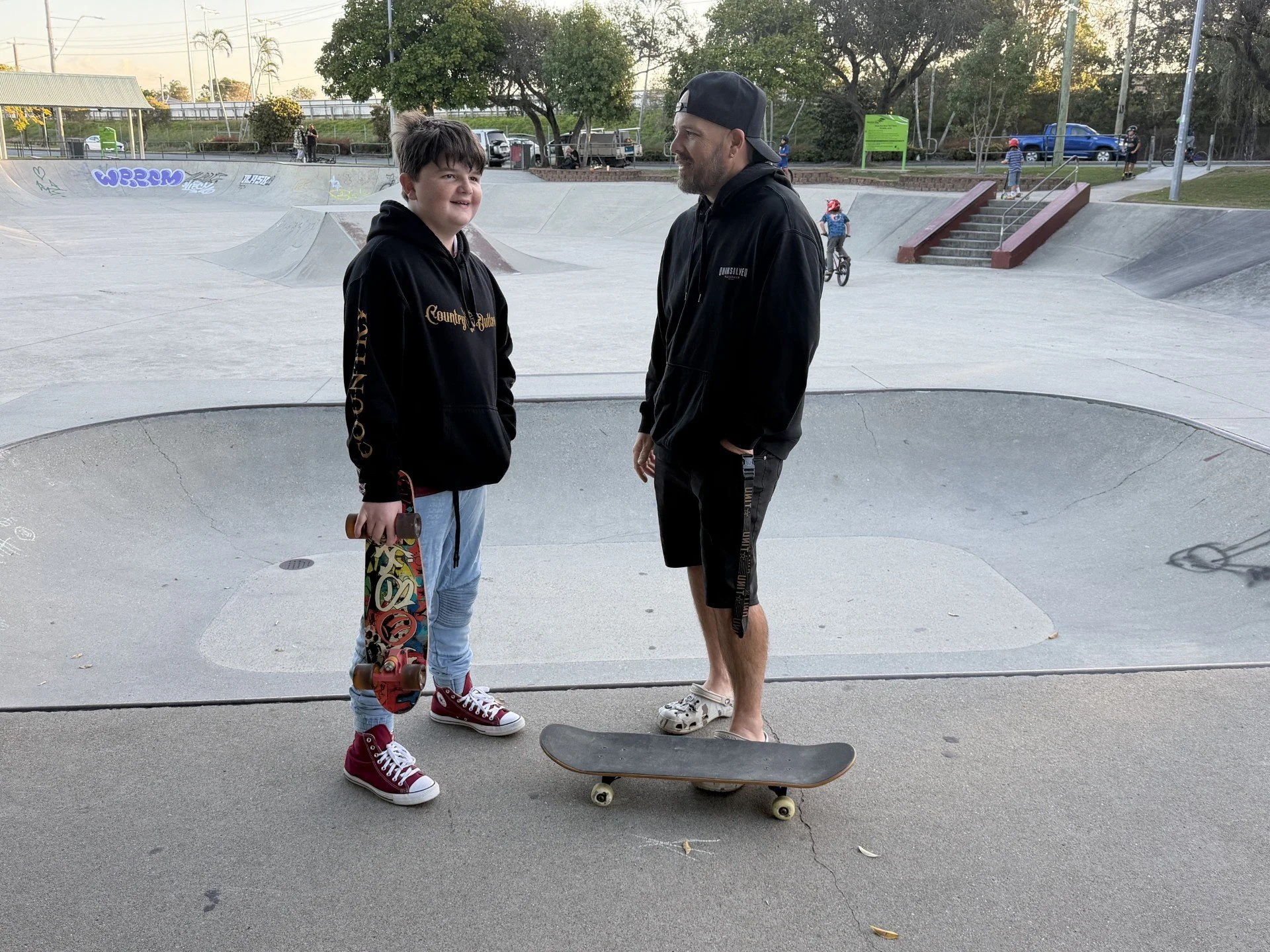
Still Rolling Together
A quieter moment from the skatepark. I included this because I liked how natural it felt. It captures the relationship just as much as the skateboards.
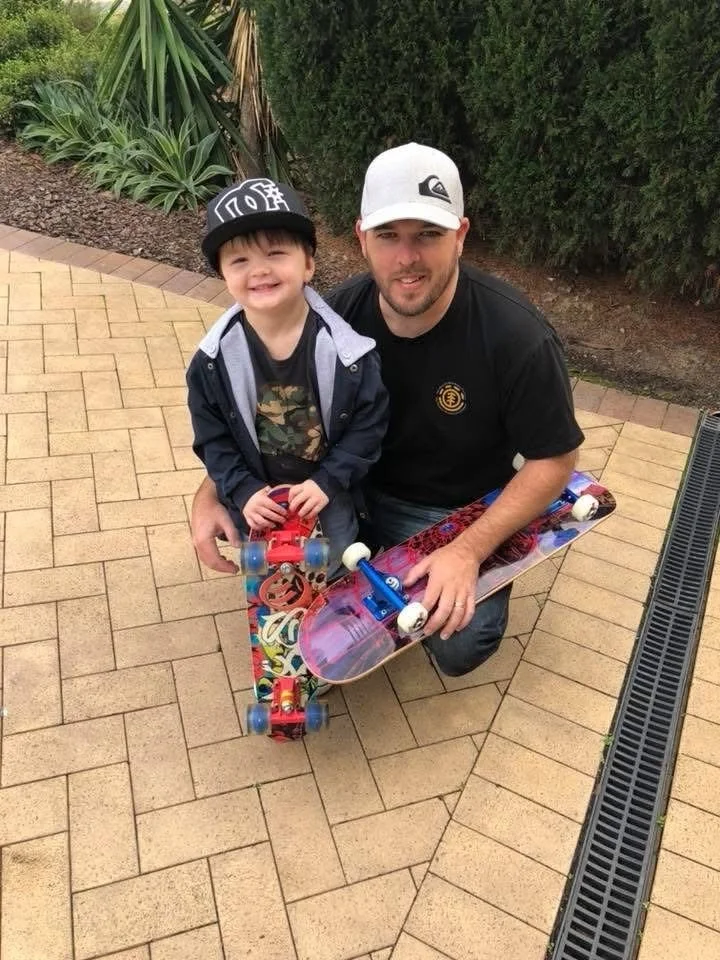
Where It All Began – Father and Son
This photo wasn't included in the original article, but it has always been one of my favourites. It shows Mason as a little boy holding one of the very first skateboards I built using the Roarockit system. I still have both of those boards today.
Looking back now, life has a funny way of coming full circle.
One of my favourite photos from the last time I wrote here is of my young son proudly holding one of the very first skateboards I built using the Roarockit system. At the time, he simply thought Dad had made something cool. I was more concerned about where the nearest emergency department was when he inevitably fell off.
Today he's only a couple of years away from building his own skateboard in my classroom. Every now and then he'll ask me how much longer he has to wait, or he'll tell his mates, "We get to build these soon."
To me, that says more about the journey than I ever could.
Nearly ten years ago it started with a skateboard.
Today it feels like the beginning of another story.
As I watch him count down the days until it's finally his turn, I can't help but smile because I already know what comes next.
He thinks he's waiting to build a skateboard.
I know he's about to begin a journey.
The skateboard is still the destination people see.
Curiosity is the journey it quietly begins.
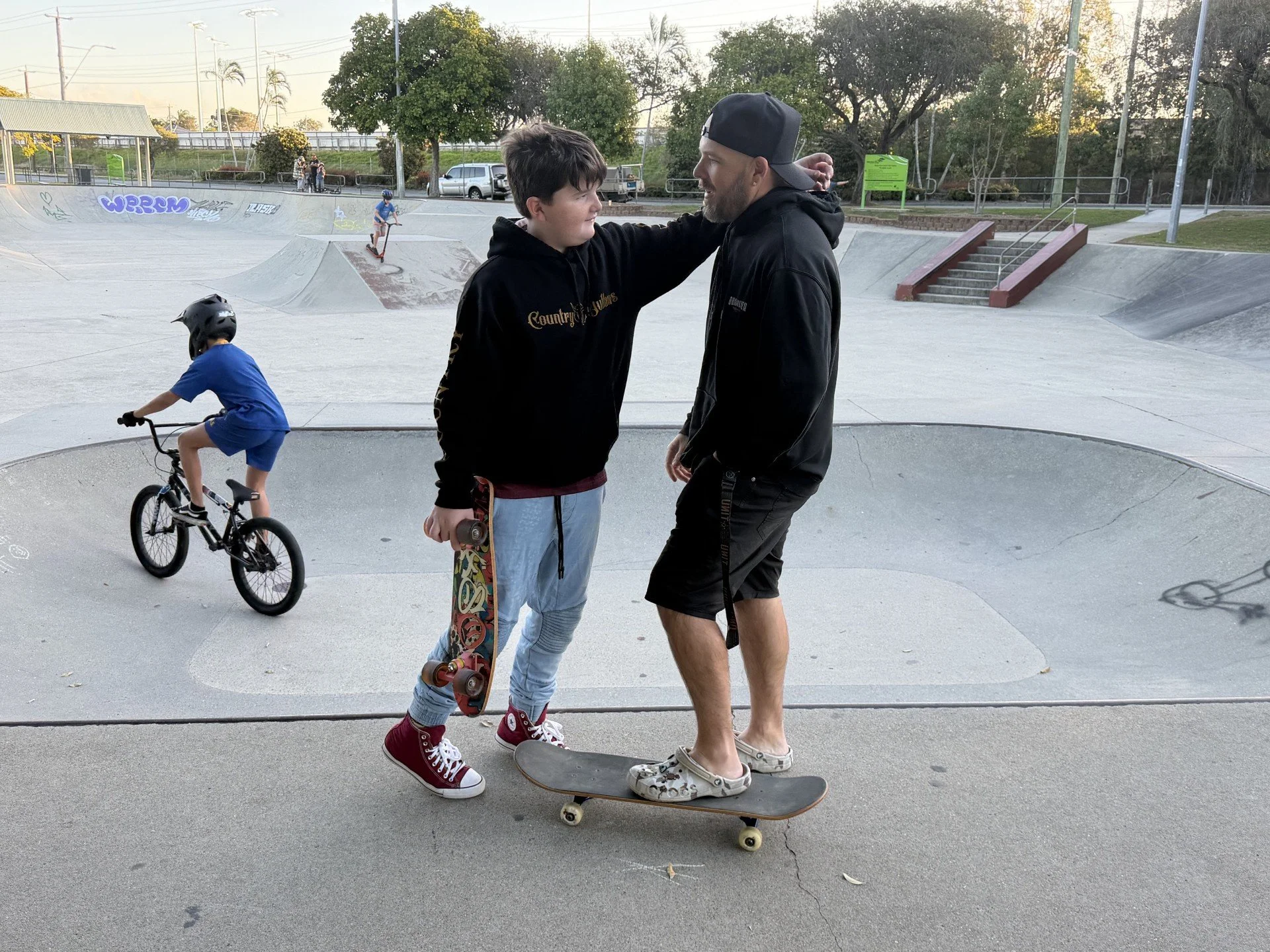
A Journey Eight Years in the Making
I took this photo with Mason a few days before sending this article through. It felt like the right way to finish the story. Nearly ten years after the original article, he's now only a few years away from building his own skateboard through the same program.
To get a similar program going at your school, Roarockit skateboard building materials are available directly through Roarockit.ca
Taryn O'Grady,
Roarockit Skateboard Company