
Making Handmade Axe Handles
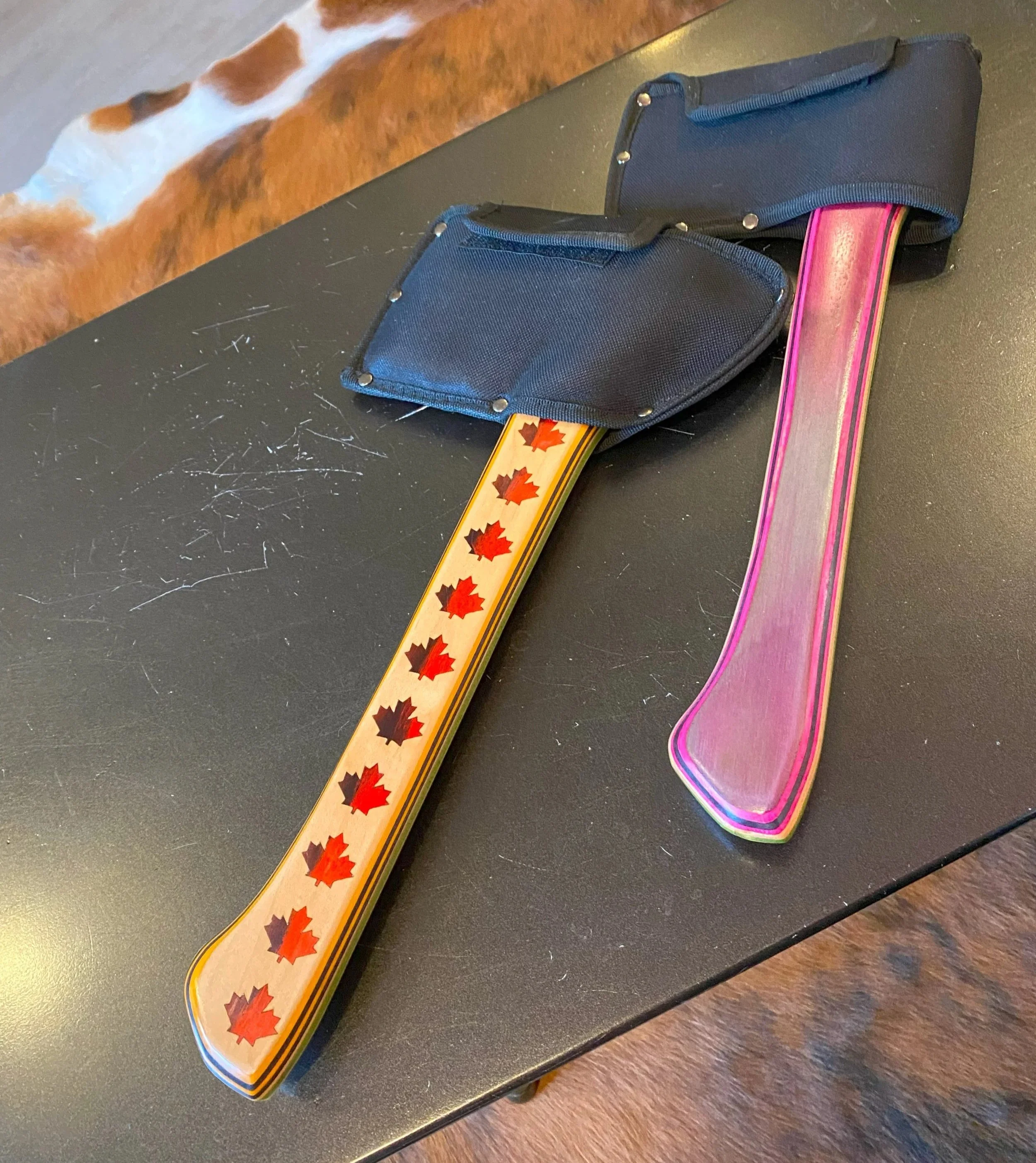
Ted, the founder of Roarockit, is known for his skill in woodcraft and his attention to detail. One of his recent projects involved making custom axe handles for his cousin Steve, who was competing in the amateur axe-throwing world finals in Oklahoma, USA. Ted had never made axe handles before, but he was excited to take on the challenge.
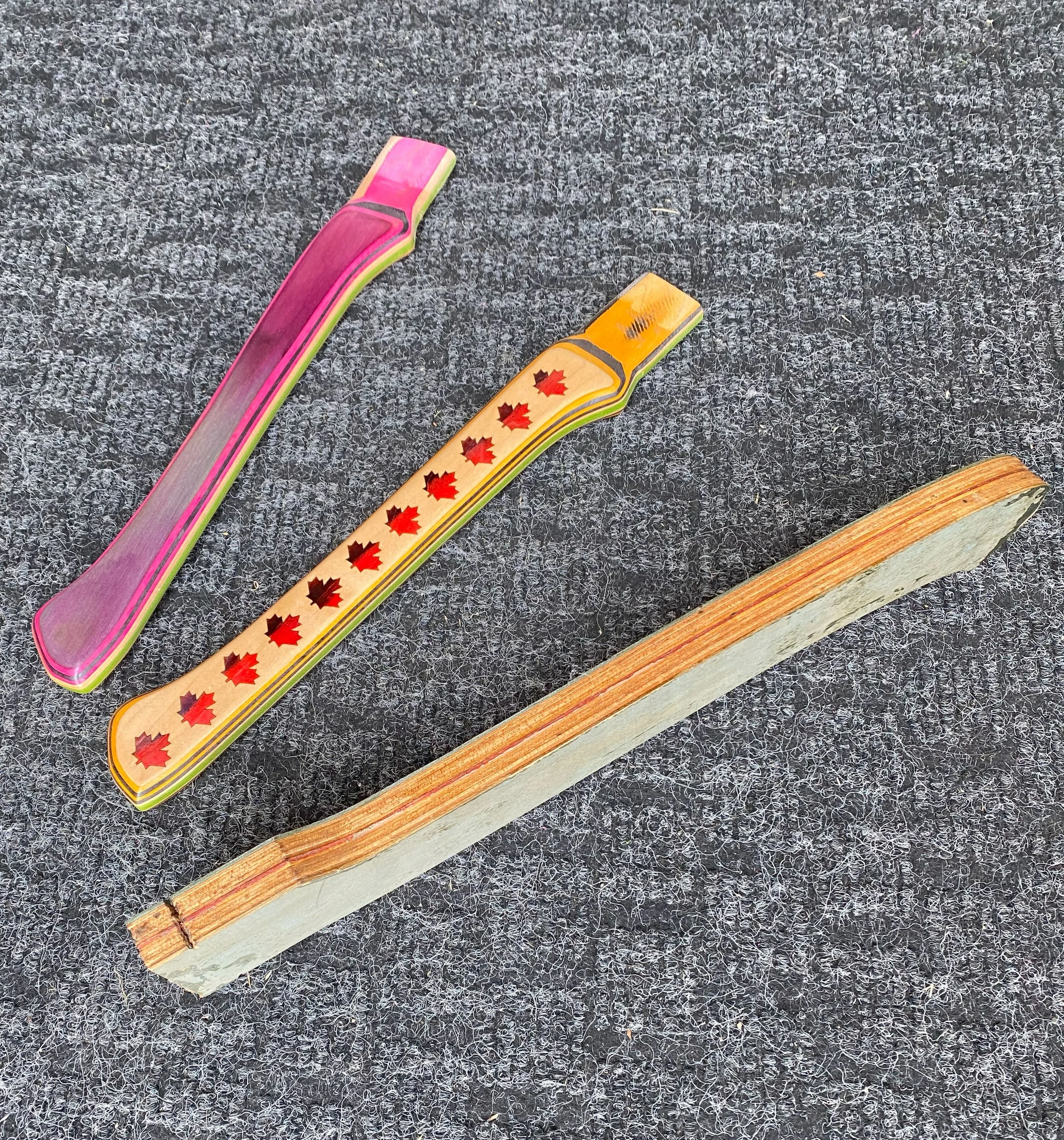
The story started when Steve asked for help. Instead of asking for funds to support his competition, he asked Ted if he could make him two custom axes. He gave Ted a color scheme - black, orange, and lime - and from there, Ted used those colors to create the axe handles. He came up with two different designs. One had a gradient color effect that took about two and a half months to create. The other design was experimental, with maple leaves made from a red-to-black gradient veneer.
Since Ted had never made axe handles before, he watched a few YouTube videos to get an idea of how others did it. "I used a tool called a rasp", Ted explains. "I used it for almost everything to shape the handles. It worked better than a scraper. When Roarockit first started, we even sold rasps in our kits before switching to a more beginner-friendly tool.”.
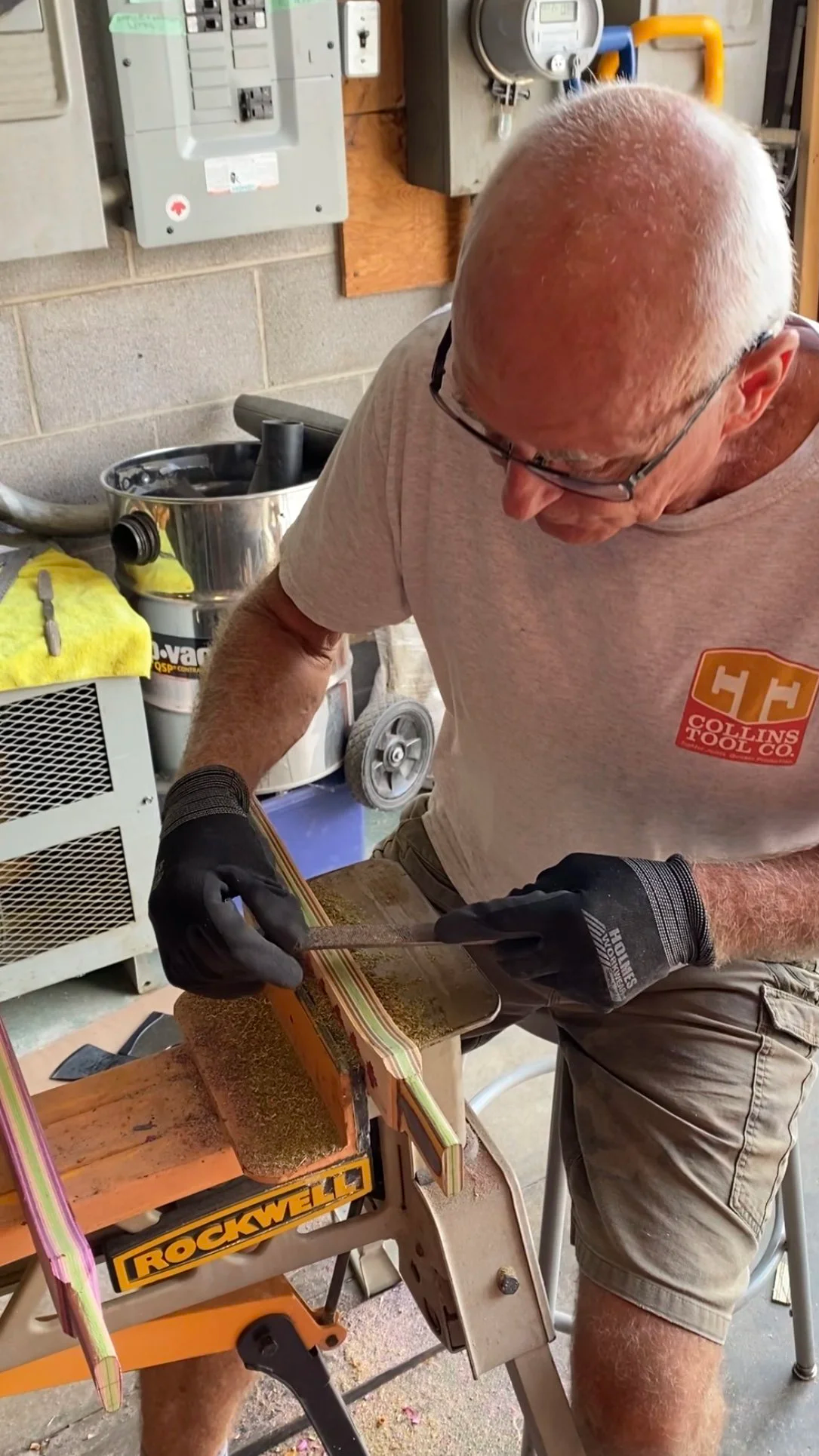
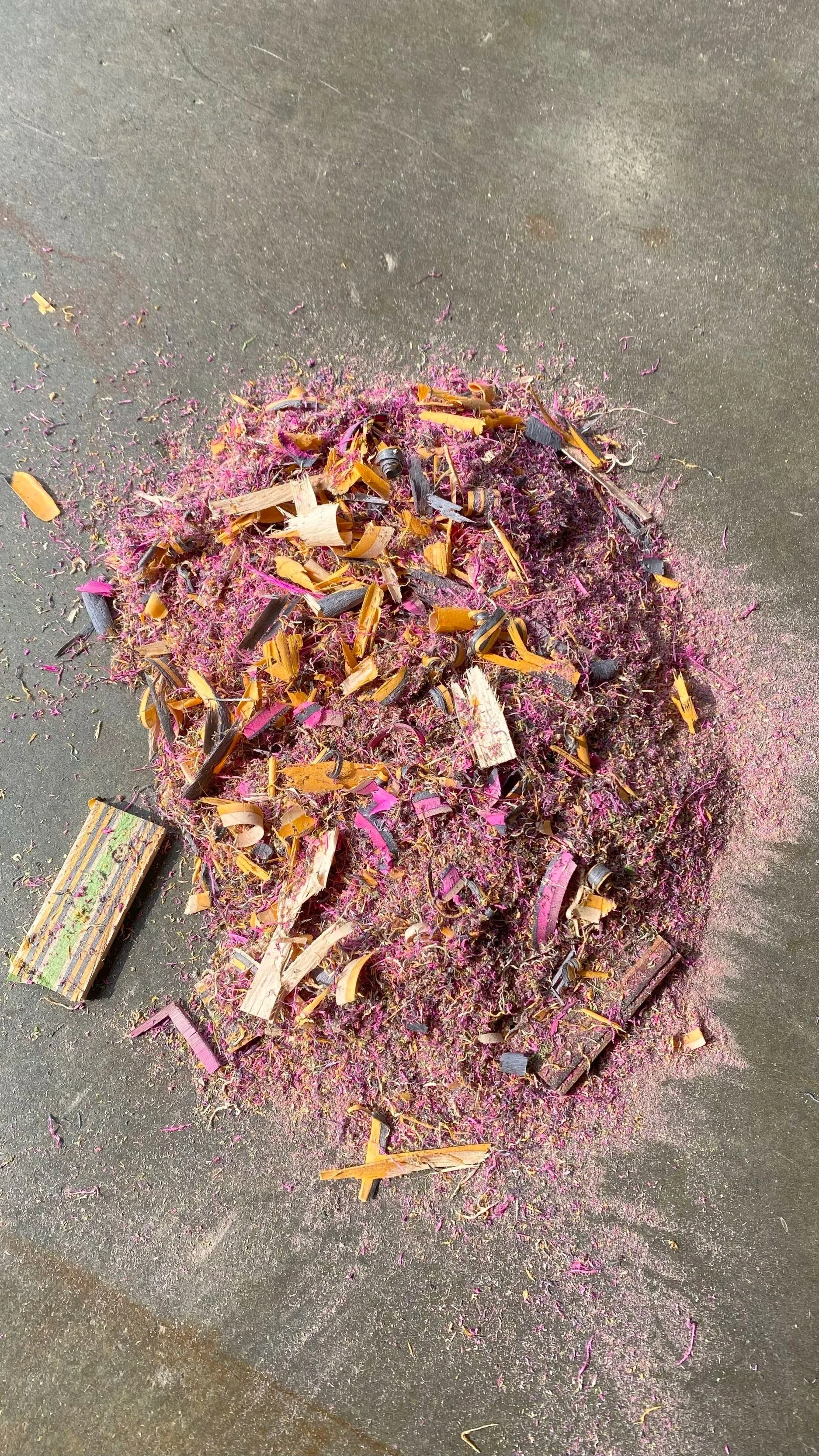
Making the custom handles was harder than Ted expected. The most difficult part was making sure the ends of the handles fit perfectly into the axe heads. "The shape of the ends is really important", Ted says. "It has to be the right size for the axe head to fit properly." Ted measured the axe heads, drew out the shape of the handle, and then carefully shaped it to match. Fitting the handles into the axe heads required a lot of adjustment. "You have to keep putting the head on and hammering it to get the fit just right", Ted says. "If you cut too much off, it won’t be strong, and you’ll have to start over."
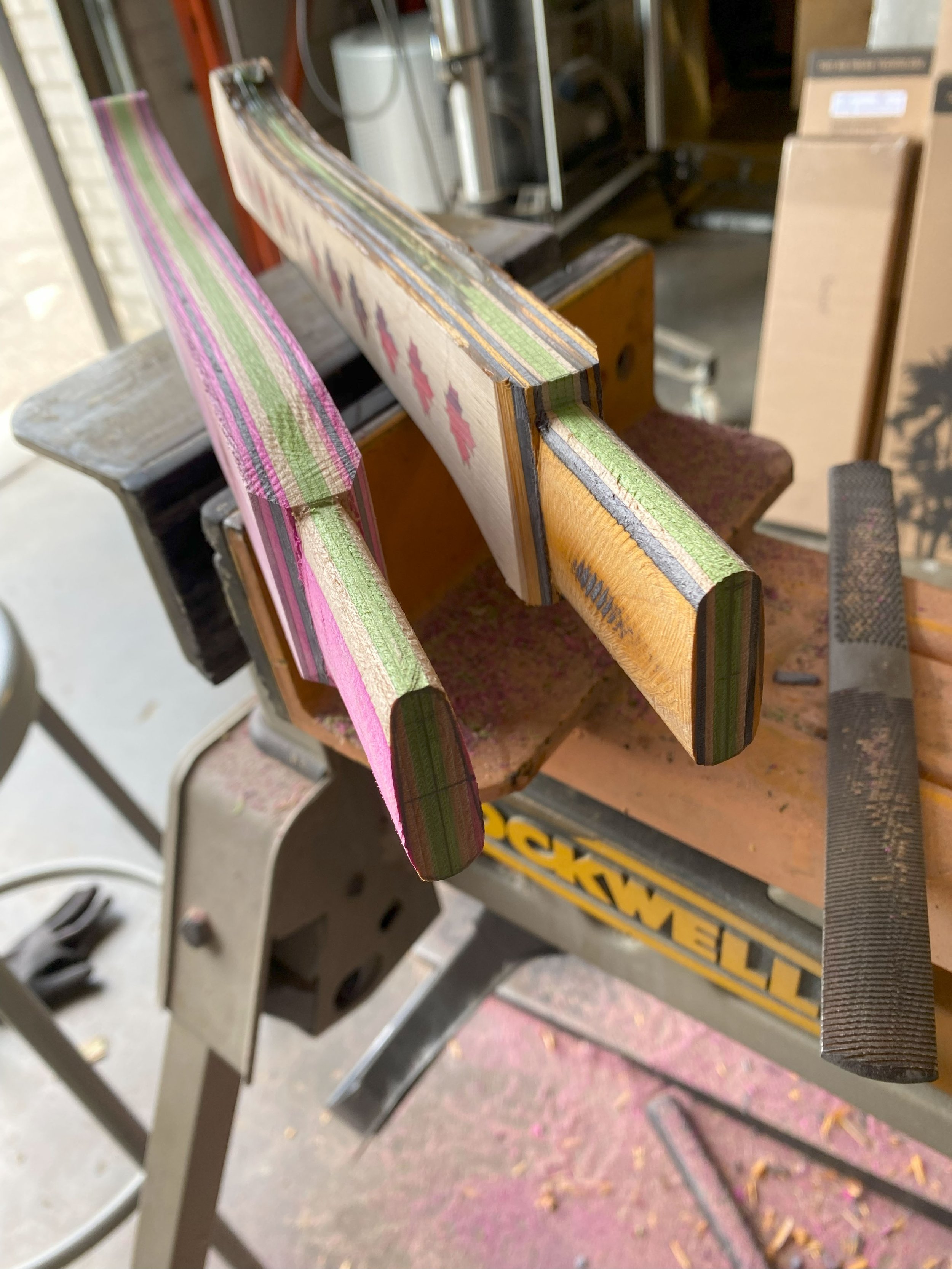
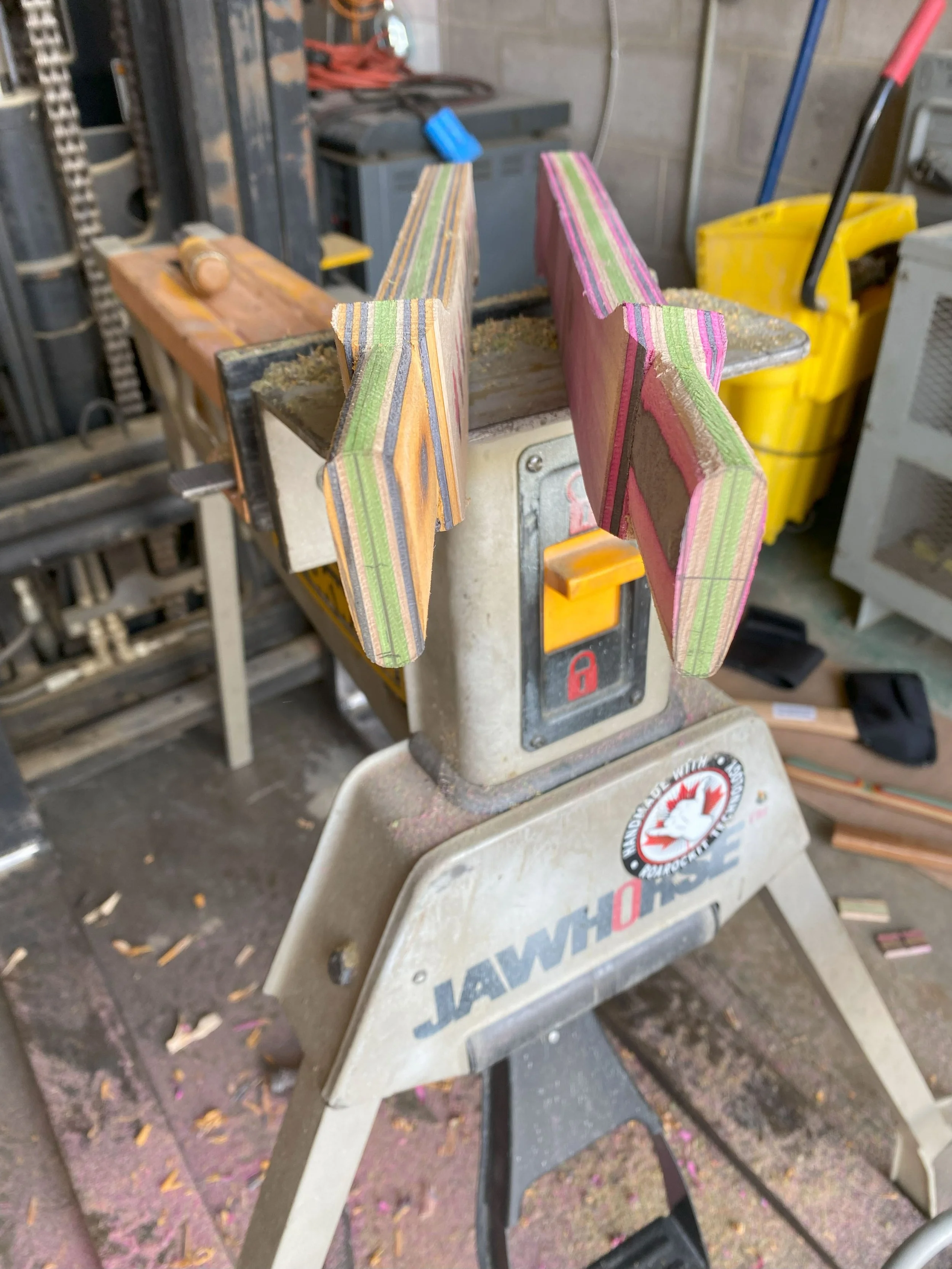
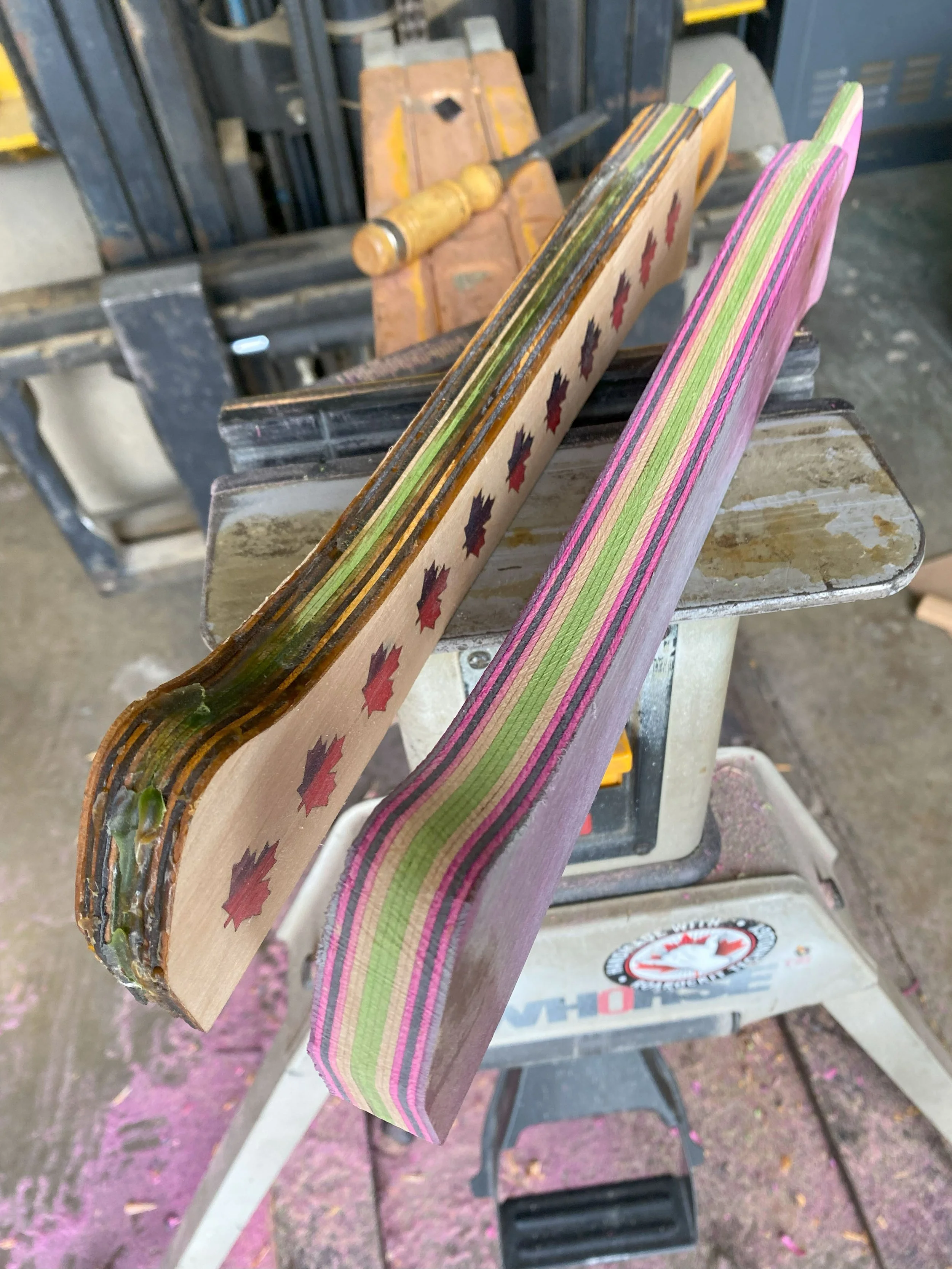
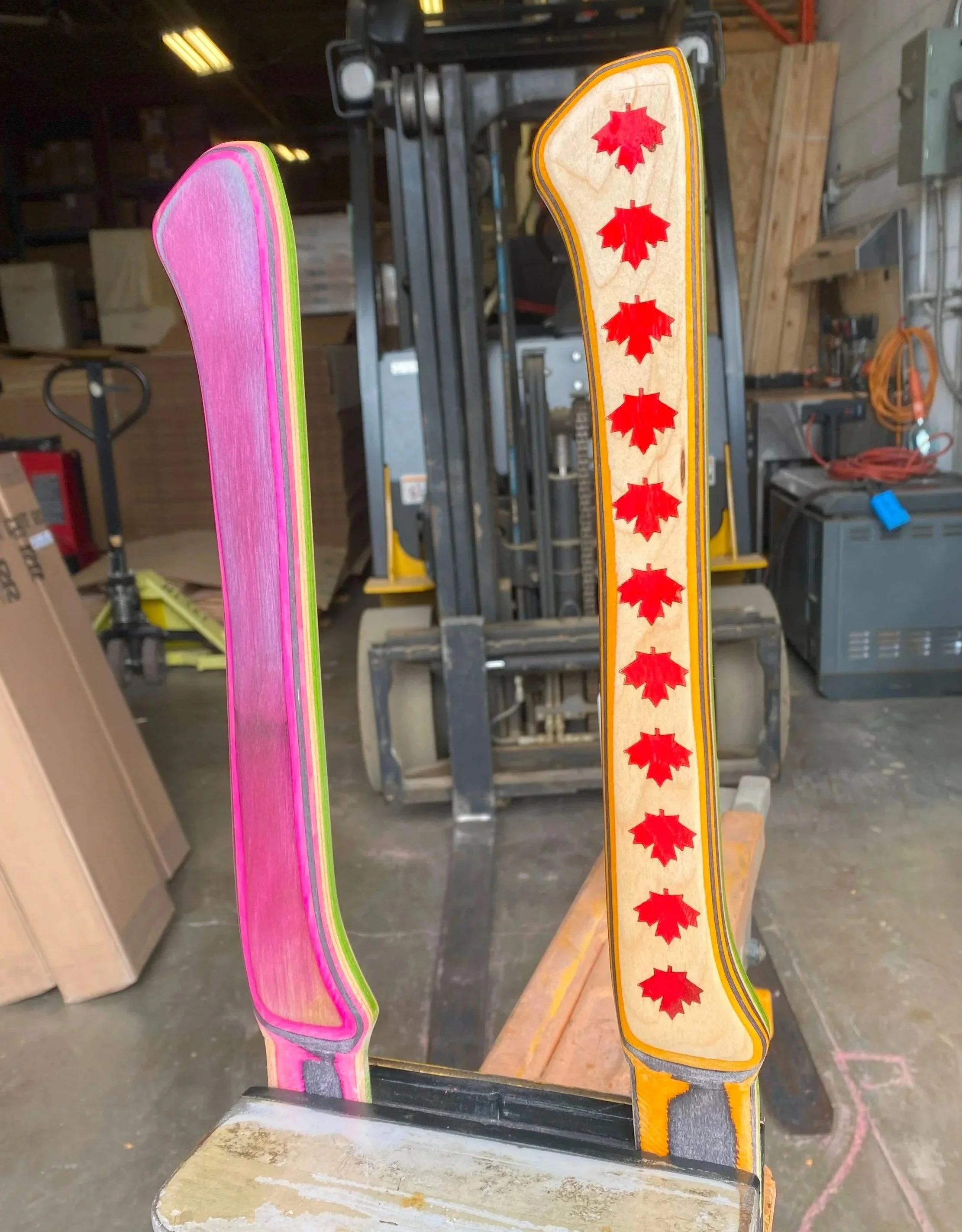
"It took me three full days to make two handles", Ted says. "It took longer than I thought, but the hardest part was getting the heads to fit just right."
To attach the heads securely, Ted used a bandsaw to cut the top of the handle and then inserted a wedge. "I glued the wedge in with epoxy and hammered it down. That made the connection really strong", he says. Once everything was set, Ted’s custom handles were ready for the competition!
Steve had never used a custom axe handle before, so Ted wasn’t sure how he would like them. "Steve said the handles were a bit longer than the ones he had before, but he’s getting used to them”, Ted says.
Making the axe handles gave Ted a new appreciation for the work that goes into building custom axes. "We have axe builders who use our kits" Ted says, "and after doing this project myself, I really respect how much work they put into it.”
While making axe handles was not the most difficult project Ted had ever done, he learned that precision is key. "It’s not that it’s hard, but you do have to be really careful and precise with it."
Ted’s cousin’s custom axes are now ready for the competition, and even though Ted doesn’t plan to become a full-time axe maker, he gained a lot of respect for those who do.
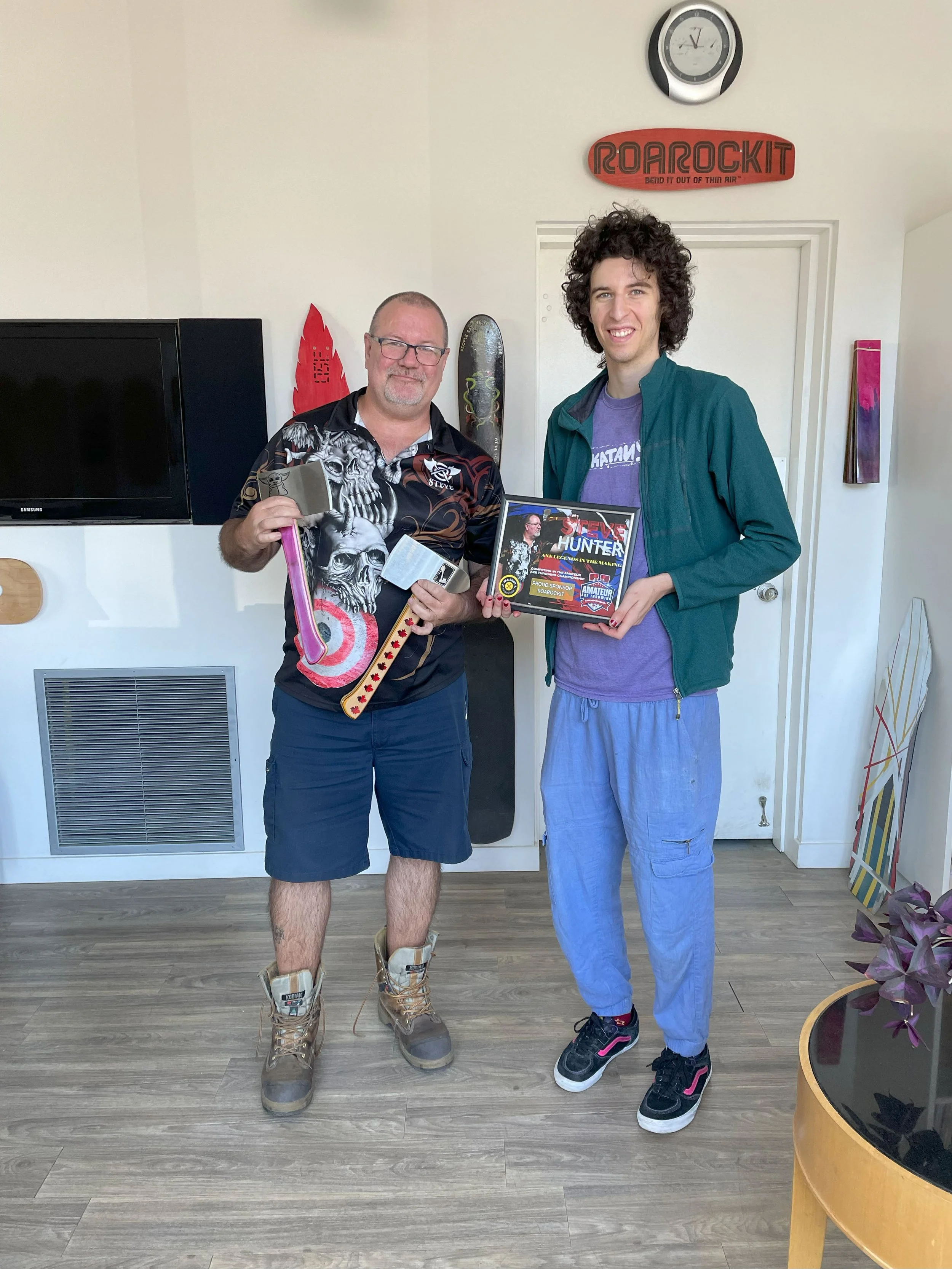
Steve (Ted’s cousin) on the left and Tamalei (Roarockit Employee) on the right.