
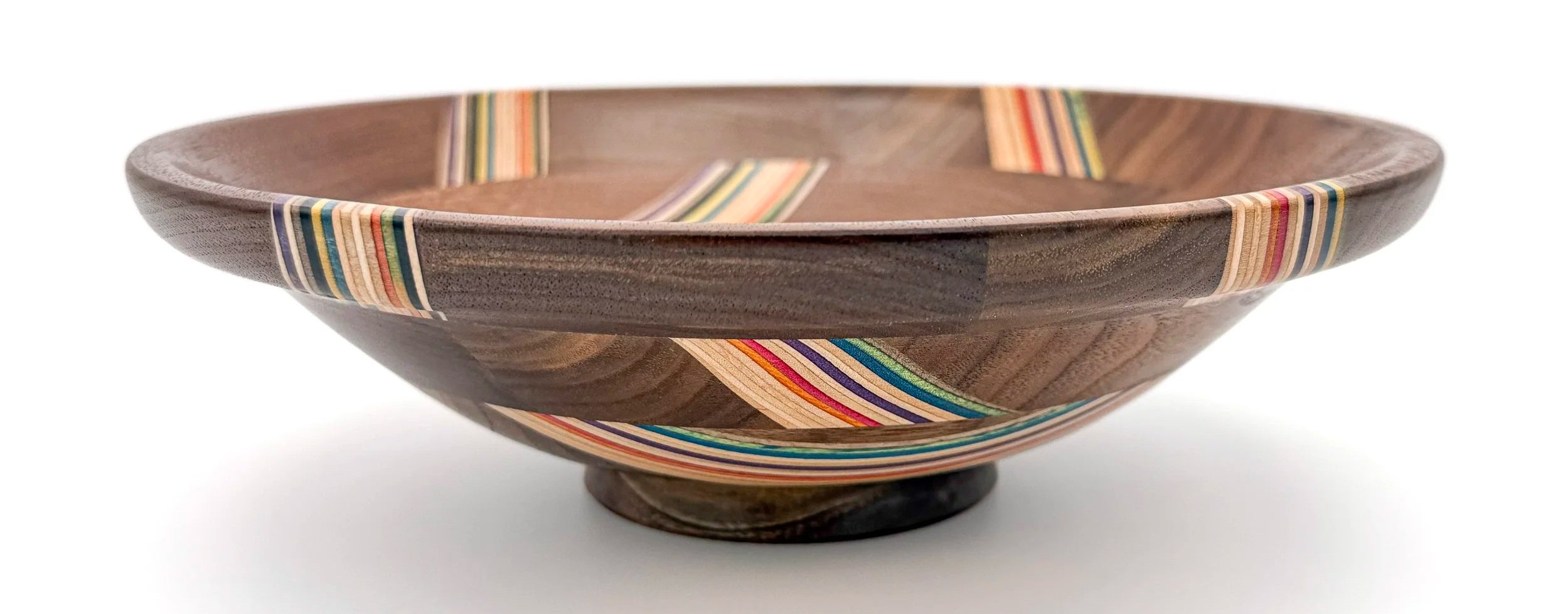
Hi Brad, how are you today? Can you tell me a little about yourself and Blackburl Works?
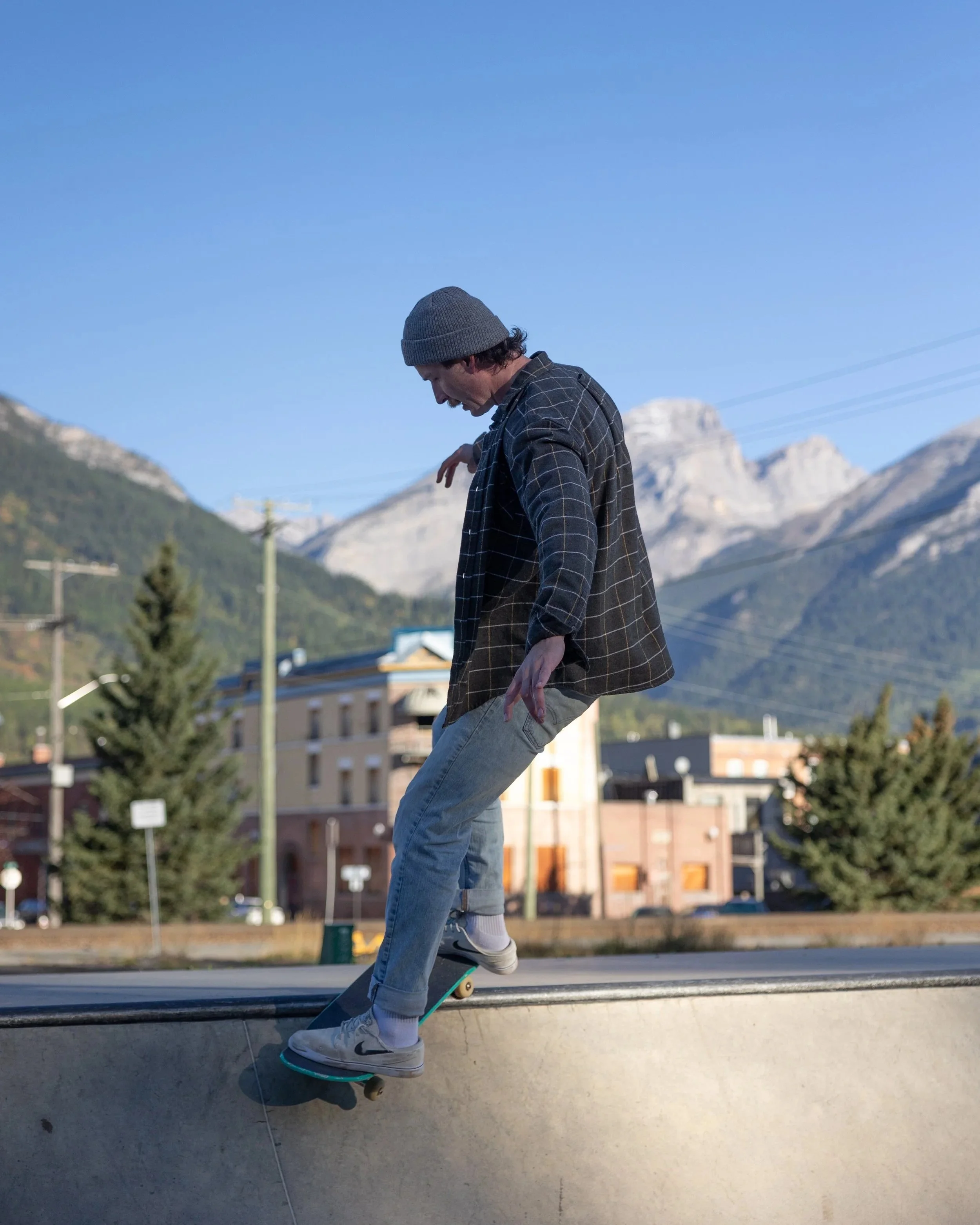
I’m doing great, thanks! I live in Fernie, British Columbia, where I’m a career firefighter and run Blackburl Works out of my home studio. I’ve always liked making things and working with my hands, and I’ve also skateboarded for a long time, so that world has naturally found its way into a lot of what I make.
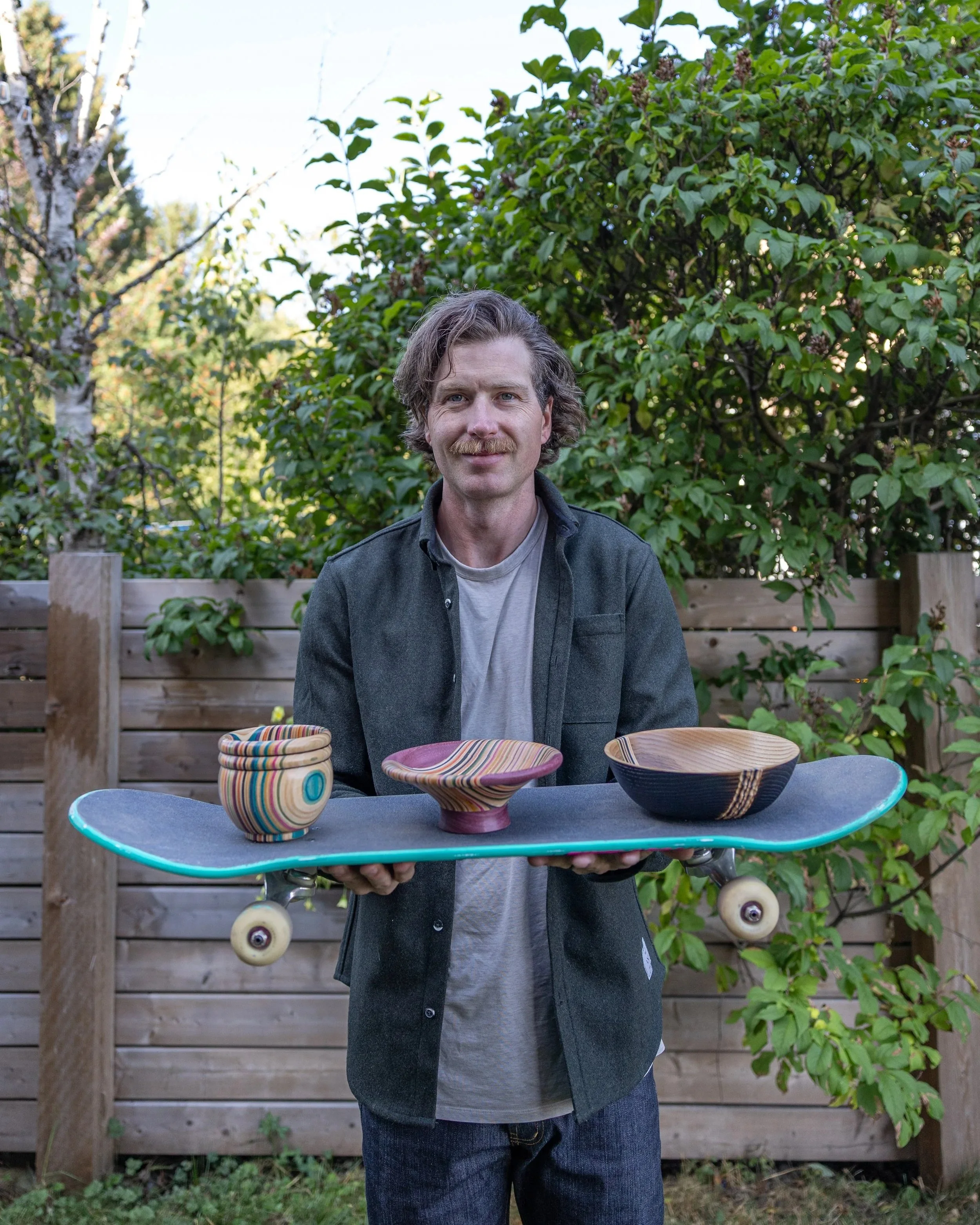
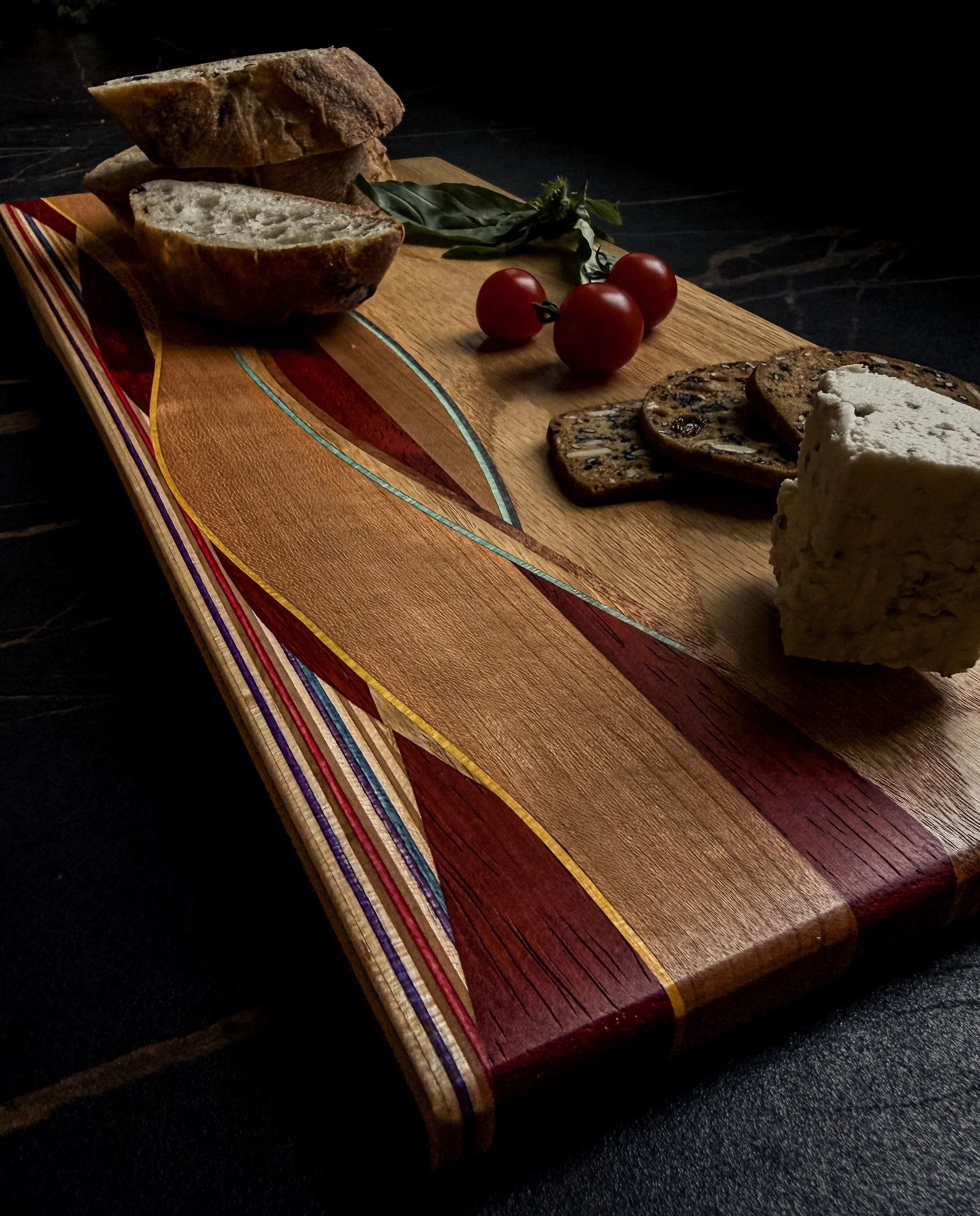
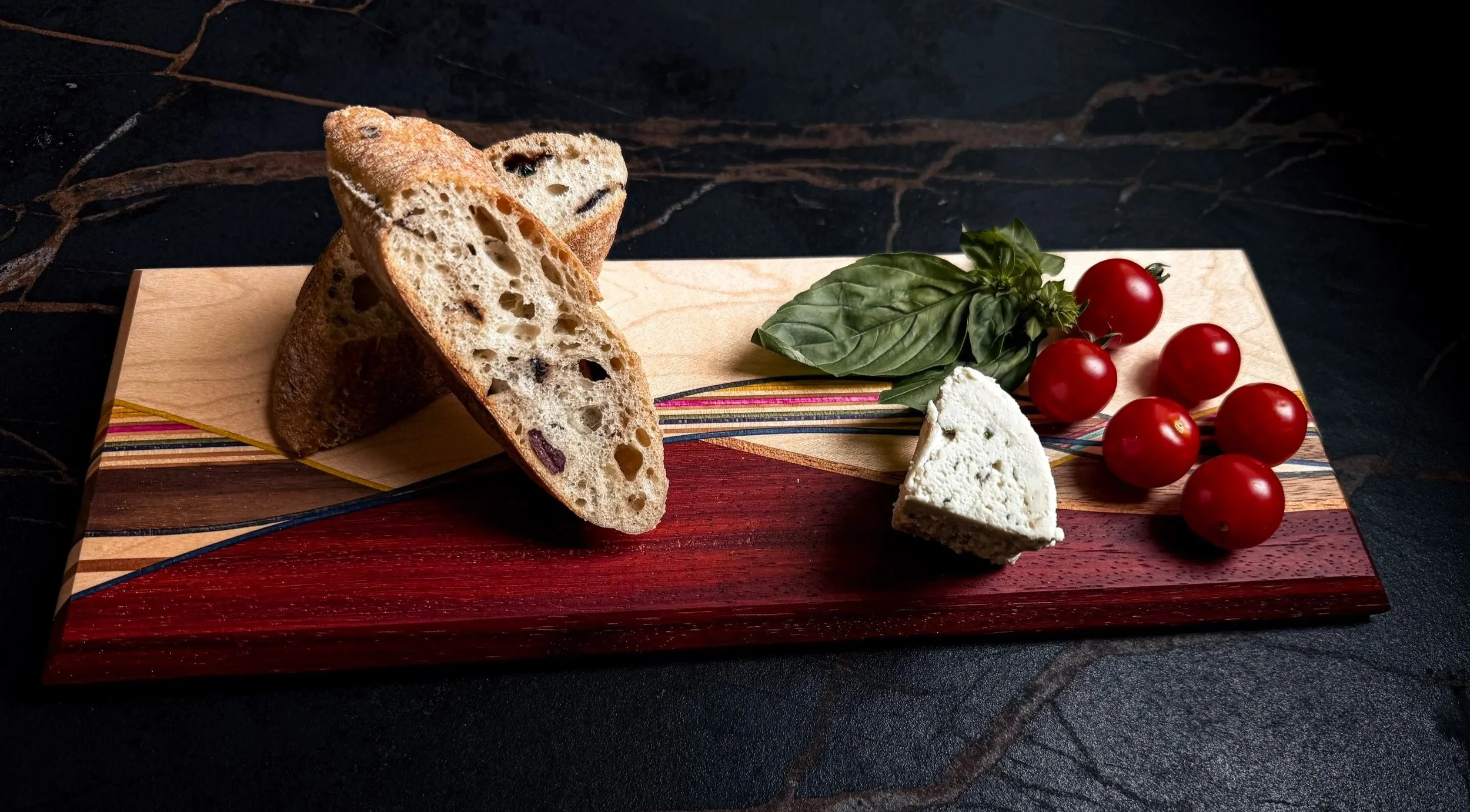
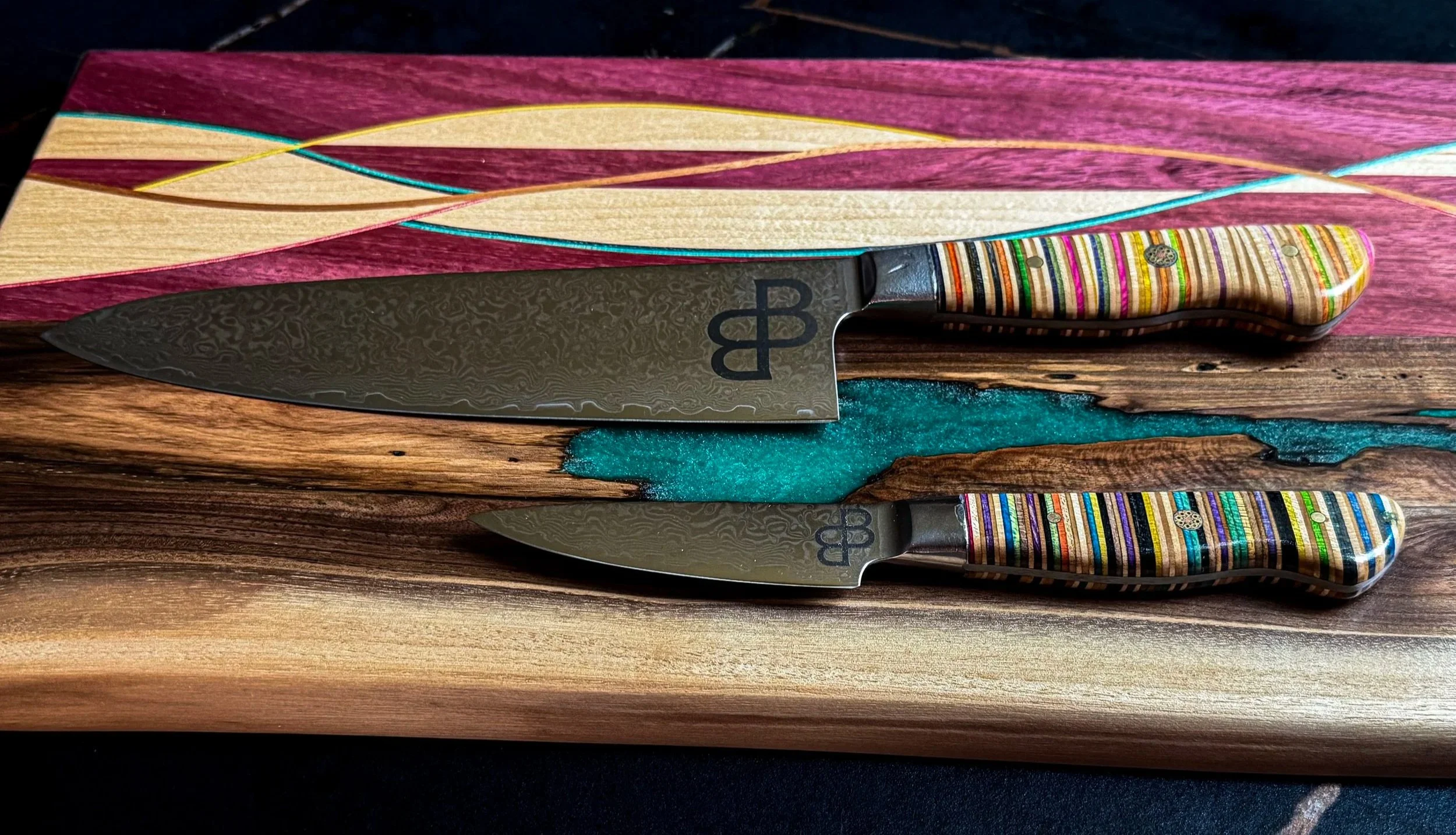
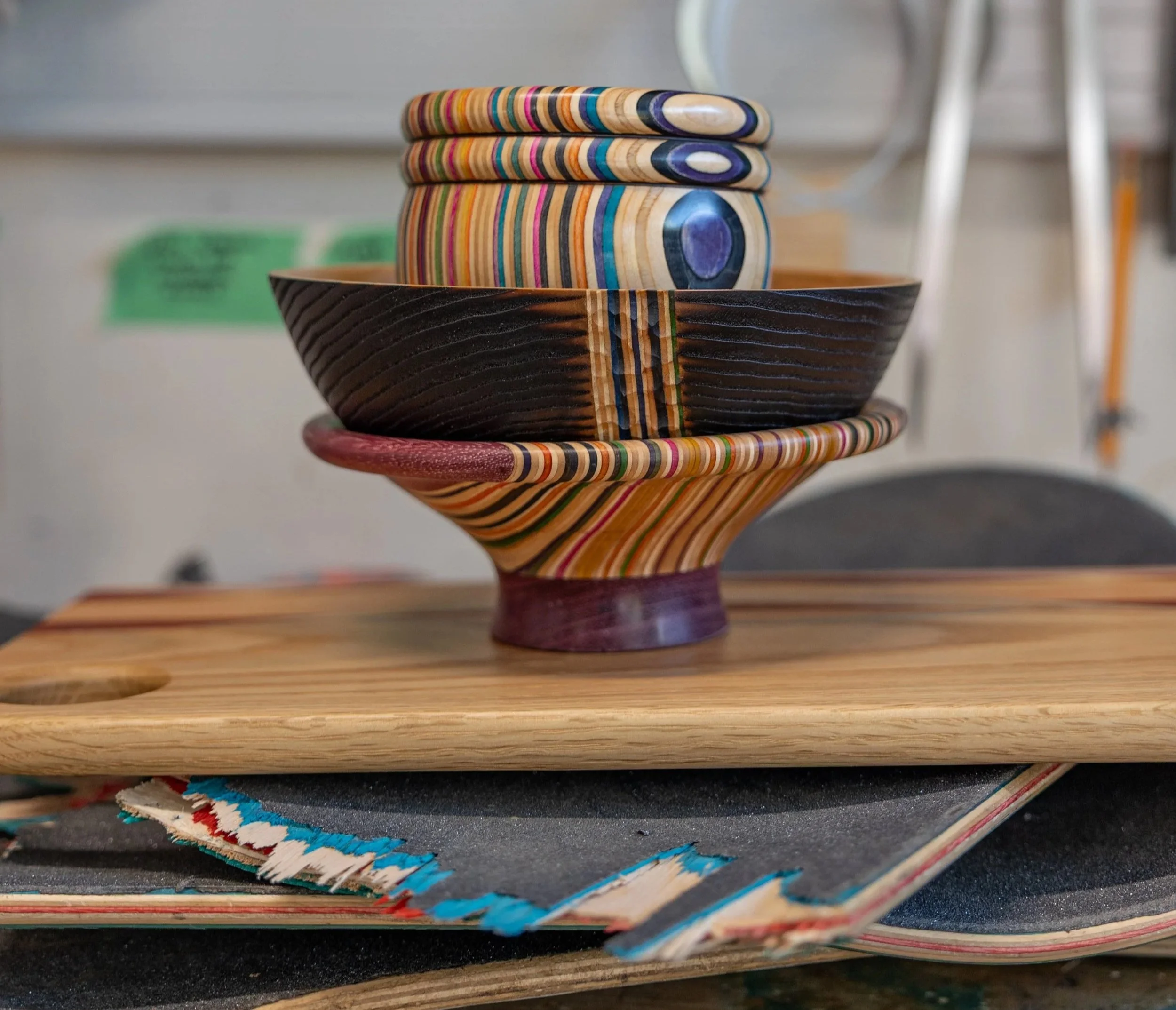
Blackburl Works started as a creative outlet and has gradually turned into something much bigger for me. I make one-of-one functional pieces using hardwoods, burls, skateboard veneers from Roarockit, reclaimed materials, and recycled skateboard maple. I really enjoy taking traditional woodworking and introducing something a little unexpected into it - whether that’s colour, a different material, or the way a piece is shaped.
I try not to start with too rigid of a plan. A lot of the time the grain, figure, imperfections, or history of the wood will dictate where I take the piece. That’s probably become one of the biggest parts of what Blackburl Works is about.
What got you into woodworking? How long have you been building?
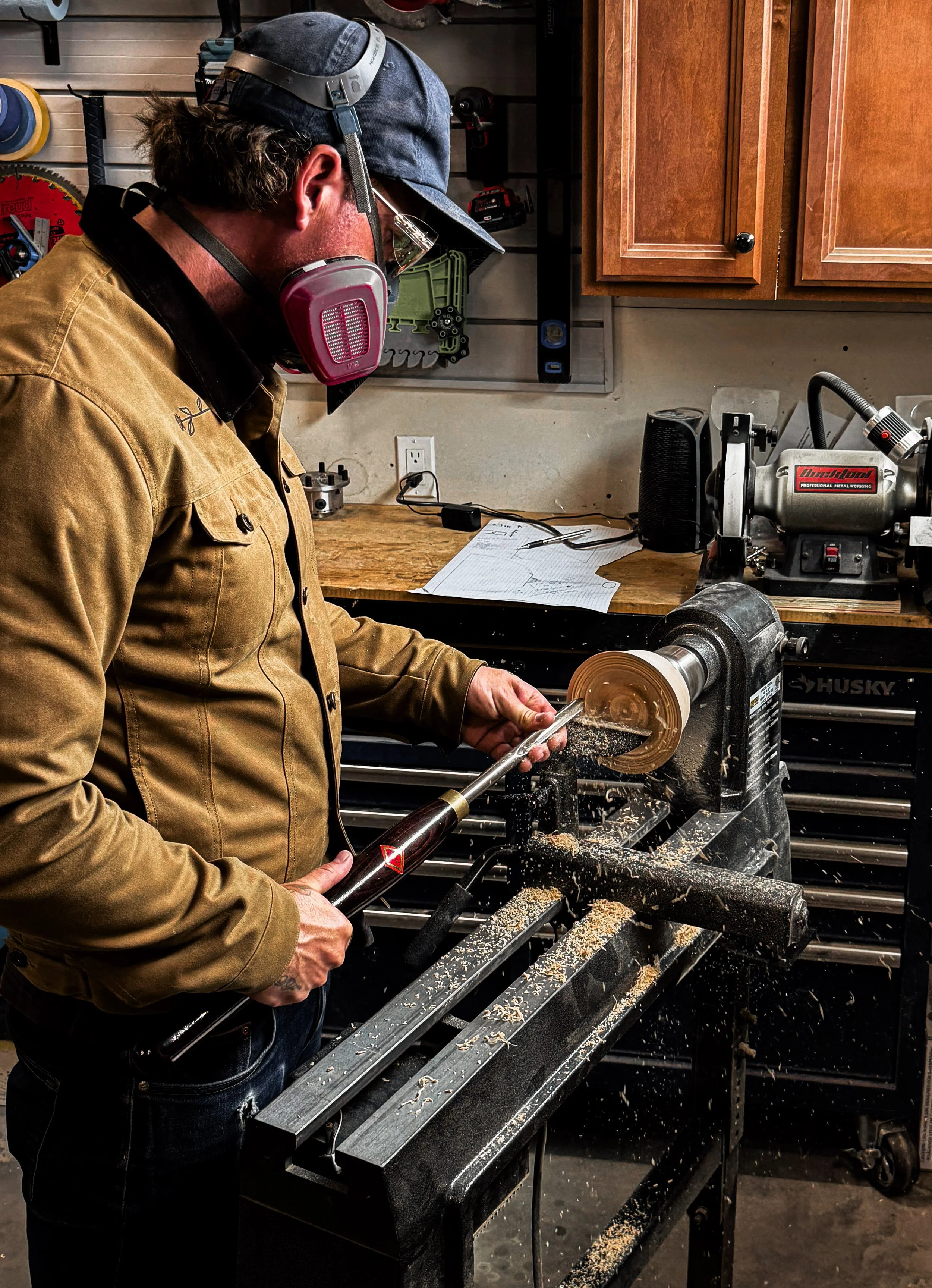
My first real experience with woodworking was actually in high school. That was the first time I had access to a lathe and proper cabinetry-grade woodworking tools, and I really enjoyed it. I always liked building things and working with my hands, but for a long time woodworking was something I would come back to here and there rather than pursue seriously.
That changed a couple of years ago when I got into my thirties. I started slowing down a little with sports like skateboarding and snowboarding and found myself spending more and more time in the shop. Woodworking became that creative outlet for me, and the deeper I got into it, the more I wanted to push my skills, experiment with different materials and make increasingly challenging pieces.
Blackburl Works officially started at the end of 2025, but it really grew out of those years of experimenting and learning. Since then, it’s evolved pretty quickly from simply making things I enjoyed into developing my own style and taking the work much more seriously.
What inspires you to create your pieces?
A lot of it starts with the material itself. I’m drawn to wood with character - burls, strong figure, natural irregularities, reclaimed timber, or material that already has a story behind it. I like allowing those things to influence the final shape rather than forcing every piece into a predetermined design.
I’m also influenced by Japanese and Scandinavian design, especially the simplicity, natural materials, and purposeful forms. Living in Fernie and being surrounded by the mountains definitely finds its way into the work too. I’m interested in proportion, balance, texture, and creating pieces that feel natural rather than overly designed.
Do you use Roarockit products in the making of your work? How did you find out about us?
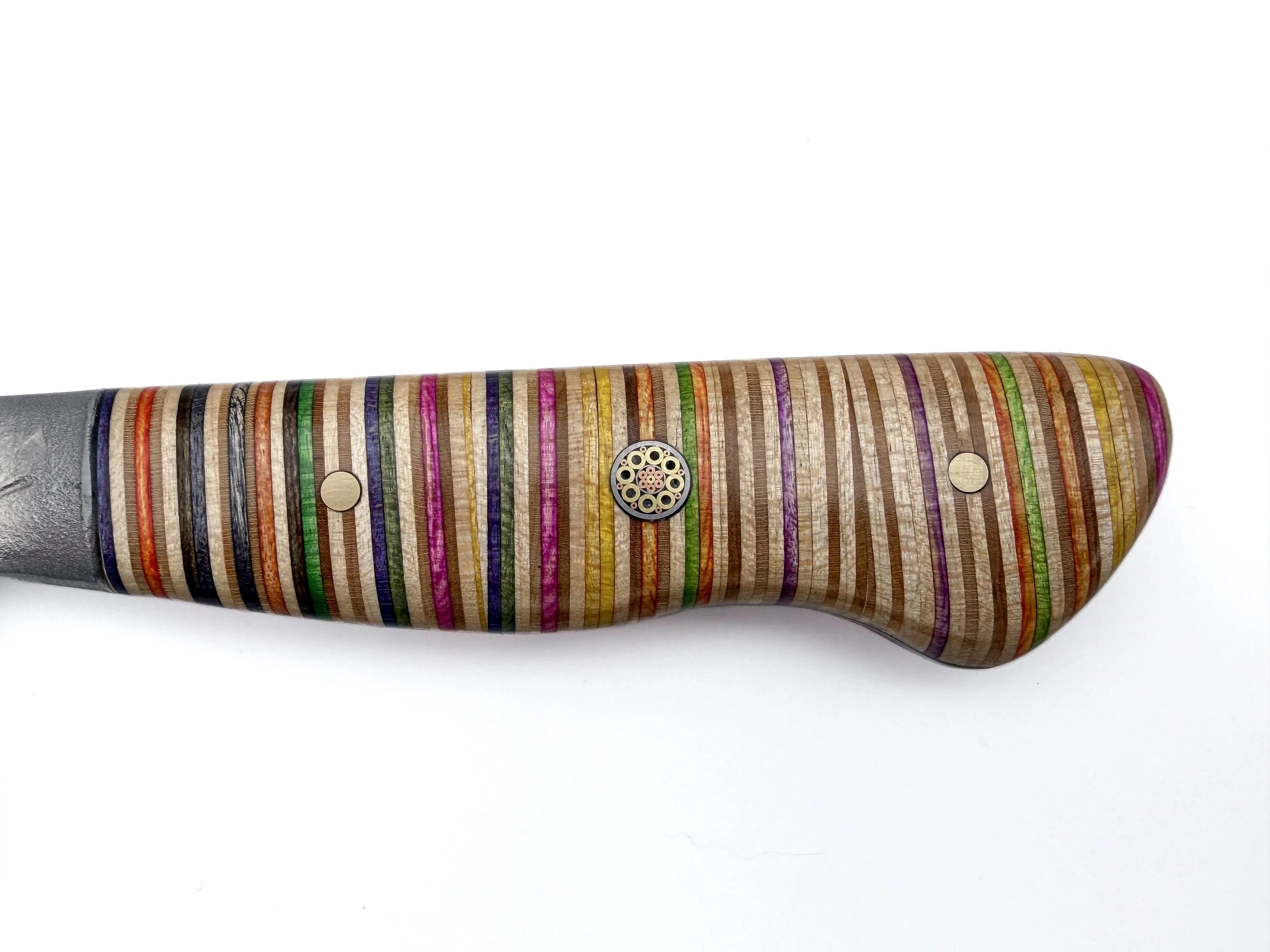
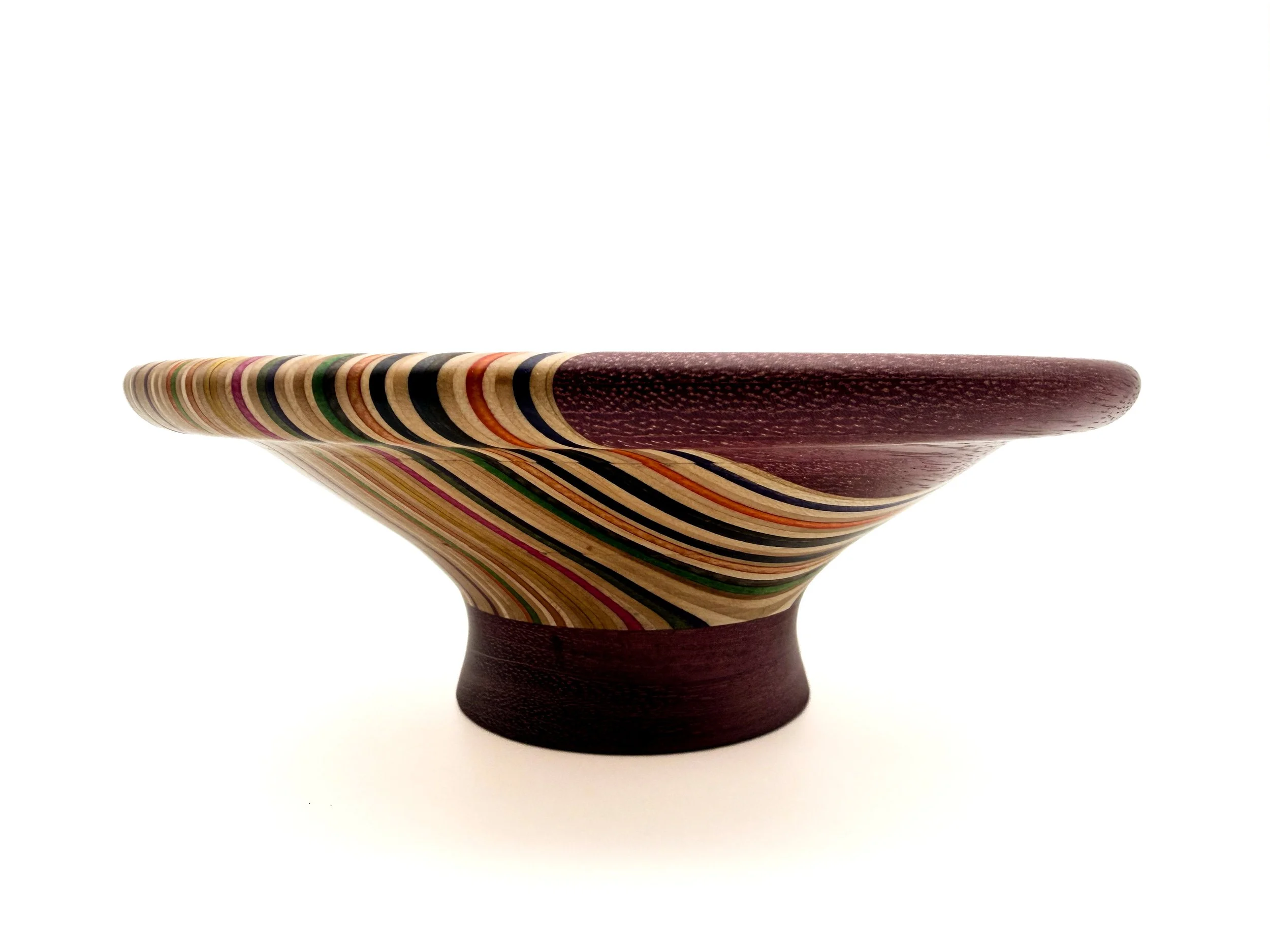
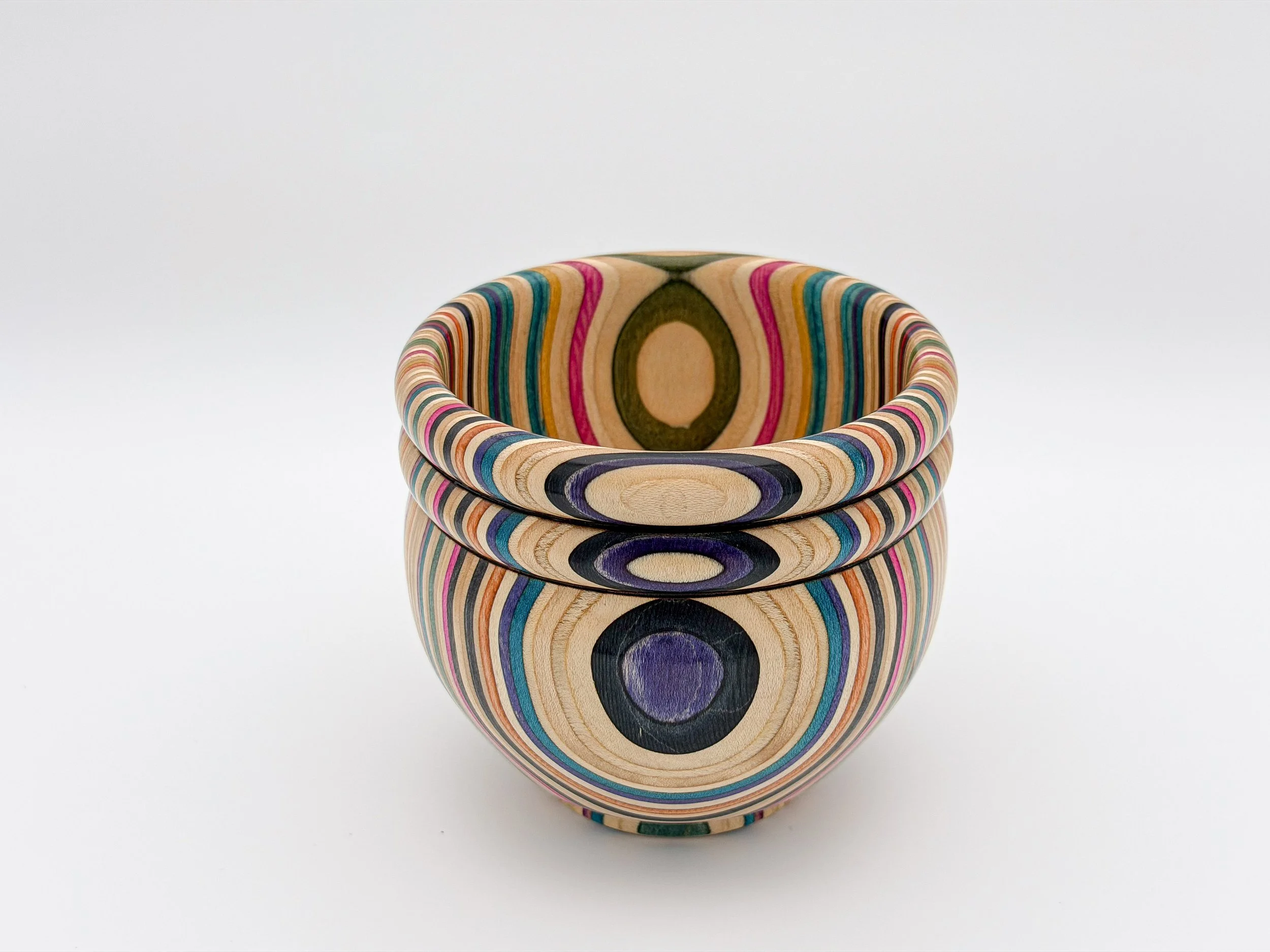
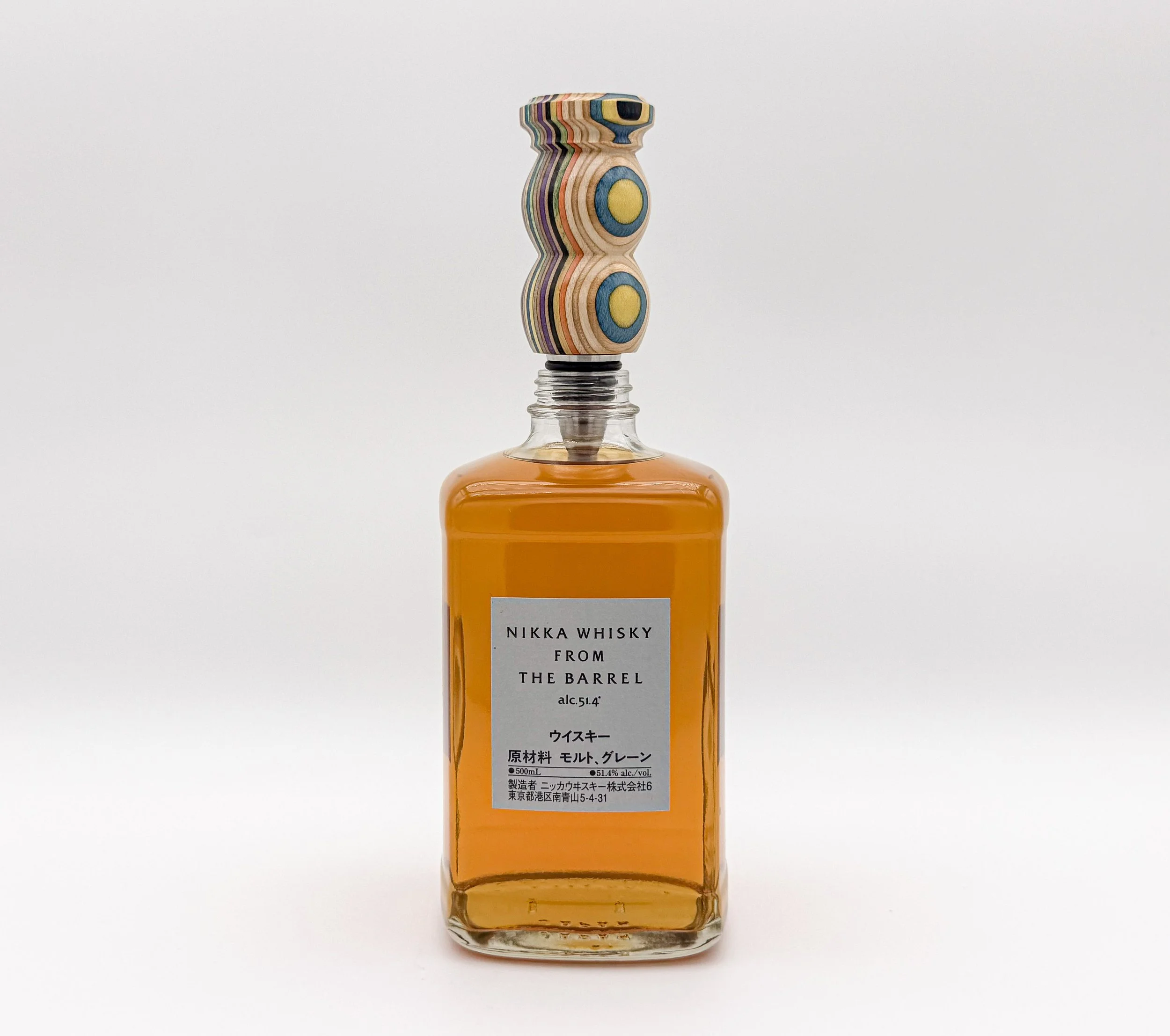
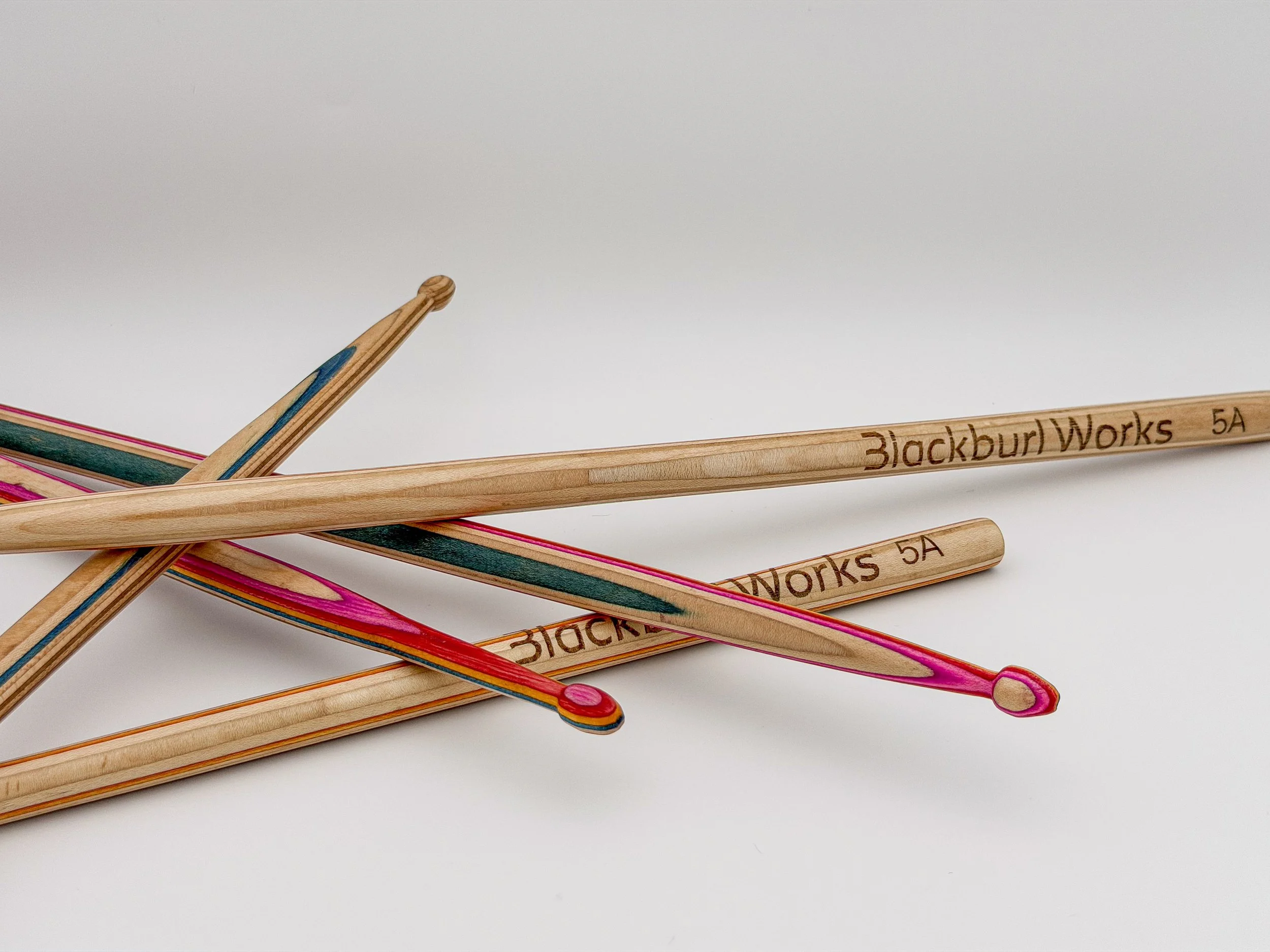
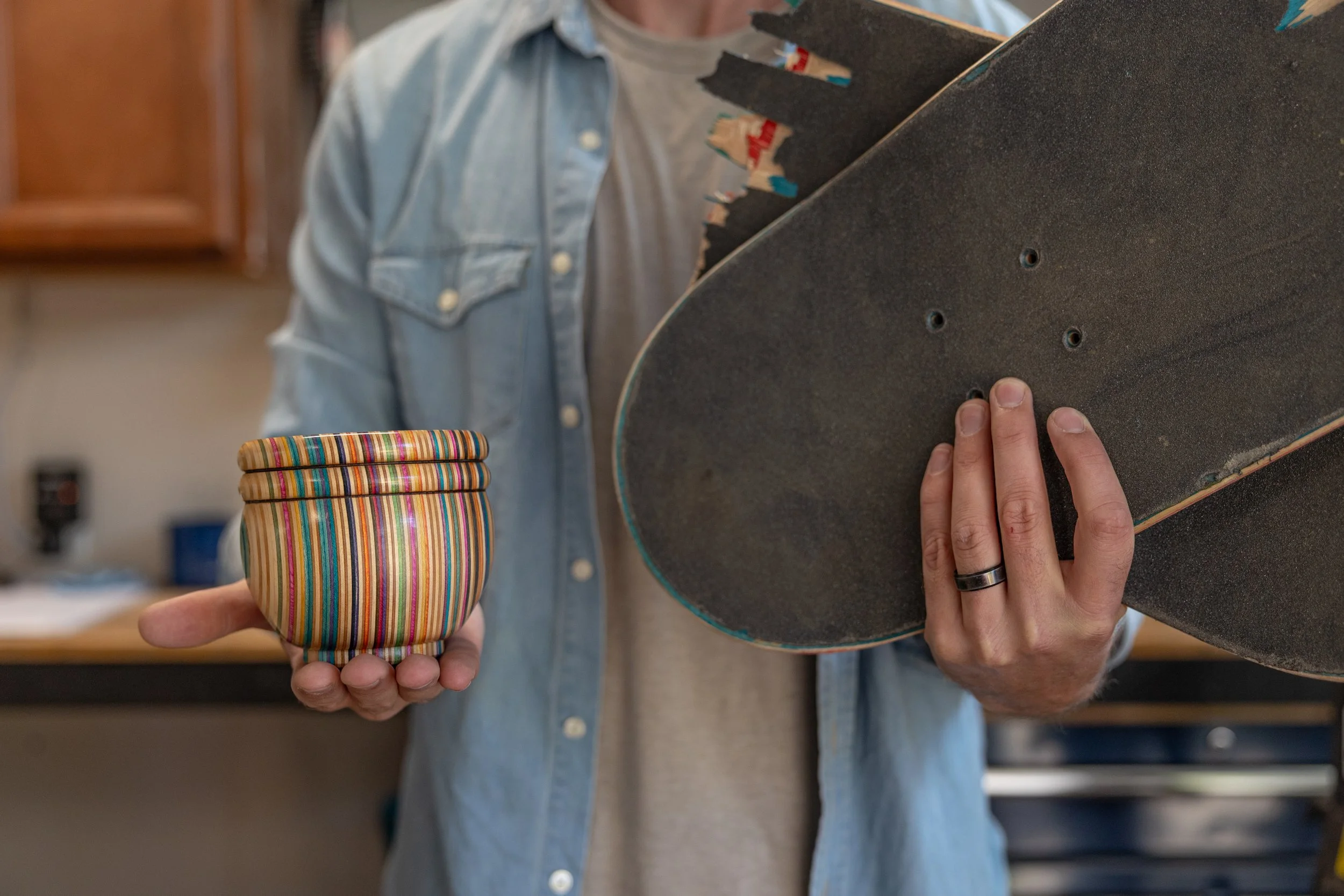
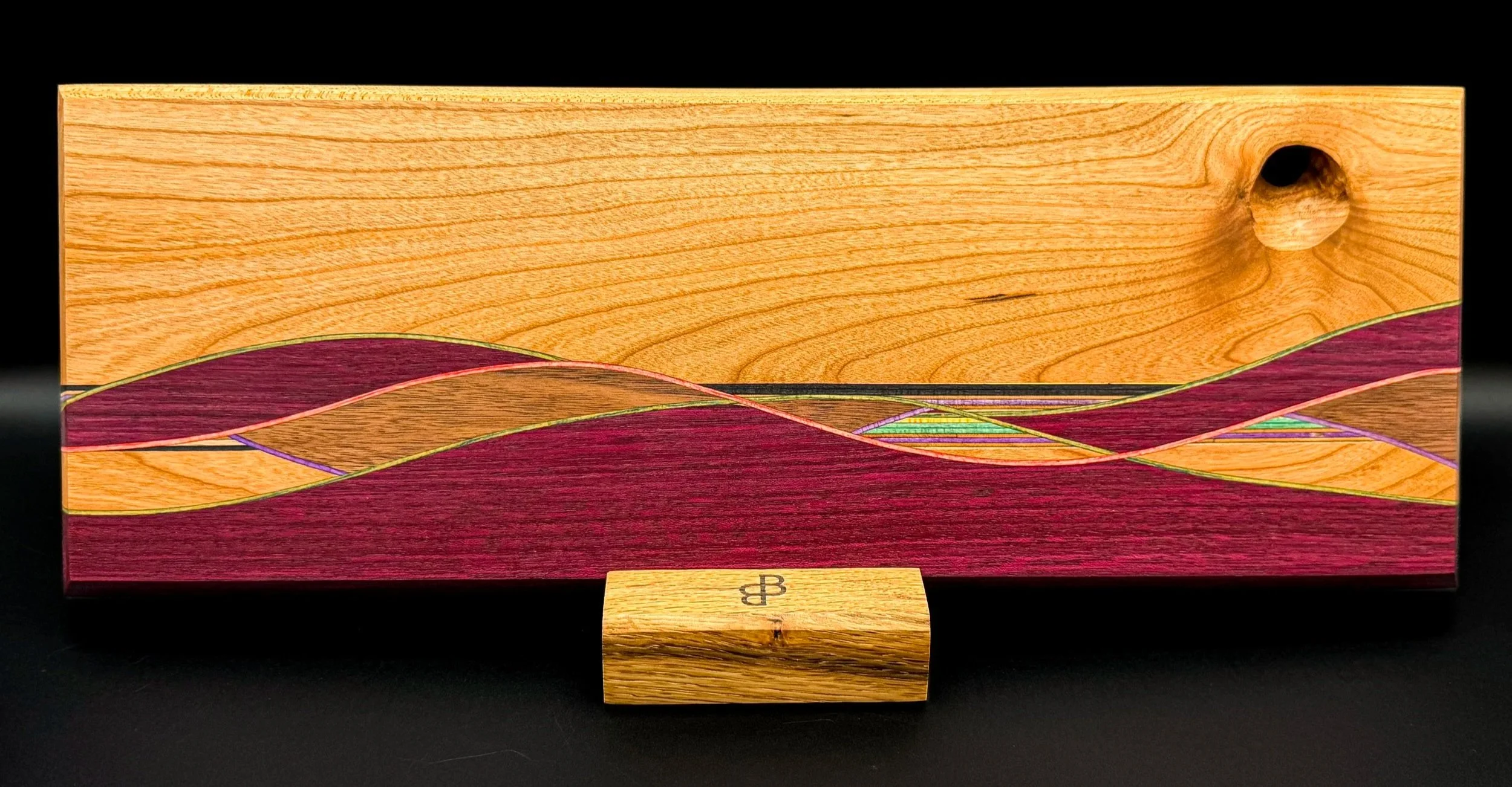
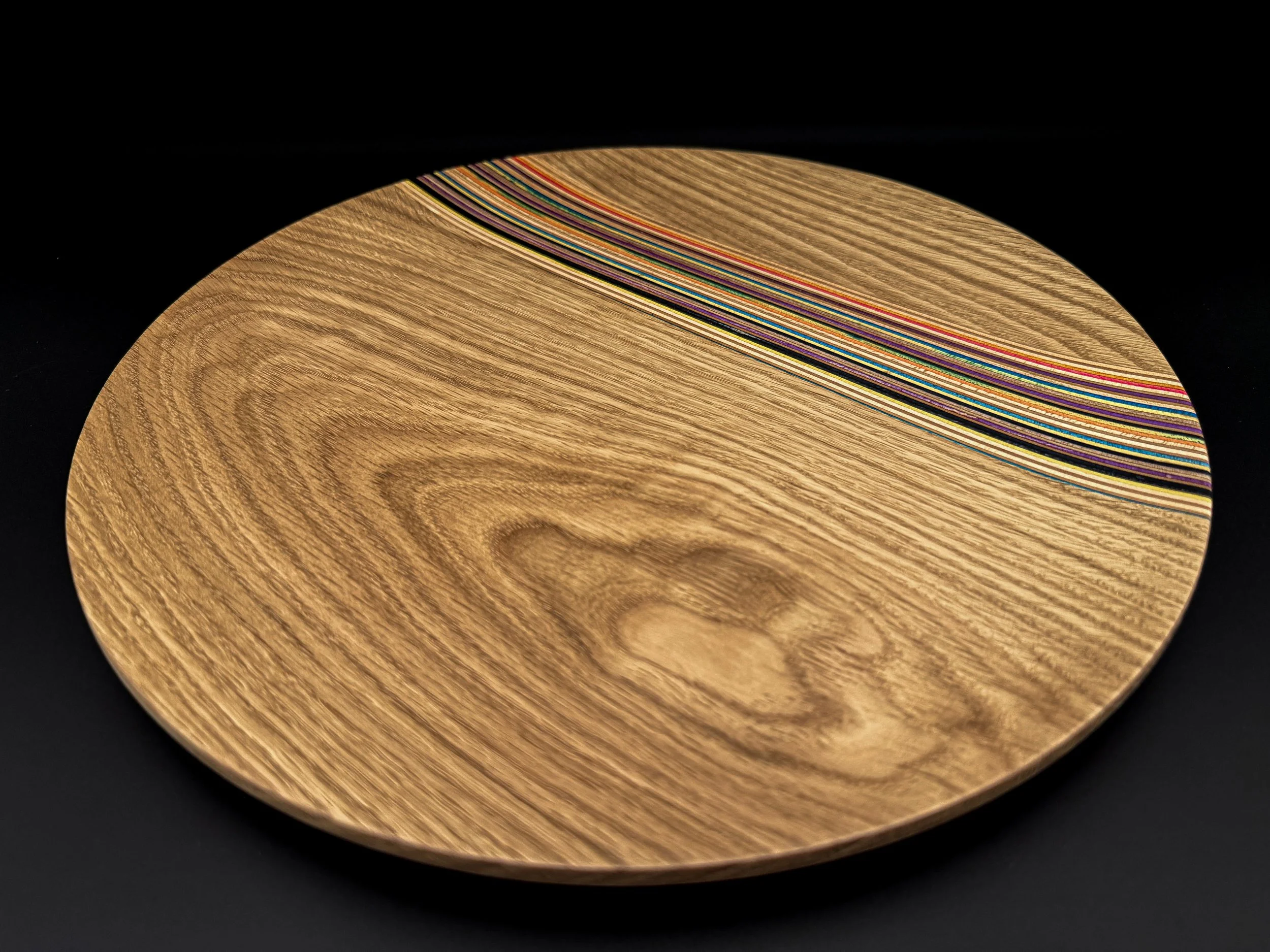
Absolutely. Roarockit’s coloured maple veneers have become an important part of my work. I use them alongside recycled skateboard decks, both as individual veneers and in laminated sections to create the coloured details that run through my bowls, serving boards and other pieces.
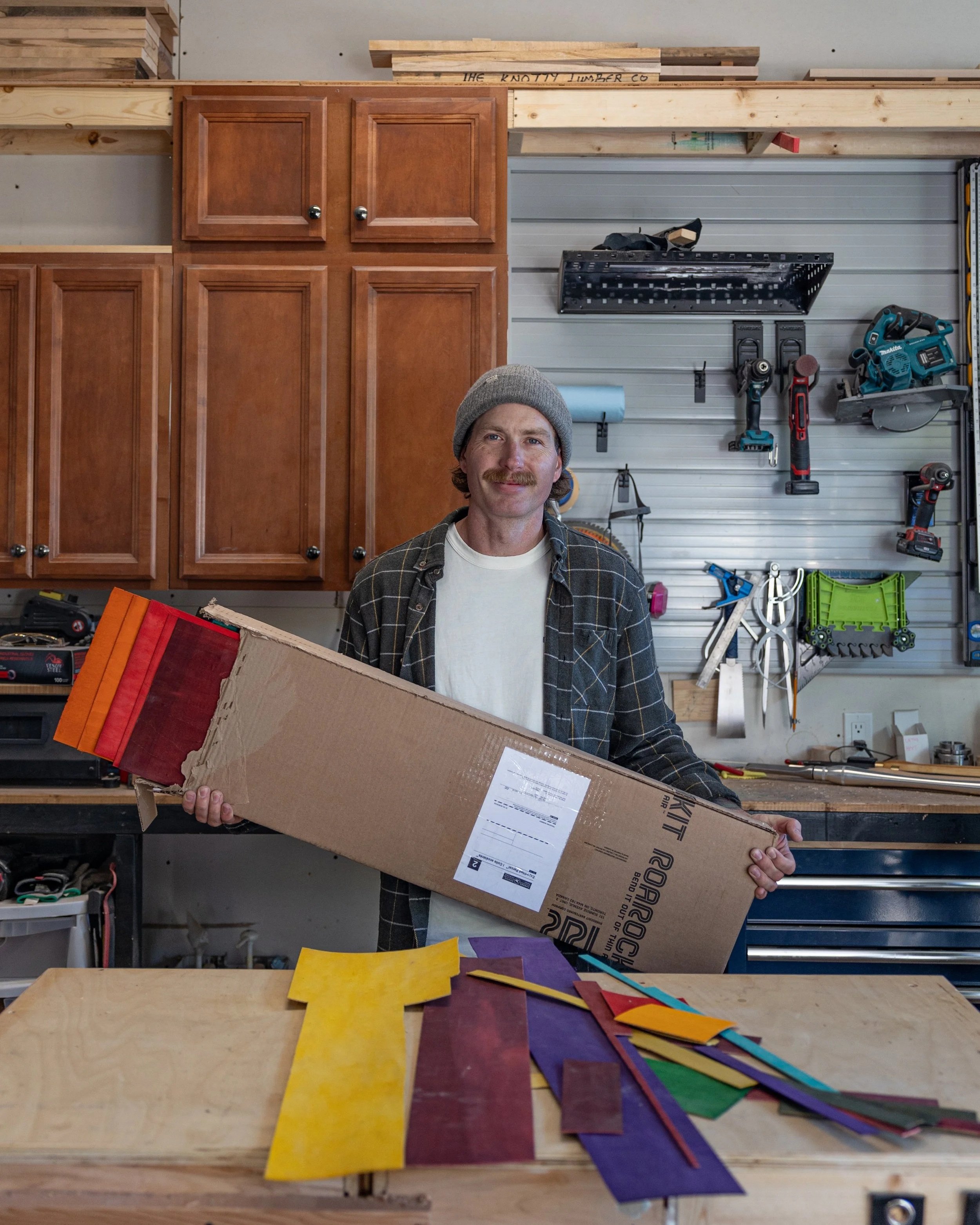
I actually discovered Roarockit while I was searching for recycled skateboards to use in my work. Someone locally was selling some coloured veneers from a Roarockit skateboard-building kit they had bought but never had time to use. I picked them up and immediately saw the potential.
I loved the idea that I could use the veneers to supplement the recycled skateboards I was already working with. It gave me much more freedom with colour and design while keeping that connection to skateboarding and the layered maple construction that originally drew me to the material. It’s become a really natural fit with what I’m trying to do with Blackburl.
How do you decide what colour combinations to use in your pieces? Your colour combos are always on point!
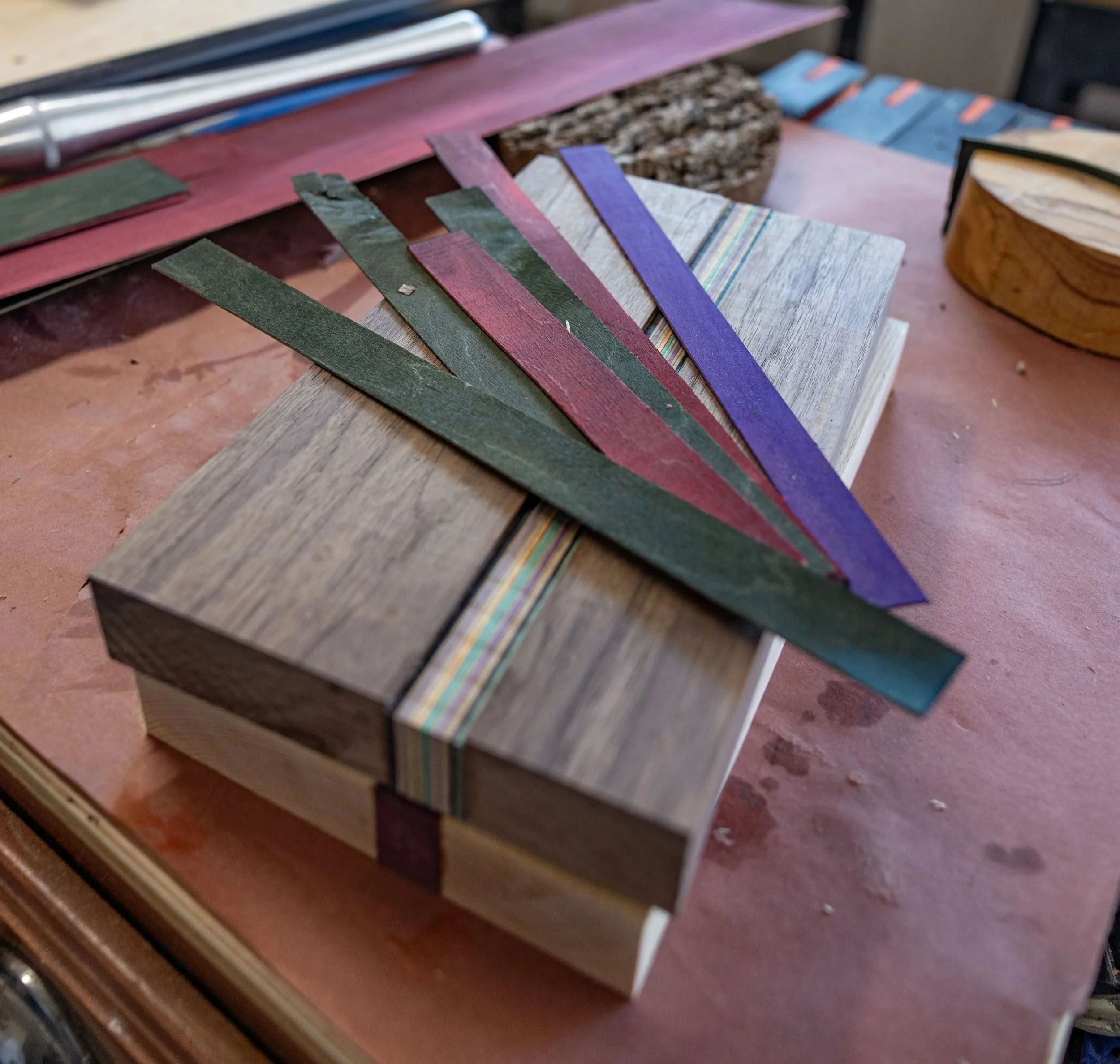
I usually treat colour as an accent rather than the main event. The wood comes first, and then I look at its natural colour, grain and figure, and decide what combination will complement it or create the right amount of contrast.
I tend to build combinations intuitively. Sometimes I want the veneer to almost disappear into the piece until you look closer, and other times I want one strong band of colour to become the focal point. I try not to use colour just because I can - the combination has to feel like it belongs with the wood and the overall shape.
What are your thoughts on working with our coloured veneers? Are there any tips you can give to aspiring builders out there?
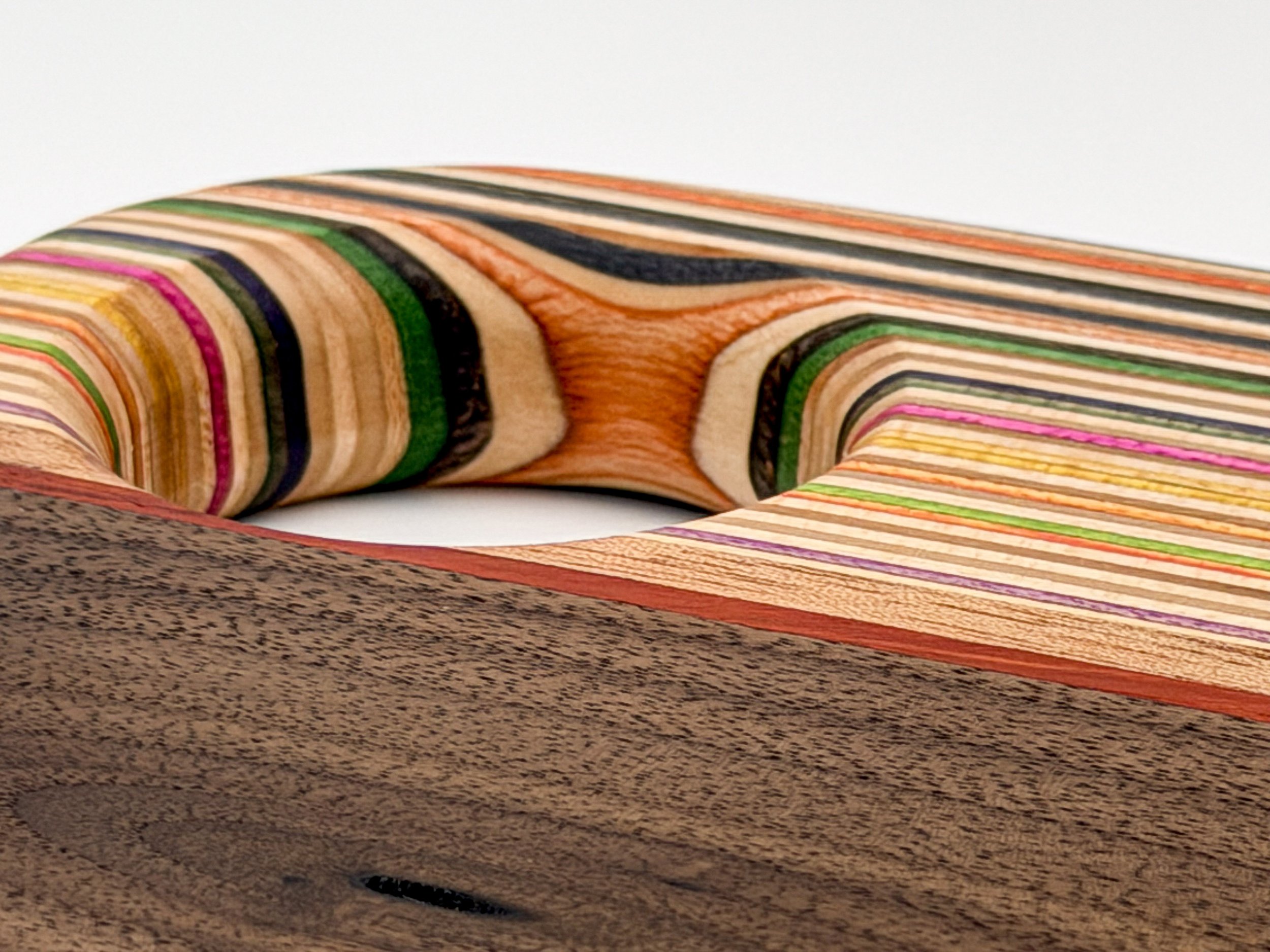
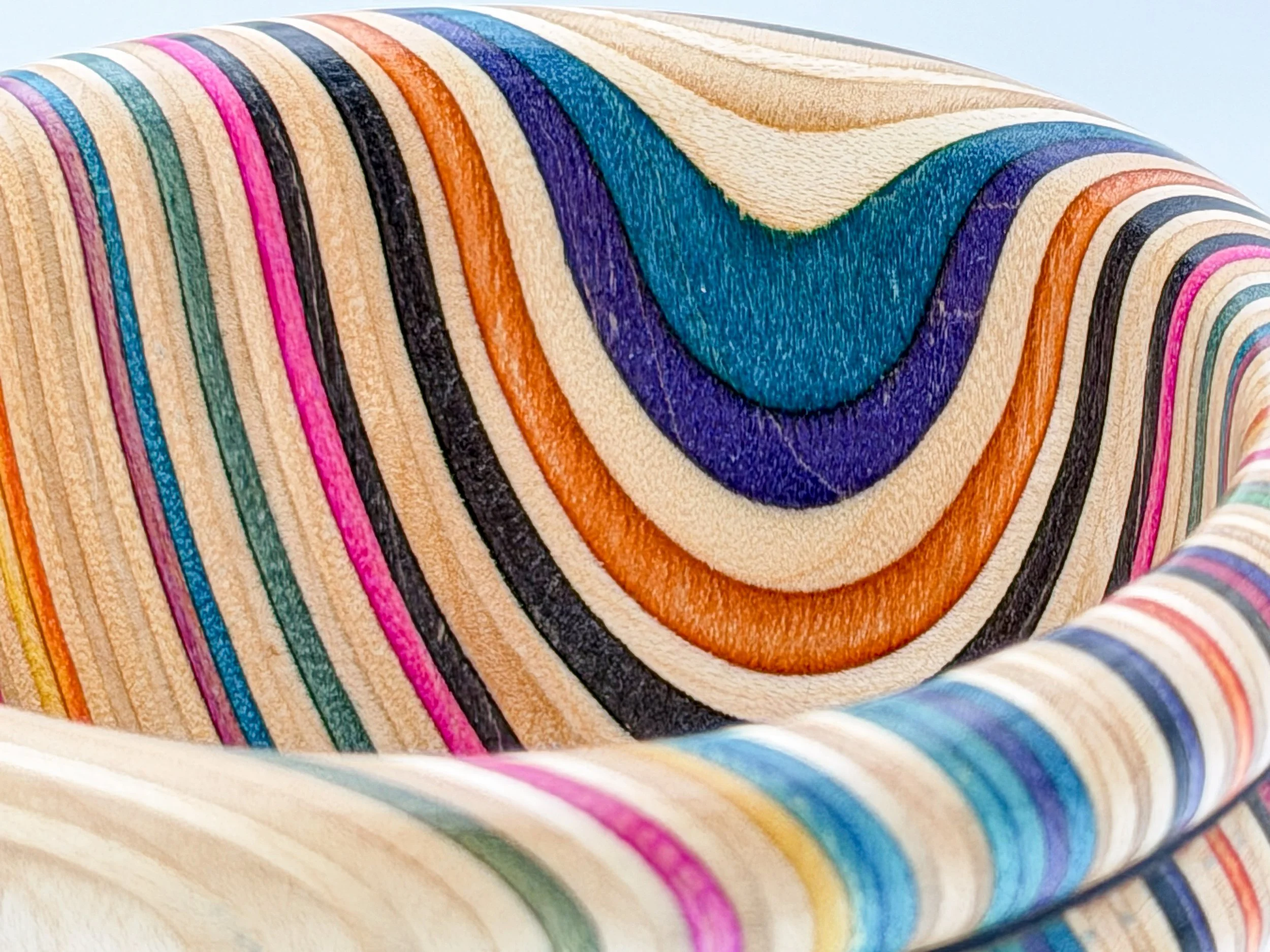
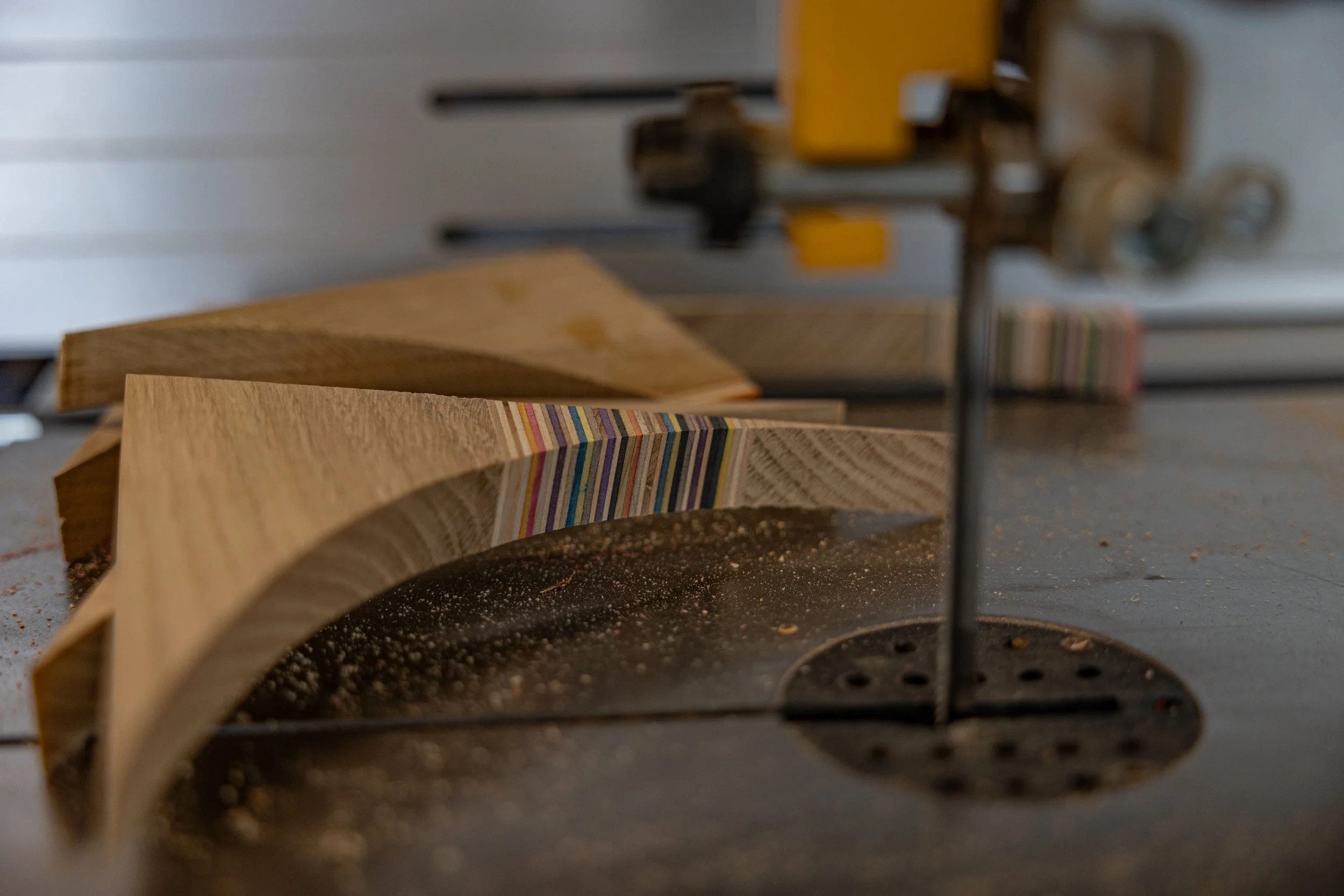
I love working with them because they give you a huge amount of creative freedom while still being real maple. You can create very subtle details or build up laminations that become a major part of the design. Once you start cutting, shaping and turning those layers, you also get patterns and reveals that aren’t always obvious when you first glue everything together.
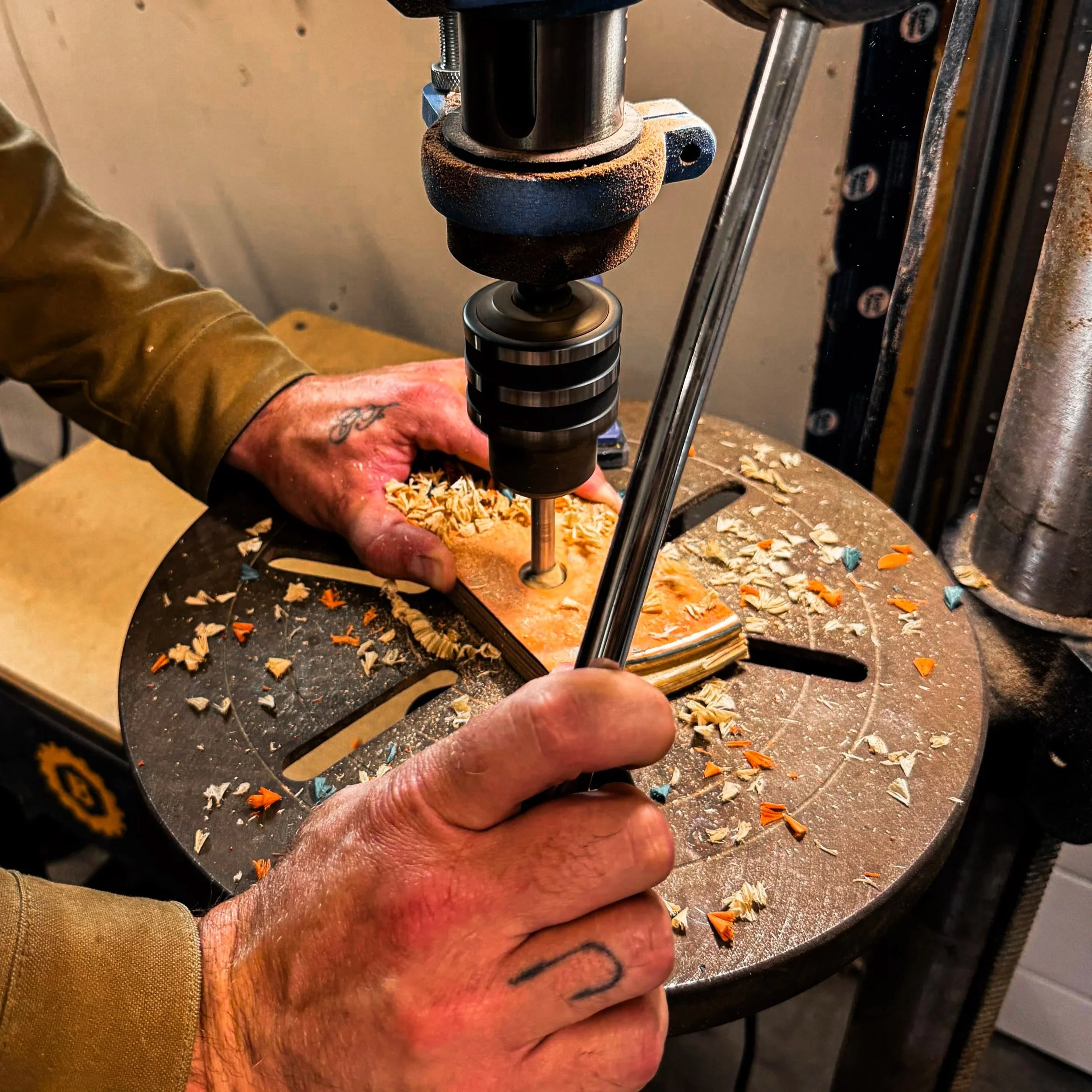
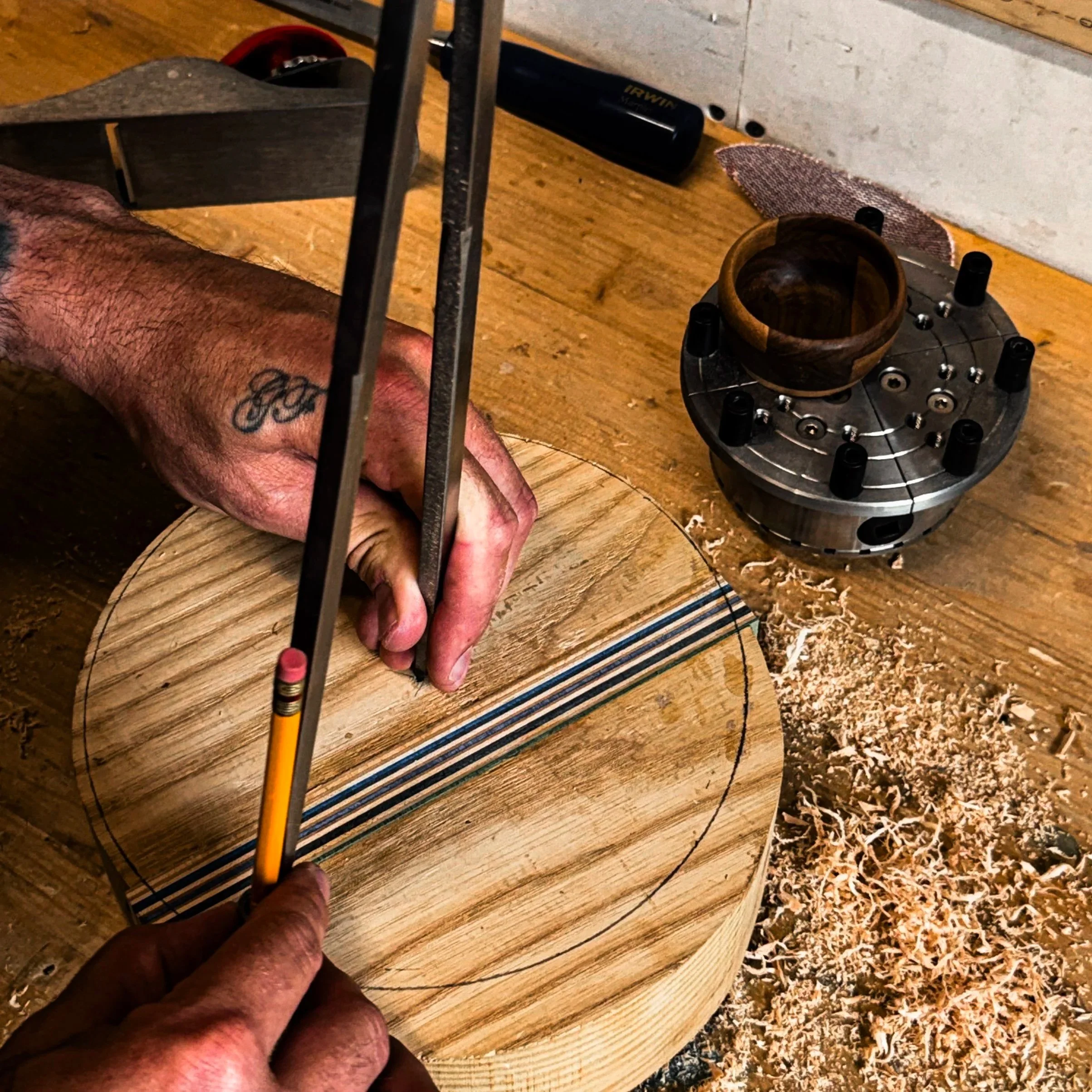
My biggest advice would be not to overdo it. It’s tempting when you have all those colours in front of you to use everything at once. I think the veneer is strongest when it has a purpose in the design. Pay attention to your glue-ups, keep everything flat and consistent, and think about how the layers are going to be exposed when the final piece is shaped - not just how they look as a flat stack.
If people wanted to find out more about your work, where can they see your creations and contact you?
The best place to see my work is through Blackburl Works online. I share finished pieces, new work, and quite a bit of the process behind them on Instagram and Facebook. My website is where you can see available pieces, learn more about Blackburl Works, and get in touch with me directly.
I’m also now represented by H Squared Gallery here in Fernie, and I’m really excited to have a selection of my work available through the gallery shortly.
Instagram: @blackburlworks
Facebook: @blackburlworks
Website: blackburlworks.com
Gallery: H Squared Gallery — Fernie, BC
Thanks again for your time, any last words for the readers back home?
Thanks for having me! One of the things I enjoy most about woodworking is that there’s always another direction you can take it. Traditional techniques and materials give you an incredible foundation, but there’s so much room to experiment, make mistakes, and eventually develop a style that feels like your own.
For me, bringing skateboard veneer into more traditional woodworking has been a big part of finding that with Blackburl, but I also want Blackburl to stand for something beyond the work itself. Men’s mental health is something I really want to support through the business, and a portion of Blackburl’s proceeds goes toward men’s mental health initiatives.
If the work can encourage someone to make something, try something different, or start a conversation that matters, then I think that’s a pretty great outcome.
Taryn O'Grady,
Roarockit Skateboard Company